
Search
Latest Stories




Newsletter Sign-Up
Newsletter
Visit our Brain Health Hub.
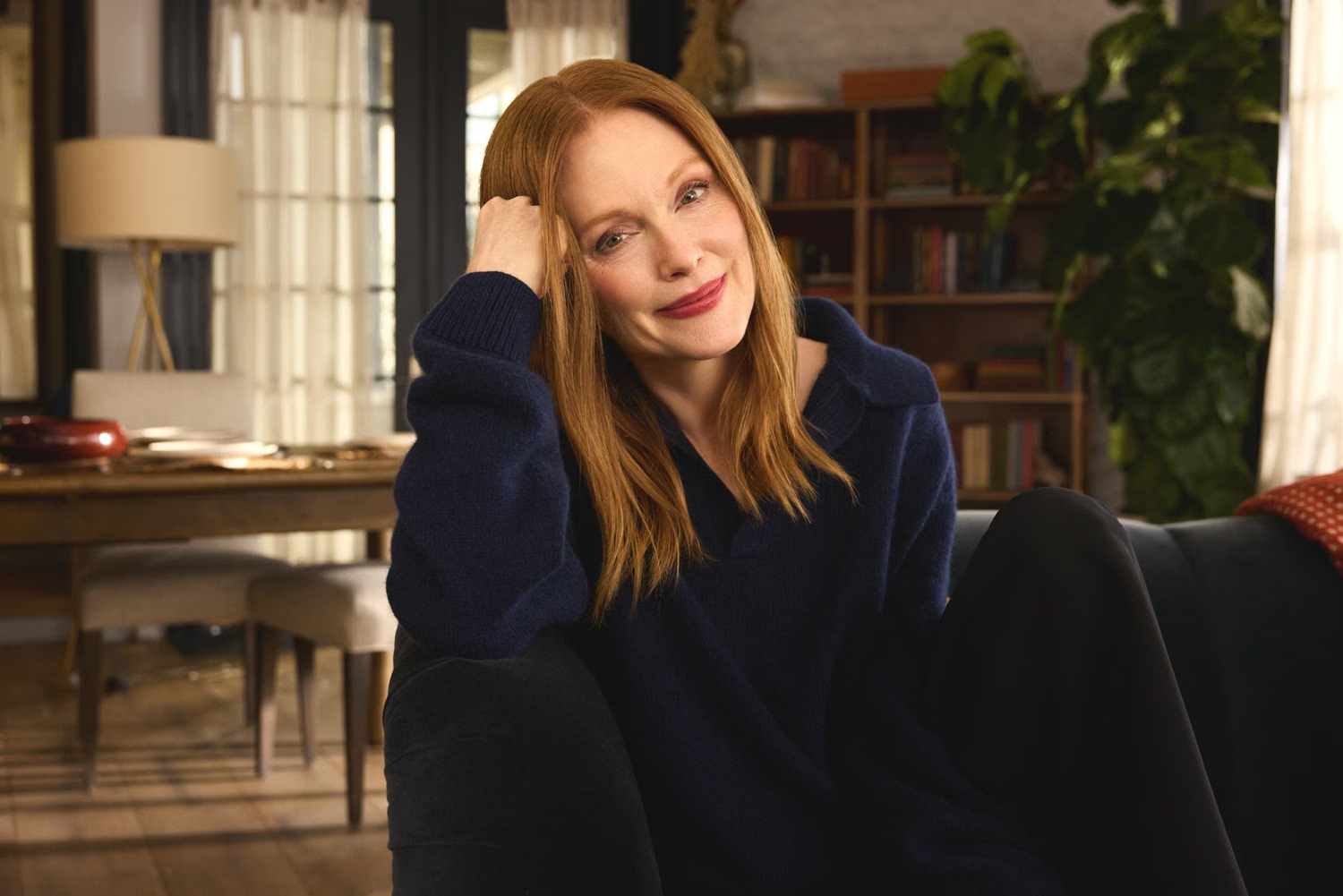
When Julianne Moore signed on to play Alice Howland, a linguistics professor with early-onset Alzheimer's disease in the 2014 film Still Alice, she had one condition. She needed time to do her research.
She wanted to meet with people living with Alzheimer’s, their caregivers and clinicians to make sure she got the details right. The role earned Moore an Academy Award, but it also left her thinking about her own brain health in a new way.
Now, Moore continues to raise awareness of brain health and Alzheimer’s disease, partnering with Lilly on Brain Health Matters, a campaign encouraging people to take a more active role in their brain health and talk to their clinicians about their risk. It’s a particularly important conversation for women, who make up nearly 2 out of 3 Americans living with Alzheimer’s disease.
I had the opportunity to sit down with Moore to talk about what she learned from Still Alice, how she takes care of her brain health and why women need to put themselves on their priority lists.
This interview has been edited for clarity and length.
HealthyWomen: What inspired you to get involved with Brain Health Matters, and how has that experience shaped the way you think about your own brain health?
Julianne Moore: I think about my own brain now all the time. When I first made the movie in 2014, it was not something I knew anything about at all. As a matter of fact, one of my conditions about doing the movie was that I have enough time to do research. The book had been written so carefully by a neuropsychologist, and I didn’t want to represent anything that I hadn't seen. So I wanted to be able to do the research, meet with patients and caregivers and doctors and be very specific in terms of the behaviors.
What I learned was fascinating. It was a time when people really didn’t talk about it and thought about Alzheimer’s as a condition of aging and not a disease. That’s the misnomer I’ve been correcting for the last 10 years. Alzheimer’s is not something you should expect to happen with aging. If it does happen, that means it is a pathology. And certainly in those years, there have been other treatments, and we understand now that there are lots of lifestyle factors that you can control.
Read: Alzheimer’s Isn’t Inevitable >>
HW: What lifestyle changes have you made in your own life to protect your brain health?
Moore: Sleep. I have my smart ring on, which is really kind of amazing. You think, “OK, I'm going to get in bed. Sleep really matters. I need to be rested.” I also just lowered the temperature in my bedroom 2 degrees, and it’s really helping.
I'm somebody who has always thought a lot about nutrition because of what I do. When I’m shooting something and I get to a part in the day where I can’t remember my lines, it’s usually because I need to eat. Actually, it’s always because I need to eat.
I’ll have fruit in a bag on set with me. If I start to lose my lines, I’ll eat a clementine, and I'll suddenly be better. When you understand that the connection can be that immediate, you really understand the mind-body connection.
HW: What would you say to women who haven't thought about their brain health as something to prioritize?
Moore: You know what they say: Put on your own life vest first or use your oxygen mask first. You can’t help anybody else if you don’t help yourself.
I think there’s this idea, too, that women have that a lot of things will just fall into place — and that’s just not true.
This is going to sound so crazy, but I remember being mad when my kids were little about how much stuff I had to do around the house. I had to pick this up, I had to pick that up. I thought, “Oh my God, this makes me crazy. Why doesn’t anybody else do this?” And when I really thought about it, I was like, “Oh, they don’t care. Whatever it was I cared about, they didn’t care about.” So once I reframed it and realized it was important to me, suddenly it wasn’t hard to do.
Sometimes I think about that with health issues, too. We think, “Oh, it’ll happen.” No, really think about it. Think about what you want. How long do you want to live? How do you want to feel? I don't want my knees to hurt. I want to travel. I want to work this long. Those are the things you want. Then make it happen for yourself.
HW: Protecting brain health can feel like one more thing on an already overwhelming list. How do you make it a natural part of everyday life?
Moore: It’s not that hard because there’s a huge correlation between physical health and cognitive health. A lot of the things people are already doing are going to be viable. I'd say nutrition and exercise are probably the top two. When you know that how you eat affects how you feel, it follows that it’s also going to affect your brain health and your heart health.
Read: Eat These 5 Foods to Improve Your Brain Health >>
Movement and strength training can really change things like bone density, which we already know about. It also helps with your heart and your brain. So it’s not really like adding anything on.
The great thing is that there are things that women do pretty naturally and easily, which are social relationships. Those are really important for brain health. They’ll have a wide circle of friends and lots of things they like to do together: going on a walk with your girlfriend and talking about what’s happening in your life, taking a ceramics class with some friends, traveling, doing puzzles or whatever is engaging, having a book club. All of those things are really valuable for cognitive health.
Read: 10 Fun Ways to Keep Your Brain Healthy >>
HW: If there’s one thing you hope women take away from your work with Brain Health Matters, what would it be?
Moore: That they need to prioritize themselves and take responsibility for it, too. And that’s not a bad thing. It’s not a burden to do that.
Women are already doing so much. Sometimes they’re caring for their mothers and their fathers. They might be in the throes of that, but they shouldn’t neglect themselves. They need to realize they need to take care of themselves.
HW: What’s your favorite way to give your brain a workout?
Moore: I like Connections and Wordle. Those are my favorite things. And Spelling Bee. If I’m on a set, I’ll do Spelling Bee throughout the day.
Connections and Wordle are the last things I do before I go to bed. I don’t know why I save it for then, but I really look forward to it. I think sometimes that’s the challenge. If that’s when you’re the most tired, and you’re still keeping your Connections and Wordle streak going, you know you can feel good about yourself.
Resources







Stories We Love
1
2
3

4
5
6
Support Our Mission
Keep Trusted Women’s Health Information Free
Your donation ensures every woman continues to have access to credible health content.
More Stories

Everything you need to know about women’s health — in one place.