

Search
Latest Stories
Newsletter Sign-Up
Newsletter
October 10, 2026, is World Mental Health Day.
I’ve lived with generalized anxiety for most of my life, and the one area most affected by it is sleep. It began in my early 20s, when I worked as a TV news reporter. Shift work wreaked havoc on my sleep and life. Eventually, my doctor prescribed a low dose of an SSRI (selective serotonin reuptake inhibitor). I started on a low dose, and in 2018, my dosage was bumped up. The medication helped me for more than a decade.
This year, that all changed.
At first, I didn’t think much of it. I’d had occasional bad nights in the past, but it usually passed. This time, it didn’t. The sleepless nights continued. Then the anxiety followed me into the daytime. Every day, I felt like there was an elephant sitting on my chest. I cried uncontrollably nonstop. I shook. My limbs tingled and felt light. I could barely eat. I was approaching my 37th birthday, so initially I wondered whether hormones were responsible. I saw an endocrinologist, but that didn’t provide an explanation that made sense for what I was experiencing.
Then my mom, who had become my confidante through all of this, asked a question: What if your anxiety medication isn’t working anymore?
It was a possibility I hadn’t seriously considered.
That’s when I discovered that recognizing that you’re in a mental health crisis — and actually getting the help you need while navigating one — are two very different things.
And for many, finding that help can be the difference between regaining control and spiraling into a deeper, darker crisis.
I needed help. Instead, I got a scavenger hunt.
I started with the place we’re so often told to start: my primary care doctor. I called on a weekday afternoon and was told she was gone for the day.
I left a message.
I emailed.
She never got back to me.
I eventually spoke with another doctor at her practice via telehealth, who told me he couldn’t help me. I wasn’t given a psychiatrist to call or a clear next step. I was simply left to figure it out. So I did what people do when the healthcare system stops functioning like a system: I became my own care coordinator. Except I was trying to coordinate that care, and figure out what to do, while barely functioning.
Next, my mother and I spent hours on the phone trying to figure out whether my insurance company had some kind of patient advocate who could help me find a psychiatrist. None existed. Then we started searching ourselves for psychiatrists near me who accepted my insurance.
One after another, we hit dead ends. Some weren’t accepting new patients. Others couldn’t see me for months. Some didn’t accept my insurance.
My therapist, whom I’ve been seeing since 2023, stepped in and gave me a list of about 20 psychiatrists she’d worked with or heard good things about.
I started calling.
Every single one I reached seemed to present another obstacle, including one psychiatrist who told me he worked only on Wednesdays and couldn’t see me for weeks.
This was happening while my mental and physical health were deteriorating: It felt like I was drowning in the middle of the ocean while, at the same time, scrounging enough material together to build my own life raft. The sicker I became, the more work I was expected to do to get treatment, all while showing up for my actual job because, at the time, I was the primary source of income for my household.
Jennifer Snow, the national director of government relations and policy at the National Alliance on Mental Illness (NAMI), described the problem to me simply: “Mental health care is so hard to access because there are not enough providers, insurance does not prioritize mental health care and there’s still an enormous stigma around receiving mental health treatment.”
Snow told me that finding a provider who accepts your insurance, is accepting new patients and has a reasonably soon appointment can feel like finding “the absolute unicorn … you’ve basically won the lottery.”
Check in with yourself: Take a 5-minute, free and confidential online assessment for anxiety and depression* >>
My medication was suddenly ineffective. What now?

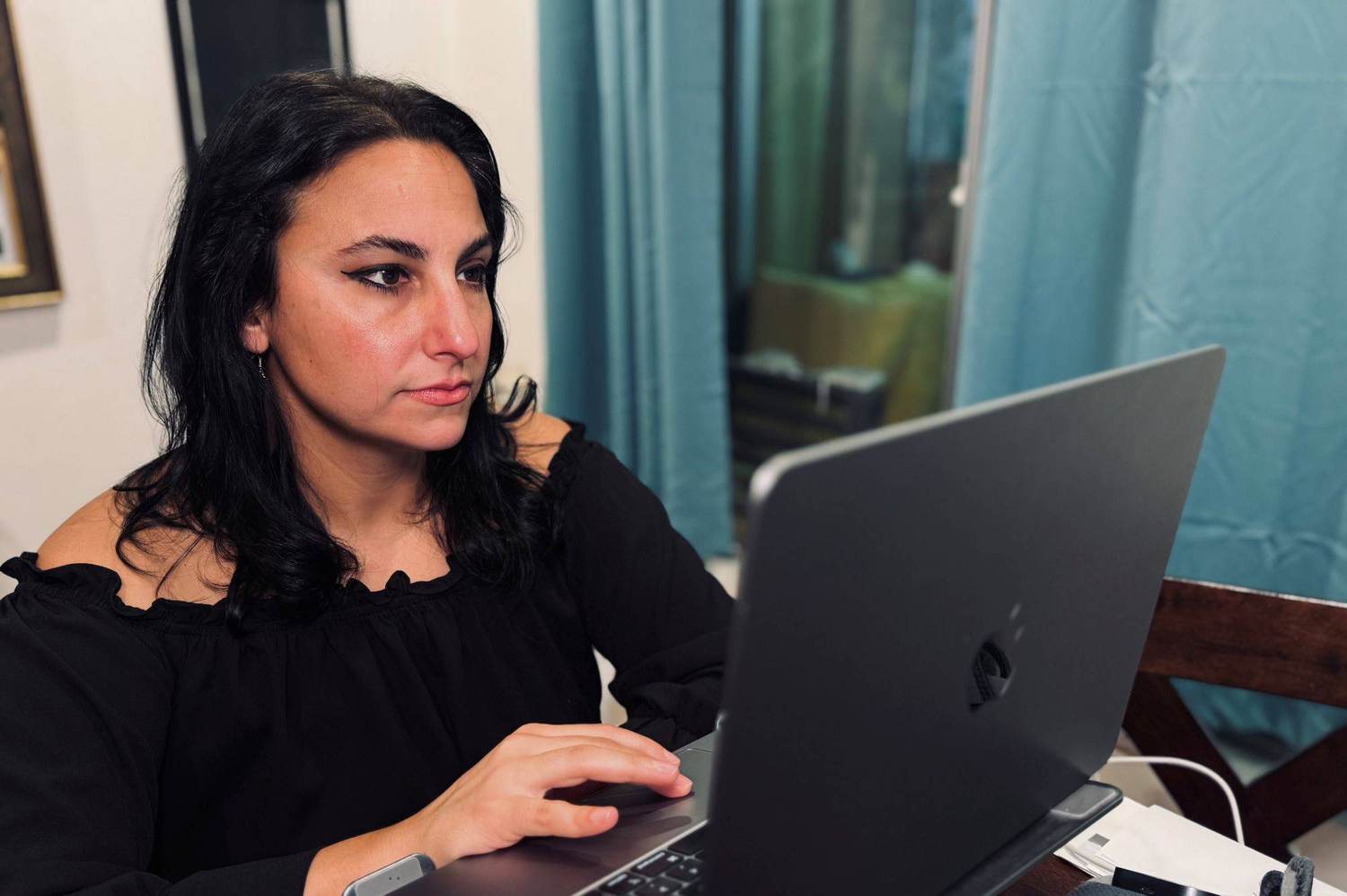
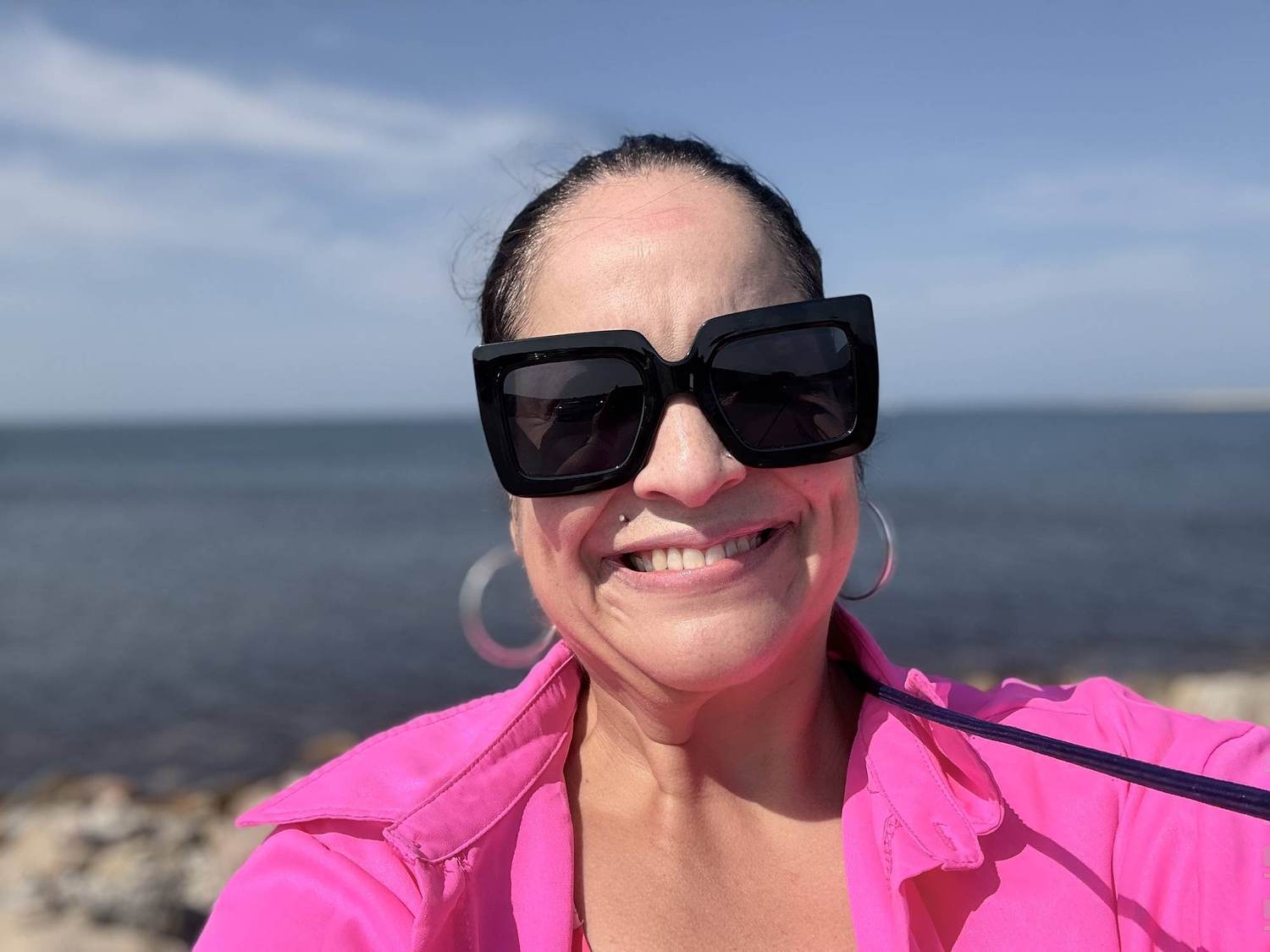
You can't tell in the photo, but I was going through my medication transition here and still had many hard days ahead.
Why did my medication that seemed to work for years stop being effective? I don’t know for sure but it could be that my body built up a tolerance over time, something known as tachyphylaxis.
Christine Crawford, M.D., MPH, chief medical officer of NAMI and a psychiatrist, said besides building up a tolerance, medications can stop working for a variety of reasons.
Crawford said clinicians may need to consider whether a dose needs to be optimized (or increased), whether another medication is interfering with it, whether a medical issue is affecting how the drug is metabolized in the body, or whether someone is taking the medication consistently. And sometimes a different medication is simply a better fit.
The most reassuring part of that conversation was something I desperately needed to hear during my crisis: Needing to change treatment doesn't mean treatment has failed.
“Depression and anxiety are treatable conditions,” Crawford said. “If one medication doesn't work,” she explained, “there are other treatment options available.”
But something I realized while talking to Crawford is how many people might find themselves in similar situations to me: prescribed an anti-anxiety medication in their early 20s by a primary care physician, with no follow up. Then, decades later, the medicine stops working and there is nowhere to turn.
“A lot of these meds are being started by primary care providers who start on a low dose and then say, ‘I'll see you in six months,’ … So people aren't getting their doses optimized in a timely fashion because they're not able to follow up with the person who prescribed it,” Crawford said.
But finding a psychiatrist who can explore medication options and help a patient navigate them has become nearly impossible, and it’s due to an overwhelmed mental health care system.
“Primary care providers are the majority of the folks prescribing mental health medications because people can't find a mental health provider,” Crawford said.
A mental health system stretched too thin
So what exactly is happening to our mental health system?
1. A psychiatrist and mental health provider shortage
America has a severe shortage of psychiatrists and mental health providers even despite the surging public demand for mental health services. Federal data shows over 137 million Americans living in a mental health professional shortage area. And according to statistics, it’s getting worse.
According to Crawford, the shortage of psychiatrists is the result of several factors, including the rising demand of mental health services, continued stigma surrounding the profession and inadequate reimbursement from insurance companies. Low reimbursement rates can make it difficult for mental health professionals to justify the years of education and training required to enter the field, contributing to some professionals leaving the workforce.
According to Pallavi Yetur, a licensed therapist in California, in addition to people leaving the field due to poor reimbursement rates that are not in line with the time and cost of training, providers also leave due to chronic burnout, a professional epidemic that comes from patient load, fighting to be validated in a stigmatized field and navigating the frustrating insurance system from the provider side.
2. Cost and insurance barriers
Experts say insurance is a huge problem.
Caitlin Hochul, senior vice president of policy and government relations at Inseparable, a mental health advocacy organization, said the system is designed by insurers to put profits ahead of people.
“We're seeing an issue where providers are being squeezed out of the system,” Hochul said. “It's very costly to even get the education, the training, the licensure to become a provider. And then once they are licensed and in practice and a network, insurers essentially make it very difficult for them to make a living wage. So that drives a lot of providers out, leading to gaps in the care that people need.”
Snow described a similar reality. Even after decades of changes, like mental health parity laws, requiring health insurance plans to cover mental health and substance use care the same way they cover physical medical and surgical care, she said people seeking mental health care are still “waiting longer, they're paying more and they have a fewer choice of providers.”
Insurance can also shape whether providers participate in networks in the first place.
Psychiatrist Rinat Tal, M.D., said that psychiatrists can face inadequate reimbursement, administrative burdens and insurance audits, leaving many psychiatrists to ultimately choose not to participate in insurance networks at all. And because there are so few providers, psychiatrists can opt out of insurance and still maintain full patient rosters.
The problem is that many people simply can’t afford the out-of-pocket cost of psychiatric care. The result is a system in which access to specialized mental health care can become a privilege reserved for those who can afford it.
“Not every person out there can afford hundreds of dollars a week for treatment,” Tal said. “They're trying to put food on the table.”
And even people with insurance often find that having coverage doesn’t necessarily mean having access to care. Hochul said insurers may deem certain treatments “not medically necessary,” decline to cover the full scope of care someone needs or offer networks filled with providers who are no longer available, a problem known as “ghost networks.”
“A person might look to see who is in the network, they start calling around and they're met with messages that say that this provider is no longer practicing,” Hochul said. “So they're being faced with these ghost networks, where they're not able to find somebody who's in their network. And then say they do eventually find a provider, usually their next available appointment time might not be for months down the road. Meanwhile, that person's mental health is continuing to get worse.”
The result is a cruel paradox: You can have health insurance and still discover that the provider you desperately need is effectively unavailable to you.
3. Stigma has changed, but the system hasn’t
While the stigma surrounding mental health has diminished over the years, making more people more willing to seek help, the system meant to support them hasn’t kept pace.
According to Crawford, part of the problem is that mental health conditions have historically been treated as separate from physical health conditions, creating a divide not only in how we think about mental health but also in how people access and receive care.
“Because it's been viewed as a separate entity, there aren't as many resources put into mental health support out in the community as there has been with primary care and more physical medical issues,” she said.
Without access to adequate outpatient mental health care — and with so many barriers to finding a psychiatrist or other provider — some people don’t receive treatment until their condition deteriorates to the point that they end up in an emergency room.
But even then, accessing appropriate psychiatric care can be complicated.
“This is where the difference between mental health and physical health really gets further highlighted,” Crawford said. “When you present to the emergency room for a medical condition and you need to be admitted, you just go upstairs in the hospital to a bed. That's not the case for psychiatric conditions because a lot of psychiatric units have been closed in a number of hospitals across the country. So people have to wait for a bed to be available at a random hospital, sometimes hours away from their home.”
In a system without enough outpatient care, the emergency room can become the default entry point for people who needed help long before they reached an emergency.
The result is a troubling contradiction: We’ve spent years encouraging people to ask for help, but we haven’t built a system equipped to help everyone who finally does.
And while the stigma surrounding mental health has improved, Crawford said it hasn’t disappeared, and its effects extend beyond those seeking treatment. Stigma can also discourage people from pursuing careers in mental health, further straining a workforce already struggling to meet demand.
“Who wants to enter into a stigmatized profession?” Crawford said.
In other words, stigma doesn’t just make it harder for people to ask for help. It can also contribute to a shortage of the very people they’re being told to ask.
Therapy and medication management aren't the same thing
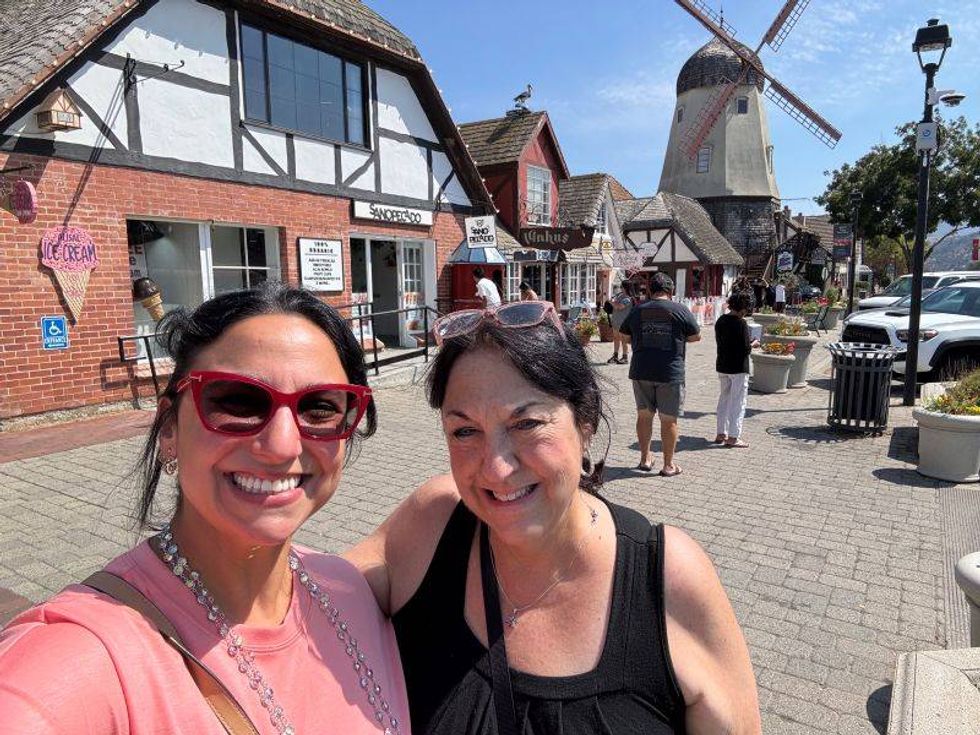
My mom visiting me in Solvang, Calif., this summer after everything I went through.
One of the strangest parts of my experience was that I was already doing something we constantly encourage people to do: I was going to therapy.
I had a therapist I trusted. I was asking for help. I’d spent years learning about my anxiety and developing tools to manage it.
But at that moment, therapy alone wasn’t enough.
Catherine Mills, Ph.D., a licensed clinical psychologist in Virginia, explained that severe anxiety can become so physiologically overwhelming that a patient may have difficulty using the techniques they’re learning in therapy. For some people, she said, medication helps regulate those physical symptoms enough for therapeutic work to become effective.
“There are some people who need both,” Mills said. “They need medication to help the physiological symptoms and then once the physiological symptoms are regulated, then the therapy will help them.”
That gap between therapy and medication management matters.
A therapist may recognize that someone needs a medication evaluation, but therapists generally aren't the clinicians prescribing and managing psychiatric medication. A primary care doctor may prescribe certain psychiatric medications, but not every primary care provider is comfortable adjusting them, particularly when symptoms become more complicated. That was exactly the gap I had fallen into.
Mills told me that when her patients need psychiatry, she often helps them look for a provider and may work with their primary care clinician to see whether a bridging prescription is appropriate while they wait. But when that doesn't happen and symptoms continue to get worse, the next recommendation may be emergency care.
That is a staggering gap: between an outpatient appointment you may have to wait months for and an emergency room because you can no longer wait.
Eventually, someone answered
I kept working my way down my therapist's list of psychiatrist providers.
Then I reached the second-to-last name.
She answered. And by sheer luck, she had a cancellation the following day. There was a catch: She didn't take insurance. The initial 90-minute appointment would cost me $675.
I was desperate. I also knew that spending nearly $700 on a doctor's appointment was going to create another source of anxiety at precisely the moment when anxiety was consuming my life.
My mother Venmoed me money to help cover it. The next day, I had my appointment.
And finally, my journey toward feeling better began.
I am deeply grateful that I found that psychiatrist. I am grateful that I had a therapist who gave me names. I am grateful that my mother could send me money. I am grateful that my husband was there while I was falling apart. But gratitude isn't the only thing I feel when I look back.
I also feel angry.
Because none of those things should have been prerequisites for getting care. And all of these challenges and hurdles are the reason so many don’t get care and end up in horrible situations.
My experience changed how I think about people whose mental illness is visible in ways our society finds uncomfortable. During my worst days, I had people catching me. I had resources. I had somewhere to live. I had people checking on me. I had someone helping me pay for treatment. I had the ability to keep searching until somebody finally answered. Take those supports away and the trajectory of a mental health crisis can look very different.
That thought has stayed with me.
Check in with yourself: Take a 5-minute, free and confidential online assessment for anxiety and depression* >>
We’ve made asking for help the message. Now we have to make help more easily available.
There has been genuine progress around mental health.
People talk about anxiety, depression and other mental health disorders more openly. Therapy has become normalized in many communities. Younger generations have more language for what they're experiencing. Crawford told me she remains optimistic in part because people are recognizing symptoms earlier, discussing mental health more openly and benefiting from an expanding range of treatments.
That progress matters. But awareness without access has limits.
We shouldn’t spend years telling people, particularly women, that the brave thing is to ask for help and then hand them an outdated insurance directory when they finally do.
We shouldn’t tell someone in the middle of debilitating anxiety to advocate for herself while requiring her to make 20 phone calls to find a psychiatrist.
We shouldn’t call mental health part of healthcare while treating timely psychiatric care like a luxury available only to people who can pay hundreds of dollars out of pocket.
Tal told me she would like to see the mental health system become less mechanical and more intimate, somewhere people can feel that they’re really taken care of.
Hochul put the goal even more simply: Progress would mean that when someone picks up the phone to make an appointment with a therapist or psychiatrist, they can get the care they need when they need it, without cost determining whether treatment is possible.
That shouldn't sound revolutionary. It should be the minimum.
I'm doing much better now, but getting here wasn't a straight line. I went through a difficult medication transition, another chapter of trial, uncertainty, and waiting for my body and mind to adjust. Healing hasn't been instantaneous, and anxiety hasn't magically disappeared from my life. But today, I have a psychiatrist managing my medication. I have a therapist who knows me and supports me. I have my family beside me. I have support. And after spending so much of that crisis desperately trying to find care, I know just how much those things matter.
I made it through the worst mental health crisis of my life, but what still haunts me is how much luck it took to get there.
Because when someone is shaking, crying, unable to eat and barely making it through the day — which is also a powerful reminder that mental health struggles are deeply physical, not “just in your head” — the healthcare system shouldn’t require her to become a researcher, case manager, insurance expert and relentless self-advocate just to get the care she needs.
She shouldn’t have to fight that hard.
We tell women to ask for help.
The next step is building a system that actually answers.
If you need urgent support, free help is available 24/7:
- 988 Suicide & Crisis Lifeline: Call or text 988, or chat at 988lifeline.org/chat.
- Warmline: Visit warmline.org to find a peer support line for non-crisis emotional support.
*This assessment is a quick snapshot of your mental health based on the GAD-7 and PHQ-8 clinical screening tools. It does not replace a professional diagnosis. If your results suggest a mental health concern, consider sharing them with a doctor or mental health expert.
This educational resource was created with support from Lancôme.







Popular
1
2
3

4
5

6

Support Our Mission
Keep Trusted Women’s Health Information Free
Your donation ensures every woman continues to have access to credible health content.More Stories






Everything you need to know about women’s health — in one place.