
Search
Latest Stories


Newsletter Sign-Up
Newsletter
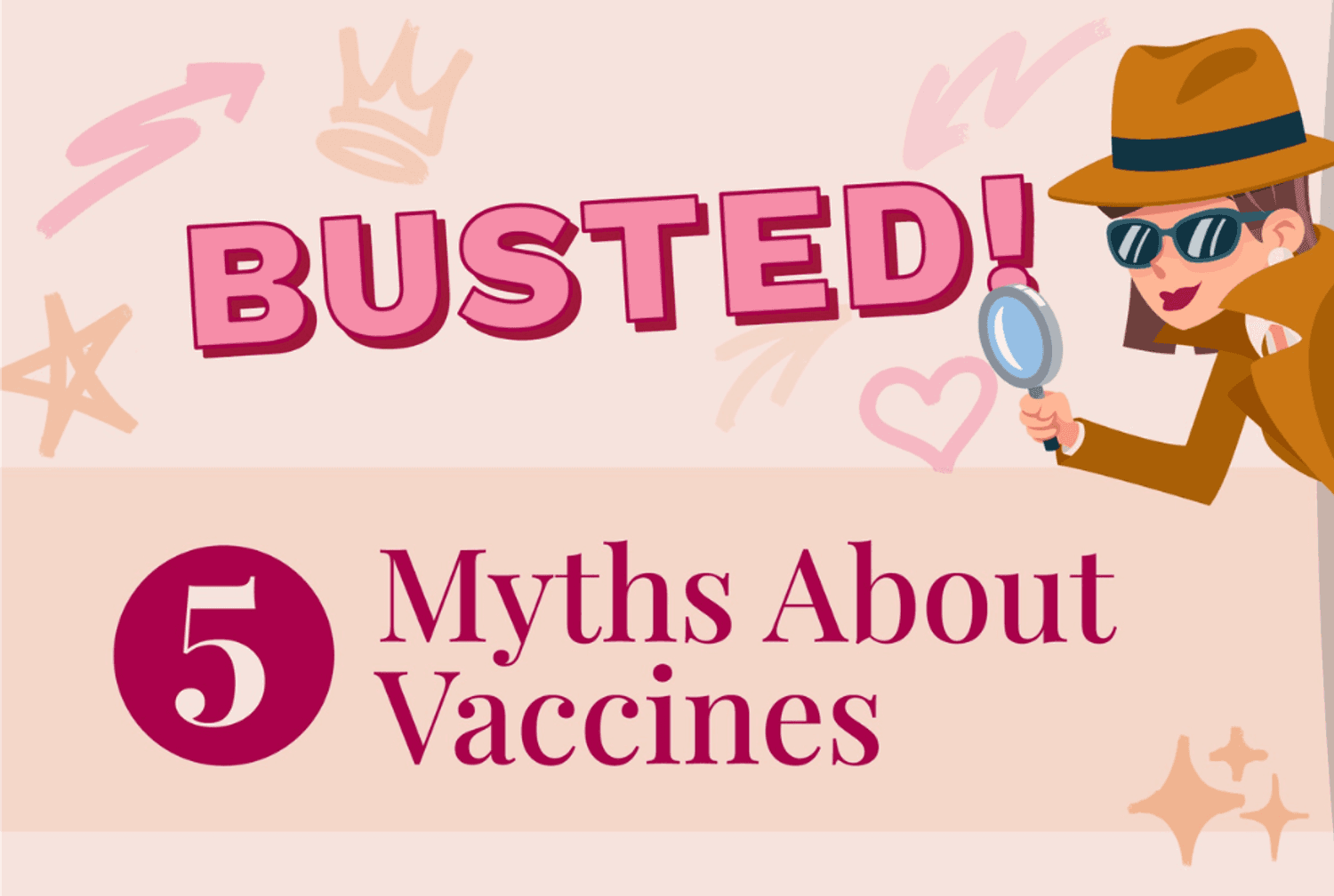
August is National Immunization Awareness Month.
Remember the Great Polio Scare of 2025?
Of course you don’t! Thanks to vaccines, the deadly poliovirus was eliminated in the U.S. in 1979.
Vaccines are like the Superwoman of modern medicine: They prevent serious diseases and illnesses, protect society through herd immunity and save countless lives.
But heavy is the vax that wears the crown. Like the deadly viruses vaccines protect us from, misinformation is contagious and myths about vaccines seem to have staying power. Between public mistrust in health and pharmaceutical companies and false information on social media — it can be hard to know who to trust and what facts are real.
So, let’s set the record straight with science.
Here are 5 common falsehoods about vaccines and the facts you need to know.
1. “Vaccines cause autism.”
There is no scientific evidence linking vaccines to autism.
The misinformation can be tied in part to a 1998 British study that suggested a possible link between the measles, mumps and rubella (MMR) vaccine and autism. The study was later retracted by The Lancet in 2011 after the lead researcher admitted “several elements” in the paper were incorrect, and he was found guilty of fraud among other charges.
Today, there are more than 25 studies that support no evidence of a connection between the MMR vaccine and the development of autism.
2. “You don’t need vaccinations as an adult.”
Adults need vaccines, too.
Some vaccines, like the shingles vaccine, are recommended for people 50 and older.
And even if you’ve received all the recommended vaccines as a child, some vaccines may become less potent over time, and you may need a booster dose.
Other vaccines, including the flu vaccine, are updated yearly to provide the best protection from severe illness.
The best thing to do? Talk to your clinician about what vaccines you may need and the best time to get them.
3. “Vaccines contain harmful, toxic ingredients.”
Hear us out: It’s true that some vaccines contain aluminum and formaldehyde (yes, like dead bodies formaldehyde).
But the amount of aluminum and formaldehyde in vaccines is tiny compared to what you’re exposed to on a daily basis in things like food, water and air.
Formaldehyde is a natural substance made of carbon, hydrogen and oxygen, and it’s found in every living thing on the planet. Manufacturers add tiny amounts of formaldehyde during vaccine production to kill viruses or toxins. Then, the vaccine is purified leaving only a trace amount of formaldehyde. The amount is so small compared to what we already have naturally occurring in our bodies that it’s not harmful or dangerous.
Vaccines may also contain aluminum salts as an adjuvant, which is a substance added to enhance immune response. So, aluminum salts help your immune system build up protection. Without it, the vaccine wouldn’t work the way it should.
Considering that aluminum is everywhere — in the water you drink, the food you eat, even in the air we breathe — the small amount in vaccines is considered safe.
See, way less creepy!
4. “You can actually get the disease from the vaccine.”
It’s extremely unlikely that a vaccine could cause a disease.
For one, most vaccines are not live vaccines, meaning they use inactive (killed) germs, bacteria or viral proteins, so it’s impossible to get the disease from the vaccine.
The vaccines that do contain live organisms — the chickenpox vaccine, for example — are grown in a lab where the weakened versions of the virus or bacteria eventually lose the ability to cause disease. Manufacturers then choose the weakest ones to reproduce and put in the vaccine.
The vaccine is made to be weak so your body can use it to build up the immunity to fight the virus without it causing a full-blown infection or disease.
Live vaccines can cause mild symptoms like a rash after getting the vaccine, but that’s a sign that the vaccine is working.
5. “It’s better to have natural immunity than immunity through vaccines.”
Think of vaccines like a safety bubble for your body. When you get a vaccine, it builds immune defense in a safe and controlled way without putting you at risk for the potential complications of the real-world infection.
Natural immunity can create immunity too, but it also means you’re exposed to infections and diseases that can cause serious illness or even death, as we’ve seen with smallpox, measles and the flu — just to name a few.
Many serious health outcomes can be avoided with vaccines. And being vaccinated doesn’t just help you — it helps keep deadly diseases and illnesses from spreading to other people.






Popular
1
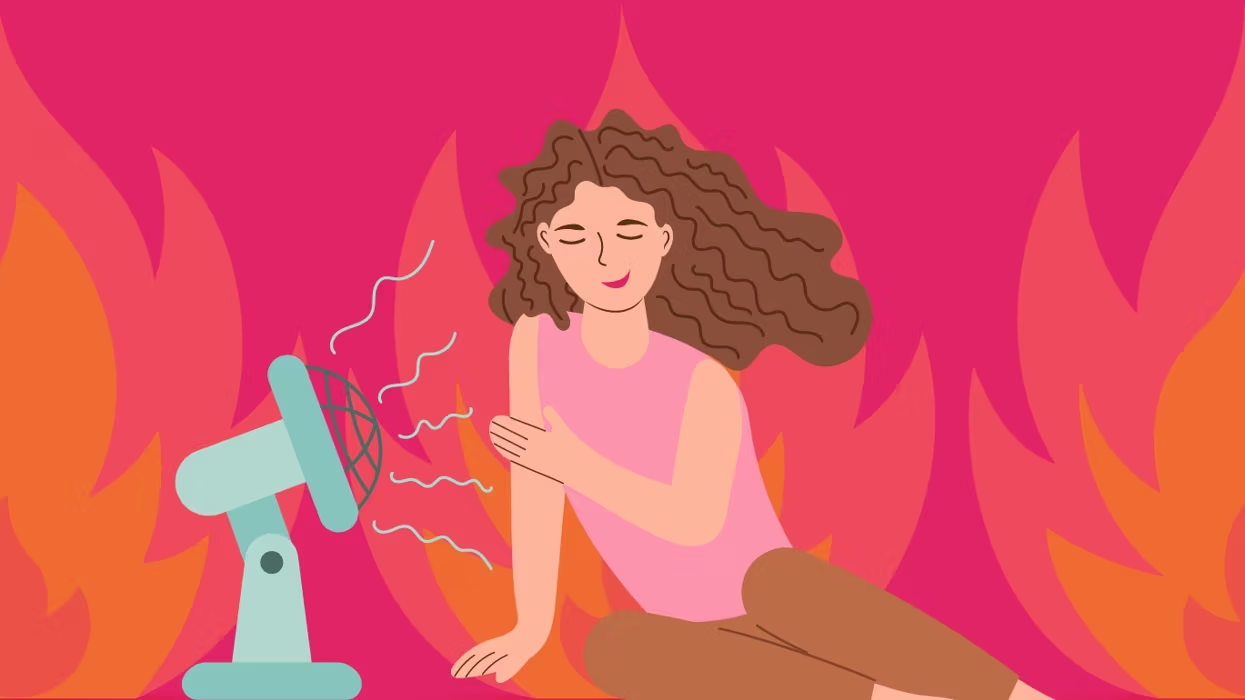
What Happens in the Body During a Hot Flash
Sep 03, 2026
2
Biologics for Treating Asthma
Sep 22, 2026
3
Bye, Bye, Itch! Managing Chronic Hives at Home
Sep 23, 2026
4
5
Understanding Menopause Stages and Terms
Sep 08, 2026
6

Support Our Mission
Keep Trusted Women’s Health Information Free
Your donation ensures every woman continues to have access to credible health content.More Stories






Everything you need to know about women’s health — in one place.