

Search
Latest Stories




Newsletter Sign-Up
Newsletter
As told to Erica Rimlinger
When I need hope most, I think of my mom, who passed away before I was married. She gave me Hope as my middle name, and I like to believe she knew I would need it.
In 2002, my husband and I welcomed our beautiful son Ian. By his second birthday, he had been diagnosed with autism. We entered a world of therapies, school programs and words we’d never heard before. We learned to meet Ian where he was and help him reach his fullest potential. On the hardest days, hope helped us keep going.
When you’re caring for a child with a disability, it’s easy to put your own health concerns on the back burner. It’s only when I think back to 2017 that I remember a few subtle changes in my health. At the time, I didn’t sense anything that might have predicted that I was about to be diagnosed with a major, chronic neurological disease. But sometimes, that’s how subtle the early signs of multiple sclerosis (MS) can be.
I wasn’t sleeping well. In yoga class, I noticed my balance had worsened, and I had pins and needles in my hands. I was tired all the time. I chalked these changes up to perimenopause. I mean, what woman isn’t tired all the time during perimenopause? My general practitioner agreed. Neither of us suspected hormone changes would soon be the least of my problems.
In an instant, the disease became shockingly obvious, and I mean shocking in the literal sense. Out to dinner one night with my husband and son, I picked up my fork and felt a powerful electric shock shoot down my arm. It felt like I’d touched an electrical socket with my fork. My husband insisted we go straight to the emergency room.
At the ER, I was examined and had X-rays, then told to follow up with a neurologist. I found that when I moved my neck in a certain way, pain would shoot into my hands or feet, which could cause pain, numbness, spasms or feeling like my limb was somehow stuck.
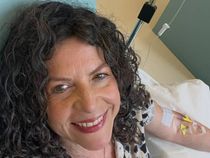
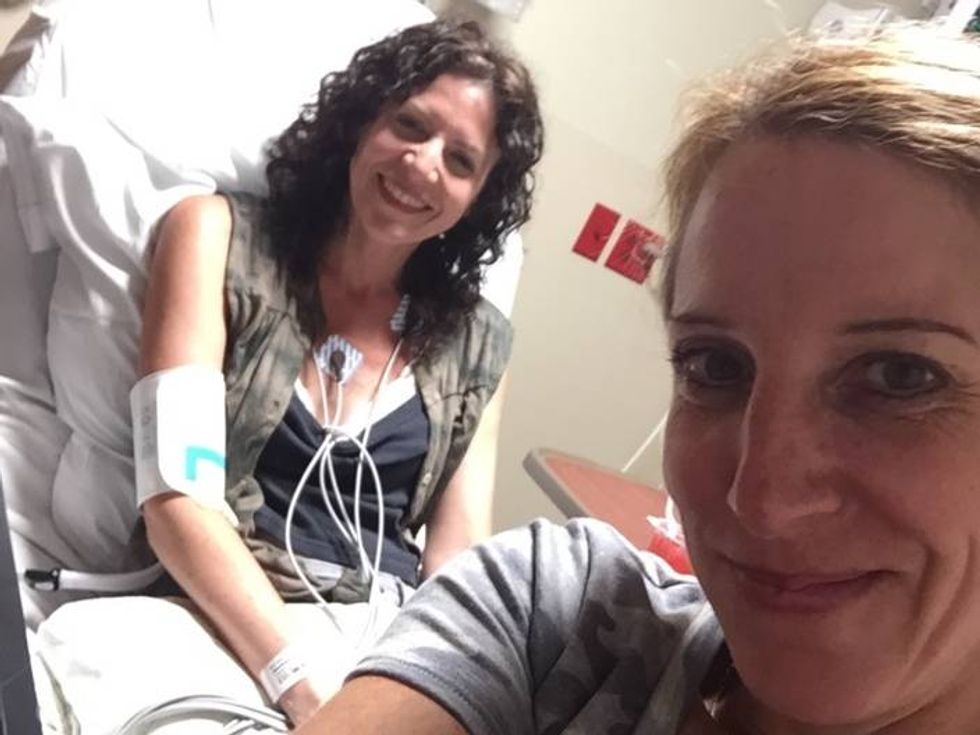 Sharon in the hospital with her best friend, Lauren, 2017
The neurologist gave me several tests but not an MRI. He was convinced the pain was orthopedic. This didn’t seem right to me, and I insisted on getting an MRI of my brain. The neurologist finally gave in.
As I’d suspected, the MRI lit up, showing lesions, or areas of damage, on my brain and brain stem. I was admitted to the hospital through the ER.
It’s not easy to diagnose MS: Doctors must rule out other causes first. Part of the reason is that symptoms vary so widely among people, depending on what part of the brain and nervous system is affected. The lesions in my brain stem and spine explained why I had the symptoms from my neck to my fingers and toes.
At the hospital for over a week, doctors still weren’t saying it was MS — but they also weren’t saying it wasn’t. And they started giving me first-line treatments for an acute MS flare-up: steroids. They didn’t work. In fact, over the course of many months, I lost most of my hair and was bedridden.
I left the hospital on a months-long wait list for an MS doctor and a course of medication that wasn’t working. My husband called the doctor’s office every day, begging them to let me in if there was a cancellation. He promised the doctor’s office he’d get me there no matter what. After several weeks, a cancellation finally allowed me to see the doctor.
“Sharon, I don’t know why this has taken so long,” the doctor told me after reading my chart. Time matters with MS: It can determine whether a symptom will be temporary or permanent.
That month, after getting insurance approval and finding an infusion center, I started my new medication protocol. The change I felt wasn’t instant. After six months, I still couldn’t go out or drive, but by my ninth month, I felt like I got my life back.
After a lifetime of caring for other people, one thing I never thought I’d have to do was learn to advocate for myself. But that’s been a critical piece of my story. Doctors only know the parts of our bodies that are fighting illness. My MS doctor is my MS expert, and my primary care is an expert in other parts of my health history, but nobody knows me as a whole person. I’m the only expert on me, and my voice is important.
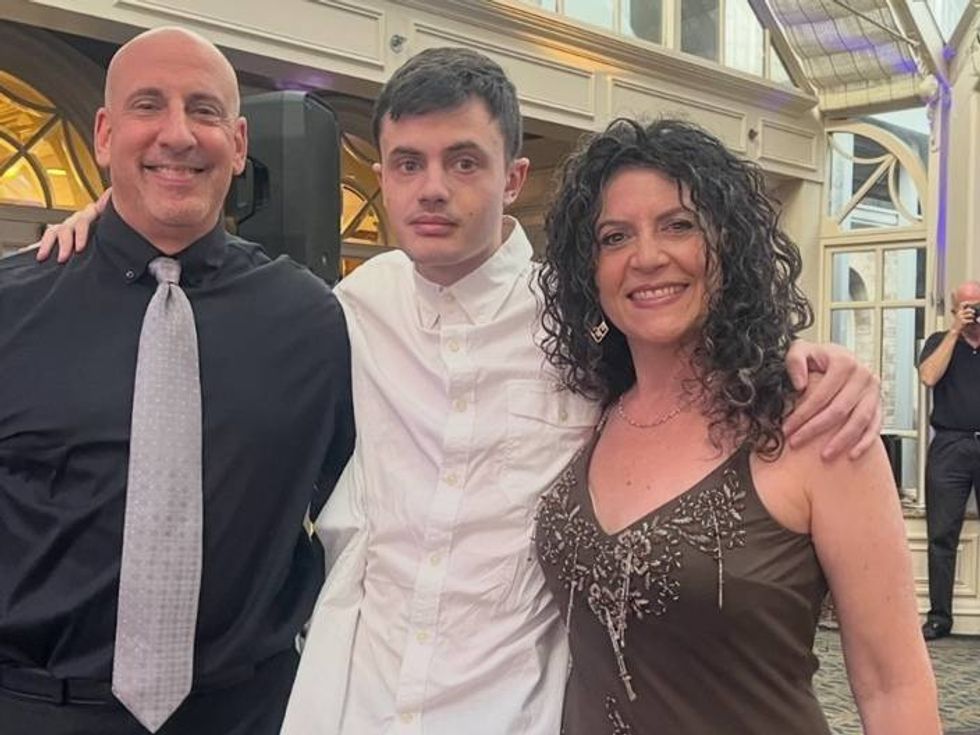 Sharon with her husband and son, 2025
Throughout this journey, home remains the place I can turn to and just be mom, not an MS patient. I’ve tried to do everything I could do even when I was sick, but I also have a great partner and amazing friends. My husband and I have gotten some mileage from the “in sickness and in health” part of the marriage vow! We had no idea how much we’d need that mindset.
I have relapsing-remitting MS, which means my symptoms are controlled now but could return, or relapse, at any time. This has happened twice, and I’ve found that moving helps me. I’ve also found it helpful during the tough times to keep up routines and stay in the moment as much as possible.
Today, nine years after my diagnosis, I take a monthly infusion of medication, and I’m fortunate to be able to walk 3.5 miles per day. I have energy and mobility, and I feel incredibly lucky. I believe it’s because of hope that our family has remained strong and close, and I’ve been able to keep moving forward.
This educational resource was created with support from Novartis.
Have your own Real Women, Real Stories you want to share? Let us know.
Our Real Women, Real Stories are the authentic experiences of real-life women. The views, opinions and experiences shared in these stories are not endorsed by HealthyWomen and do not necessarily reflect the official policy or position of HealthyWomen.






Stories We Love
1

2

3

4

5

6
Support Our Mission
Keep Trusted Women’s Health Information Free
Your donation ensures every woman continues to have access to credible health content.
More Stories






Everything you need to know about women’s health — in one place.
