July is Bebe Moore Campbell National Minority Mental Health Awareness Month.
As told to Jacquelyne Froeber
Social gatherings were a nightmare for me.
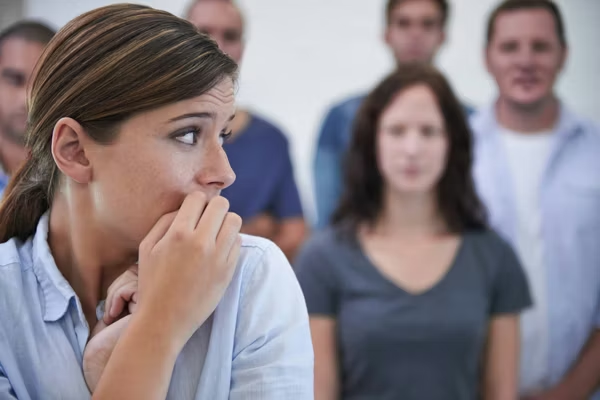
Walking into any event, big or small, it felt like all eyes were on me. Focused. Like I was a specimen under a microscope and everyone was watching — judging — waiting for me to embarrass myself.
The fear of rejection ruled my world. As a child, I never wanted to say the wrong thing, so I didn’t talk a lot. When I did, I’d run the conversation back over and over in my head until I’d convinced myself that I’d messed everything up and no one liked me.
I was told I was shy and sensitive — both of which are true. But growing up in a Korean American household, we didn’t have open conversations about anxiety or trauma or emotional well-being. Mental health carried a lot of stigma in our culture, and any emotional struggles were minimized or kept private. So, that’s what I did.
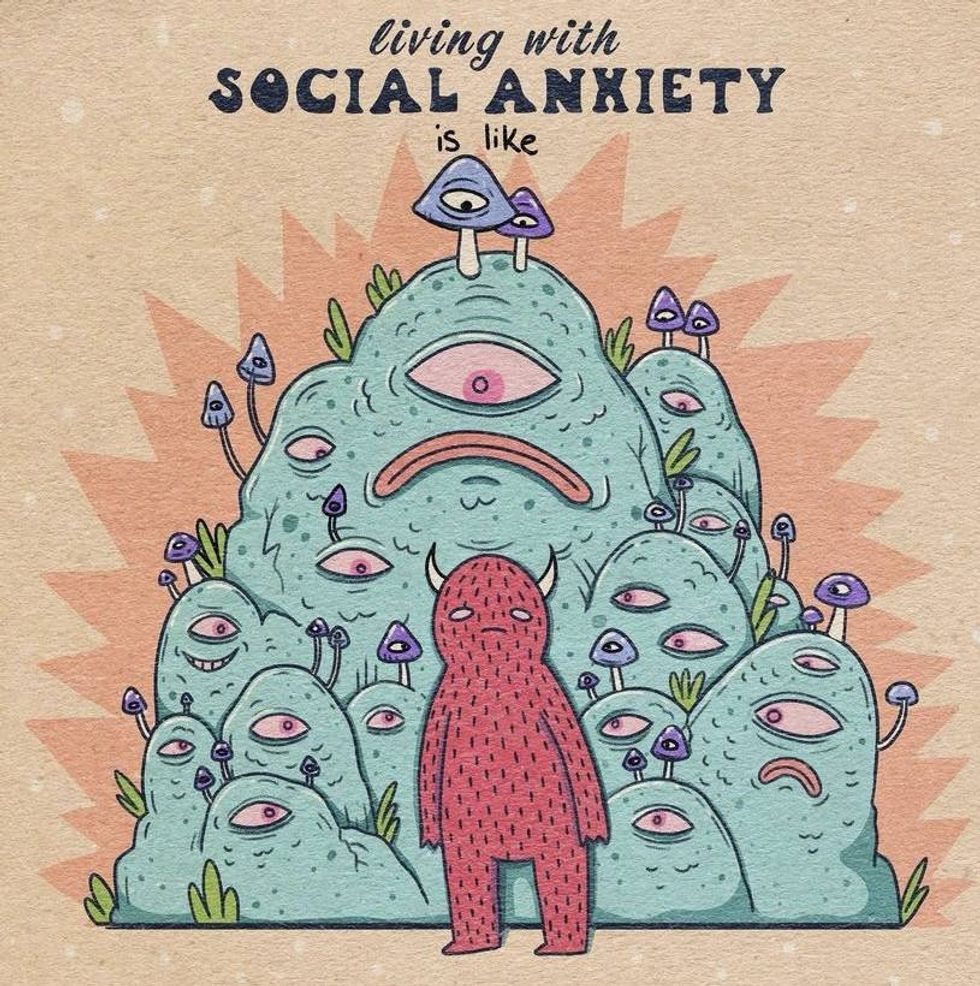 Art by Zoë
As I got older, I tried to overcome my “shyness” and put myself out there and meet new people, but something as simple as striking up a conversation was an exhausting process. I’d become hyper focused on every word and every movement like I was an outsider critiquing my performance. I was never in the moment — never off the cuff and never truly myself. Afterward, the repetitive thoughts of how I didn’t fit in, didn’t make enough eye contact, didn’t say anything right, would go on for hours — sometimes days.
As an artist, I had to dig deep to attend some industry and networking events, but otherwise I avoided social situations. I was often lonely, and at times, frustrated with myself. I couldn’t understand why everyone else seemed so confident, and I struggled with small talk.
I knew I was missing out on connections and opportunities, but most days I was too overwhelmed.
The silver lining was my art. Creating art was the only thing that helped get me out of my head. Although the relief was short-lived, it meant everything to me. And knowing that I could achieve a more positive head space sparked my curiosity for other things I could do to help redirect my thoughts.
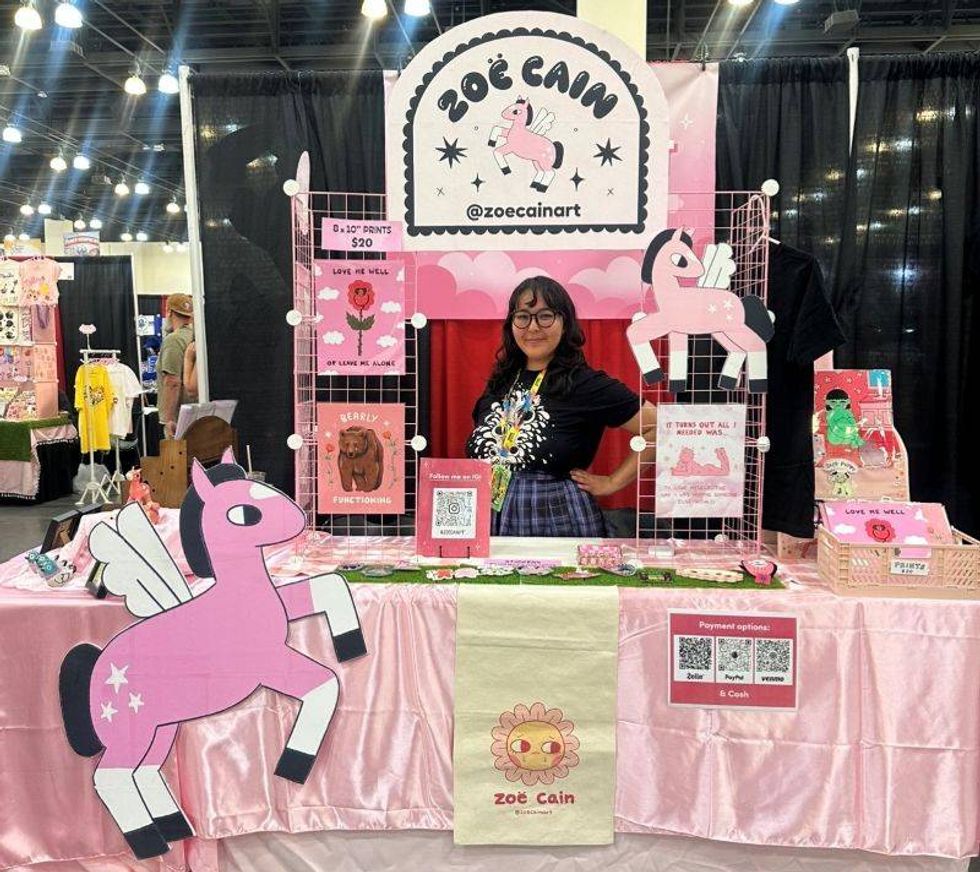 Zoë at a recent art show
I started researching mental health conditions online and saw my experiences reflected in different diagnoses, including anxiety. I knew the next step would be to talk to a professional, so I signed up for therapy. It wasn’t long before I had a diagnosis: social anxiety disorder.
Putting a name to everything I’d been experiencing — the intense scrutiny and fear — was beyond validating. For so long I’d thought my symptoms were just part of being shy and sensitive, but it was social anxiety disorder. And there were tools that could help me.
My initial goal was to get rid of my anxiety completely. But I quickly realized that anxiety wasn’t something I could eliminate. It was something I needed to work with and understand.
For me, avoidance made my anxiety worse, so I started challenging myself to do things that felt uncomfortable because I knew I’d come out of each situation with new tools in my toolkit.
After my diagnosis, I started creating illustrations about my experience with anxiety and other mental-health related conditions and posting them on social media. The whole process helped me turn my difficult emotions into something tangible and allowed me to process my experiences rather than get stuck in them.
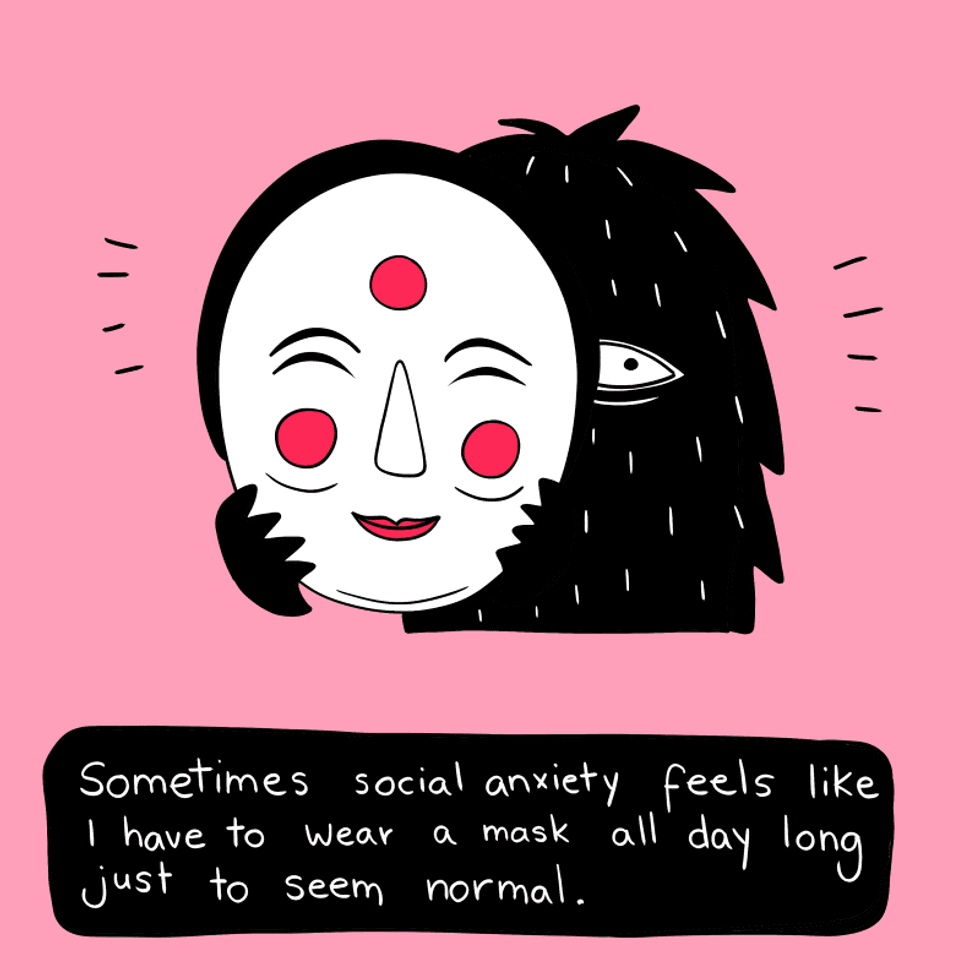 Art by Zoë
After a few posts, I started receiving messages from complete strangers that said, “I thought I was the only one who felt like this” and “I feel this way too.” Each message was life-changing for me. For so long, I thought I was the only one struggling. Now, the thing that was so isolating for me had become a bridge to other people. I realized that my personal art could create a sense of community and reduce the shame around mental health.
Mental health advocacy is deeply personal to me. Being Korean American has shaped my understanding of the strengths and the challenges that can exist within our communities. Today, I see a lot more Asian American people working in mental health spaces than I did when I was growing up. And that’s inspired me to work with different organizations like National Asian American Pacific Islander Mental Health Association (NAPIMA), The Jed Foundation and Crisis Text Line because I've seen how powerful it can be when people feel safe enough to speak honestly about their experiences and how representation matters.
For anyone struggling with social anxiety disorder, know you’re not alone. Social anxiety can come with a really harsh inner critic, and learning to change that conversation and speak to yourself with kindness can make a huge difference in your life.
I know it’s not easy. Every day I care for my mental health through a combination of therapy, creativity, meaningful relationships, boundaries, movement and rest.
One of the biggest lessons I've learned is that mental health is not something that you achieve once and never think about again. It's usually a series of small moments and experiences, like going to an event you’re afraid of or asking for help. Or showing up as yourself — fully present — even though it’s scary.
Resources
National Asian American Pacific Islander Mental Health Association (NAPIMA)
Have your own Real Women, Real Stories you want to share? Let us know.
Our Real Women, Real Stories are the authentic experiences of real-life women. The views, opinions and experiences shared in these stories are not endorsed by HealthyWomen and do not necessarily reflect the official policy or position of HealthyWomen.
- When I Found Out I Was Autistic, I Finally Stopped Masking and Started Trusting Myself ›
- Ketamine Therapy Gave Me the Joy I Never Had with Treatment-Resistant Depression ›
- What Is a Highly Sensitive Person? ›
- Social Anxiety: When Avoiding People Is More than Just Being Shy ›