

Search
Latest Stories



Newsletter Sign-Up
Newsletter

May is Mental Health Awareness Month.
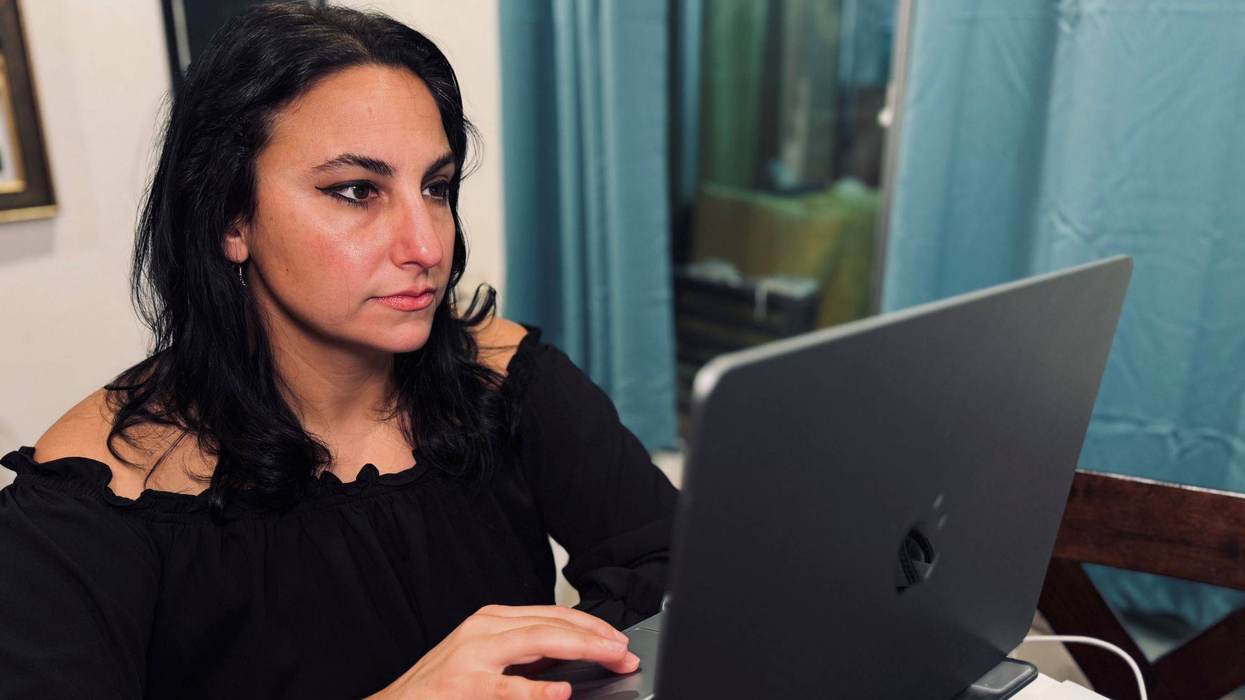
Pleasantries were the stuff of nightmares for Kristen Rogers.
A random run-in with a coworker would cause her heart to pound so hard she thought it would leap out of her chest. Her mind would go blank — she’d stammer trying to make conversation while pools of sweat collected under her arms. Even impromptu chats with close friends or family caused this type of extreme anxiety.
But the fallout was even worse.
“I would always end those interactions feeling really embarrassed and ashamed, and I’d ruminate for hours or days about how the other person must think I'm stupid or incompetent,” Rogers said. “I would get so upset and stressed and physically sick — it was an unfortunate cycle.”
Rogers was a teenager when the symptoms started and they only intensified as she got older. She didn’t date or make a lot of new friends — she wouldn’t even dance at concerts because she was terrified that everyone was watching her. Judging her.
Rogers figured she was just an anxious person. But when she started seeing a psychiatrist in 2020, she learned it wasn’t just anxiety — she had social anxiety disorder.
What is social anxiety disorder?
Social anxiety disorder (SAD) is the persistent, intense fear of social or performance situations where a person anticipates being scrutinized, judged or humiliated. For people living with SAD, common everyday activities like talking to new people, eating in public or giving a presentation at work can cause crippling anxiety and fear.
“When you have social anxiety disorder, that fear of being revealed as inadequate or worrying that people are going to judge you gets in the way of life,” said Ellen Hendriksen, Ph.D., psychologist and author of How to Be Yourself: Quiet Your Inner Critic and Rise Above Social Anxiety.
Hendriksen said people with social anxiety experience distress, impairment or both. Distress in this context means discomfort, stress, anxiety and feeling upset before, during and/or after a social interaction. Impairment meaning social anxiety stops you from doing things you want to do. “If you turn down a promotion at work because it would make you have to go visit satellite offices and talk with a lot of strangers — that's impairment,” Hendriksen said.
People living with SAD also experience physical reactions such as blushing, rapid heart rate, nausea, trembling, lightheadedness and difficulty talking in social situations.
“You might feel your stomach drop, you might turn red, you might get sweaty — all the classic fight or flight physical symptoms,” Hendriksen said.
Symptoms of SAD can vary from person to person and change over time. And while it’s completely normal to feel nervous or anxious now and then, SAD is a chronic medical condition that requires treatment.
The root of social anxiety
Social anxiety disorder isn’t caused by one thing. Instead, SAD is usually a combination of biology, life experiences and learned patterns, according to Laura Johnson, LMFT, LPCC, cognitive behavior therapist and author of Social Anxiety For Dummies.
When it comes to biology, Johnson said people with SAD may be born with a tendency to be inhibited. “Social anxiety could be linked to having an overactive amygdala, the part of the brain that controls your fear response.”
Having a family history of SAD may also increase risk. One study found people with a first-degree relative (parents, sibling) with SAD are up to six times more likely to have the disorder.
And because SAD usually starts in childhood or early teenage years, negative life events such as abuse, neglect or growing up with a medical condition that causes unwanted attention and how your parents raised you can be risk factors for SAD.
“Some ways your parents could have influenced the development of social anxiety include modeling anxious behaviors, being overly protective or being critical,” Johnson said.
Women and social anxiety disorder
SAD affects both men and women, but research shows women are more likely to have SAD — and have more severe symptoms as well as higher levels and greater numbers of social fears — compared to men.
“From a young age, many women are subtly — and sometimes not so subtly — taught to be agreeable, likable and not take up too much space. That can translate into over-monitoring how they come across, second-guessing their own opinions and holding back in conversations, especially in environments like the workplace where men may dominate discussions or interrupt, which can further reinforce self-doubt,” Johnson said.
Although SAD typically develops earlier in life, major life events such as moving to a new city or being diagnosed with an illness may trigger symptoms in adulthood for the first time.
“Women in midlife with social anxiety disorder have probably had it for decades and the key thing to know is that social anxiety disorder is fed and watered and maintained by avoidance, so it’s important to try to face your fears and think about where you’ve built avoidance into your life,” Hendriksen said.
Social anxiety never goes away — but it can get better
The most common treatments for social anxiety disorder are prescription medications and cognitive behavioral therapy (CBT), which involves identifying and reframing negative or irrational thoughts over time.
“The most effective treatment is cognitive behavior therapy, especially when it includes exposure,” Johnson said. “That means gradually facing the situations you fear instead of avoiding them, while also learning how to respond differently to the thoughts driving the anxiety.”
Exposure exercises involve identifying the fear and worst-case scenarios in social situations and testing them out to see if the outcome is really as bad as the person with SAD thinks it would be. “The point is to face our fears, and our feared outcomes are almost always worse than what actually happens. Even if the worst-case scenario happens, we have to remind ourselves that we are able to cope and that we can handle what life throws our way,” Hendriksen said.
For Rogers, CBT made a huge difference. “In a lot of ways, CBT saved my life,” she said. “I had some early life experiences that really instilled in me perfectionism, so part of it was having to undo that and find relationships and people who are much more open-minded in terms of not everything having to be perfect all the time.”
It’s been six years since Rogers started therapy, and she no longer experiences social anxiety every day. When she does, it’s nowhere near as intense as it once was. “I still find myself sometimes taking different routes to avoid conversation or feeling weird about the fact that I don't always have something to say when I run into someone, but more often than not I try to strike up a conversation whether that's with strangers or colleagues,” she said.
Rogers’ advice for anyone struggling with SAD: Find a good cognitive behavioral therapist. “The process can be painful and challenging and sometimes you may not want to hear what the therapist has to say, but it really does get better.”








Popular
1
2
3

Why Some Women Don’t Have Orgasms
Nov 01, 2021
4

Don't Panic at Your Child's First Pubic Hair
Dec 14, 2015
5

5 Ways to Help Him Last Longer in Bed
Aug 05, 2014
6

What to Do When Your Partner Is Addicted to Porn
Aug 18, 2017
Support Our Mission
Keep Trusted Women’s Health Information Free
Your donation ensures every woman continues to have access to credible health content.More Stories







Everything you need to know about women’s health — in one place.