
Vaccines have been saving lives since the first smallpox vaccine was developed in 1798. For most people, vaccines are a routine part of life, starting when we're newborns, continuing through our pediatric checkups to attend school, and continuing with annual flu shots and travel requirements.
But vaccines have recently been thrust into the spotlight thanks to the COVID-19 virus. In the face of a global pandemic, COVID vaccines have been a beacon of hope and a powerful reminder of the critical role vaccines play in keeping our communities safe and healthy. However, the pandemic has also showcased the public health challenges that vaccines face: We've witnessed the spread of misinformation about vaccines, the uneven playing field when it comes to accessing vaccines and the severe consequences when vaccines aren't used.
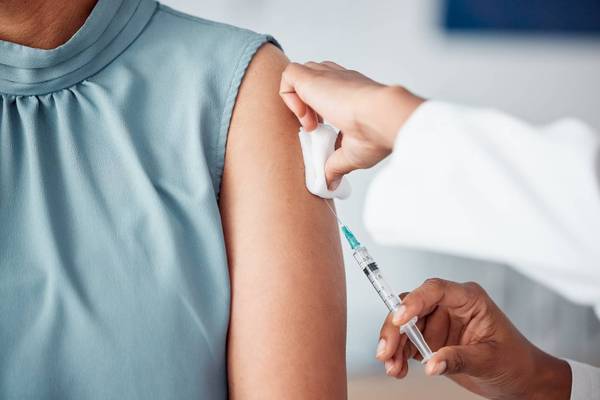
But the COVID vaccines are not the only vaccines that face these challenges. Despite well-documented evidence of the efficacy, safety and benefits of maternal immunization and the recommendations of physicians, many pregnant women are not receiving the vaccines that protect against influenza, nor the vaccine that protects against tetanus, diphtheria and whooping cough (Tdap). According to estimates from the Centers for Disease Control and Prevention (CDC), only 40.3 percent of pregnant women received both flu and Tdap vaccines in 2019–2020, and rates were far lower in some populations due to racial and ethnic coverage disparities. Without these critical vaccines, mothers and their babies are left vulnerable to potentially life-threatening complications should they contract these diseases.
The longstanding barriers contributing to coverage gaps in maternal immunization have been well-documented, and in response, many legislative-, programmatic- and community-level efforts have been created to address commonly reported barriers to vaccination. Yet despite these efforts, many pregnant women continue to go without maternal vaccinations.
Concerned about the persistence of suboptimal maternal vaccination rates, a group of leading maternal and vaccine stakeholders published a white paper that aims to provide a better understanding of the factors that may be driving and contributing to continued maternal immunization challenges even in the face of efforts to increase vaccinations. The real question is, What is standing in the way of getting life-saving vaccines into pregnant women's arms?
Findings presented in the white paper Improving Maternal Immunization Status: Working Toward Solutions to the Policy, Data, and Implementation Challenges Driving Suboptimal U.S. Maternal Vaccination Rates identify two primary challenges with an impact on efforts to close vaccination gaps: an inadequate collection of maternal immunization data and a lack of on-the-ground coordination and implementation of immunization programs.
According to the in-depth analysis detailed in the paper, "Without better data collection, sharing and analysis, it is difficult to fully understand exactly who does not receive maternal vaccinations and why, and to determine how to best address the situation. Likewise, a lack of coordination between federal programs and the teams responsible for carrying out these programs within local communities presents implementation challenges that also impede efforts to improve maternal immunization rates."
The authors of the paper point out that while COVID-19 has exacerbated maternal immunization challenges, it has also raised important conversations about existing barriers to vaccination and prompted increased policy momentum and investment into resources and infrastructure related to immunization. This means that maternal health advocates now have a unique opportunity to advance meaningful solutions to address the issues of data collection and intervention coordination to improve rates of maternal immunization.
Key Insights: High Quality Data, Monitoring and Reporting
- More effectively collecting, monitoring and reporting on maternal immunization data that leverages information technology will be critical to realizing meaningful progress against suboptimal vaccination rates among pregnant individuals.
- To achieve this goal, widely used vaccine registries or immunization information systems (IISs) with complete high-quality data will be vital, as comprehensive IIS provide timely, accurate information on immunization, serving as a powerful tool for addressing current coverage rates, gaps and disparities, and enabling the development of effective and targeted efforts in areas with highest need.
- Several pieces of recent legislation — including the 21st Century Cures Act, the proposed Immunization Infrastructure Modernization Act and The Black Maternal Health Momnibus Act — include language aimed at expanding and improving data collection and interoperability, demonstrating some promising movement across the policy landscape.
- Additionally, the COVID-19 outbreak — and most recently the rollout of COVID vaccines — have prompted renewed momentum around data collection and IIS's among policymakers.
Key Insights: On-the-Ground Coordination and Implementation
- An emphasis on coordination between the programs being developed at the federal level and HCPs who are implementing on the ground, and solutions that aim to address the most prominent access challenges will be critical to advancing maternal immunization efforts going forward.
- Solving for these on-the-ground implementation challenges will require prioritizing a range of diverse solutions. A handful of states have established some promising measures that should be looked to for evidence of the impact these changes can have on reducing gaps in maternal immunization. Forward-looking solutions to encourage maternal immunization currently underway in select states include:
- Incentivizing payments in the managed care delivery system for HCPs who administered the Tdap vaccine as part of their prenatal care
- Allowing HCPs to bill health plans outside of capitation rates
- Providing Tdap starter doses to clinics and encouraging group purchasing of vaccines
- Leveraging vaccination management services, or third-party tech platforms that provide end-to-end vaccine management.
White paper authors represent the following organizations: Adult Vaccine Access Coalition, American College of Obstetricians and Gynecologists, American Public Health Association, AHIP, Association of Maternal & Child Health Programs, Association of Women's Health, Obstetrics and Neonatal Nurses, HealthyWomen, Immunization Action Coalition, March of Dimes, National Association of Hispanic Nurses, National Black Nurses Association, National Coalition for Infant Health, National Minority Quality Forum, Society for Maternal-Fetal Medicine, and Vaccinate Your Family.
Read more and access the full white paper here.
- Can Living in the U.S. Increase Your Risk of Preterm Birth? ›
- Clinically Speaking: Questions to Ask Your Healthcare Provider About Preterm Birth ›
- Why Aren’t Pregnant Women Getting Vaccinated? ›
- The Role of Nurse Practitioners in Women’s Health: Maternal Health - HealthyWomen ›