
Search
Latest Stories


Newsletter Sign-Up
Newsletter
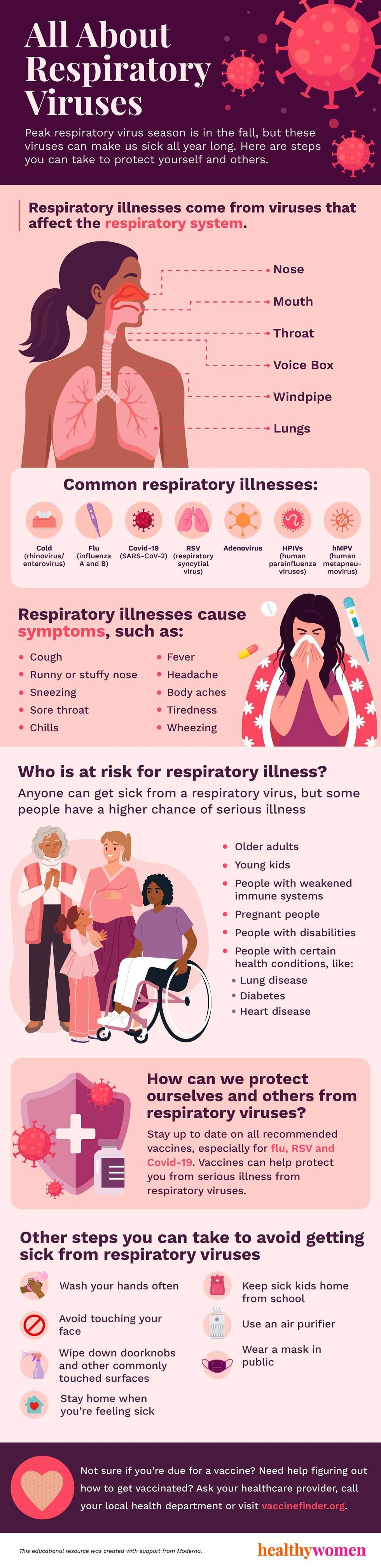
Respiratory illnesses come from viruses that affect the respiratory system .
Common respiratory illnesses:
- Cold (rhinovirus/enterovirus)
- Flu (influenza A and B)
- Covid-19 (SARS-CoV-2)
- RSV (respiratory syncytial virus)
- Adenovirus
- HPIVs (human parainfluenza viruses)
- hMPV (human metapneumovirus)
Respiratory illnesses cause symptoms, such as:
- Cough
- Runny or stuffy nose
- Sneezing
- Sore throat
- Chills
- Fever
- Headache
- Body aches
- Tiredness
- Wheezing
Who is at risk for respiratory illness?
Anyone can get sick from a respiratory virus, but some people have a higher chance of serious illness
- Older adults
- Young kids
- People with weakened immune systems
- Pregnant people
- People with disabilities
- People with certain health conditions, like:
- Lung disease
- Diabetes
- Heart disease
How can we protect ourselves and others from respiratory viruses?
Stay up to date on all recommended vaccines, especially for flu, RSV and Covid-19 . Vaccines can help protect you from serious illness from respiratory viruses.
Other steps you can take to avoid getting sick from respiratory viruses
- Wash your hands often
- Avoid touching your face
- Wipe down doorknobs and other commonly touched surfaces
- Stay home when you’re feeling sick
- Keep sick kids home from school
- Use an air purifier
- Wear a mask in public
Not sure if you’re due for a vaccine? Need help figuring out how to get vaccinated? Ask your healthcare provider, call your local health department or visit vaccinefinder.org.
This educational resource was created with support from Moderna.






Popular
1
2
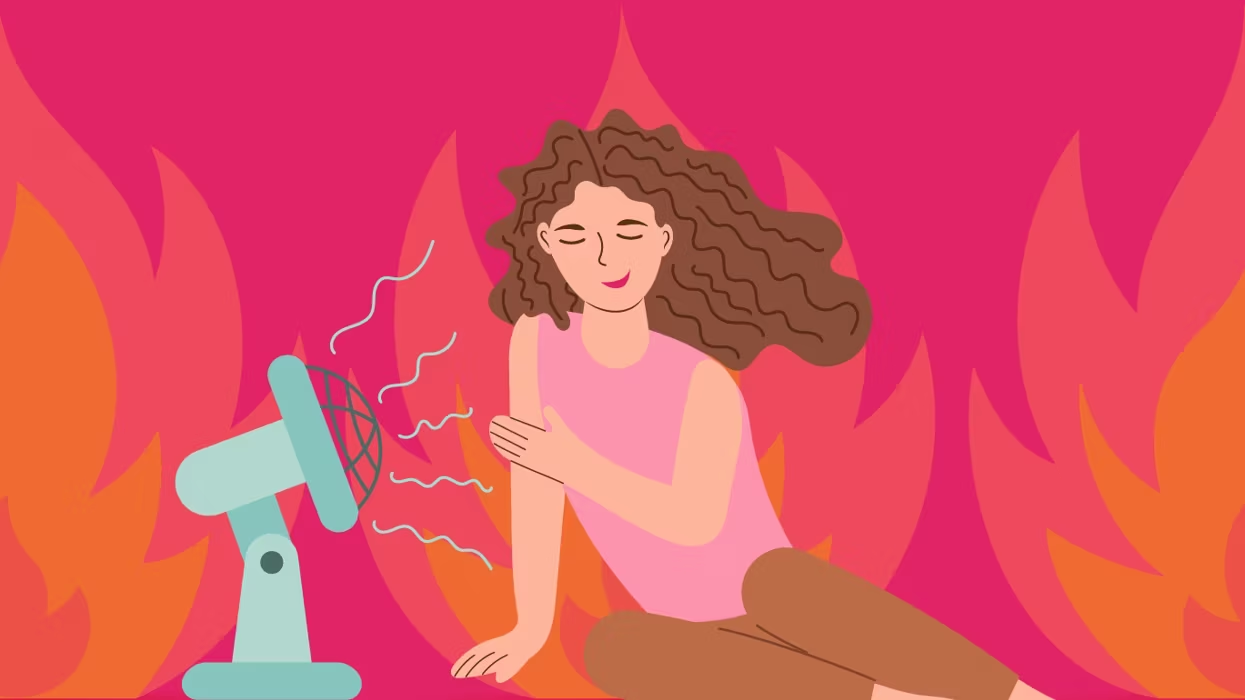
What Happens in the Body During a Hot Flash
Sep 03, 2026
3
Understanding Menopause Stages and Terms
Sep 08, 2026
4

5
6
¿Qué es la urticaria crónica espontánea (UCE)?
Jun 29, 2026
Support Our Mission
Keep Trusted Women’s Health Information Free
Your donation ensures every woman continues to have access to credible health content.More Stories






Everything you need to know about women’s health — in one place.