Your BodySjögren'sLupusHepatitisSclerodermaPrimary Biliary Cholangitis (PBC)Nonalcoholic Fatty Liver Disease and Nonalcoholic SteatohepatitisConditions & Treatments

Your thyroid is a little butterfly-shaped gland in your neck that makes and releases hormones. These hormones help regulate many important body functions like metabolism and body temperature.
If your thyroid isn’t working properly, you may develop a thyroid condition, like Graves' disease.
“Women are more likely to have Graves' disease than men, and we do see all ages,” said Malini Gupta, M.D., ECNU, FACE, FITS, an endocrinologist and director of G2Endo.
We asked Gupta what women need to know about Graves' disease and the treatment options for the condition.
Graves' disease is an autoimmune disease where antibodies mistakenly attack the healthy thyroid. The inflammation and damage caused by antibodies can lead your body to make more thyroid hormone than it needs, called hyperthyroidism. Graves’ disease is the most common form of hyperthyroidism.
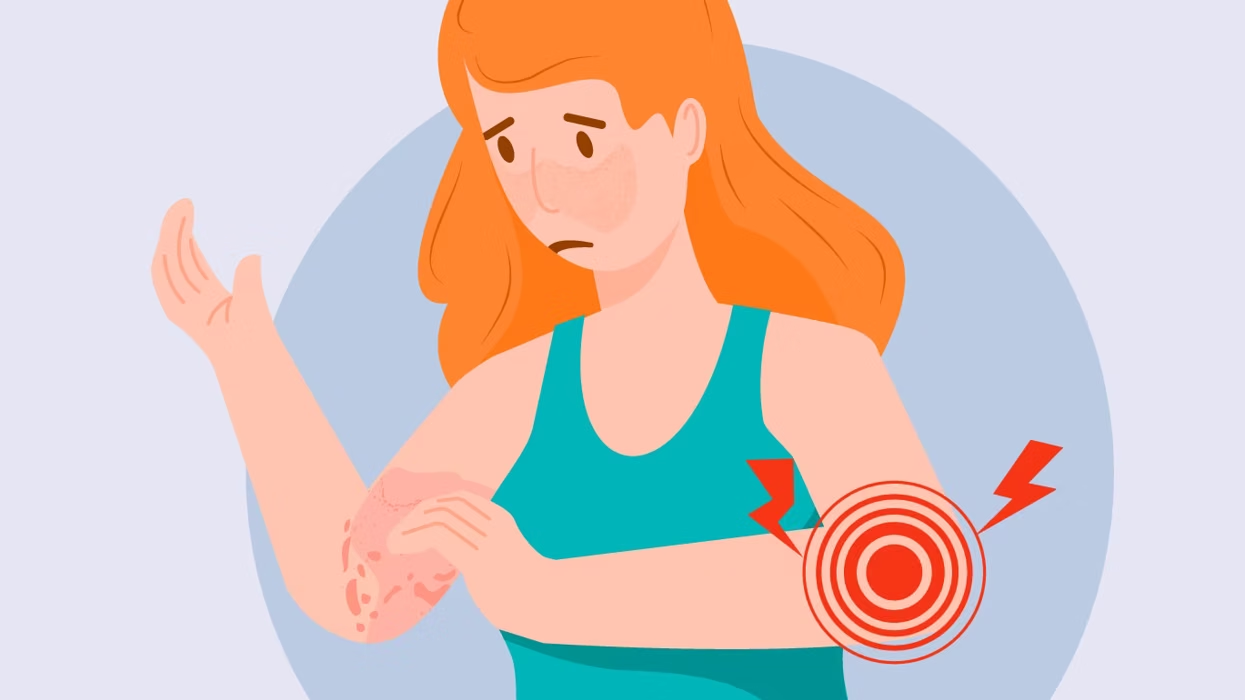
Graves’ disease can cause a variety of symptoms that can affect your quality of life, daily functioning and mental health including:
About 4 out of 10 of people with Graves’ have a separate but closely related autoimmune disease called thyroid eye disease, which can cause bulging, watering and redness of the eyes.
A healthcare provider can perform a simple blood test that can tell you if you have hyperthyroidism. Antibody testing, and sometimes a nuclear medicine test called a thyroid uptake and scan, will help your healthcare team determine whether you have Graves' disease.
After you’re diagnosed with Graves' disease, your primary healthcare provider will send you to an endocrinologist who usually specializes in thyroid conditions to monitor your thyroid levels and guide treatment.
Currently, there are three traditional treatment options for Graves' disease: oral antithyroid medications, radioactive iodine and surgery. These options target the thyroid to stabilize hormone levels rather than addressing the underlying autoimmune cause of Graves’ disease.
Methimazole (MMI) and propylthiouracil (PTU) are the two common oral antithyroid medications that block the production of thyroid hormone in the gland.
Radioactive iodine (RAI) is another oral medication that has been used to slowly destroy the cells making thyroid hormone. And sometimes a thyroidectomy, or surgical removal of the thyroid gland, plays a role in treatment. Both RAI and a thyroidectomy result in lifelong hypothyroidism (too little thyroid hormone) and require someone to be on thyroid hormone medication for the rest of their life.
There are also new medications undergoing clinical trials that are designed to address the root cause of Graves' disease and may offer a new option for people who struggle to retain control.
You often will know your treatment for Graves' disease is working when your thyroid levels and symptoms improve. However, many people will relapse after a certain time on antithyroid medications or after stopping medications. When this happens, you may need a different antithyroid medication or other treatment.
If you're still having symptoms while you're being treated for Graves' disease, even if your levels improve, it’s important that you speak to your healthcare provider because you may need a secondary treatment. This may mean that you could be placed on heart medications to keep the heart rate down, an inhaler to help with breathing or even acne medications.
Sometimes, too much antithyroid medication can cause what is called iatrogenic hypothyroidism, where a person will develop hypothyroid symptoms and levels, and the thyroid dose will need to be adjusted.
If Graves' disease is not treated, it can lead to heart failure, loss of bone density and, in severe cases, it can lead to thyroid storm, which is a rush of hormones that can be fatal.
This educational resource was created with support from Immunovant, a HealthyWomen Corporate Advisory Council member.





Support Our Mission