
What are blood cancers?
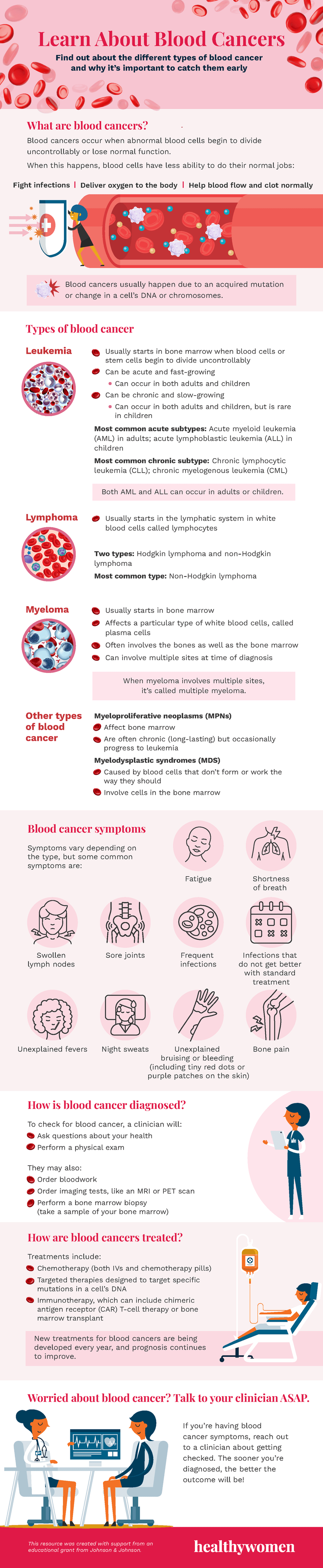
Blood cancers occur when abnormal blood cells begin to divide uncontrollably or lose normal function.
When this happens, blood cells have less ability to do their normal jobs:
- Fight infections
- Deliver oxygen to the body
- Help blood flow and clot normally
Blood cancers usually happen due to an acquired mutation or change in a cell’s DNA or chromosomes.
Types of blood cancer
- Leukemia
- Usually starts in bone marrow when blood cells or stem cells begin to divide uncontrollably
- Can be acute and fast-growing
- Can occur in both adults and children
- Can be chronic and slow-growing
- Can occur in both adults and children, but is rare in children
Most common acute subtypes: Acute myeloid leukemia (AML) in adults; acute lymphoblastic leukemia (ALL) in children
Most common chronic subtype: Chronic lymphocytic leukemia (CLL); chronic myelogenous leukemia (CML)
Both AML and ALL can occur in adults or children.
- Lymphoma
- Usually starts in the lymphatic system in white blood cells called lymphocytes
Two types: Hodgkin lymphoma and non-Hodgkin lymphoma
Most common type: Non-Hodgkin lymphoma
- Myeloma
- Usually starts in bone marrow
- Affects a particular type of white blood cells, called plasma cells
- Often involves the bones as well as the bone marrow
- Can involve multiple sites at time of diagnosis
When myeloma involves multiple sites, it’s called multiple myeloma.
Other types of blood cancer
- Myeloproliferative neoplasms (MPNs)
- Affect bone marrow
- Are often chronic (long-lasting) but occasionally progress to leukemia
- Myelodysplastic syndromes (MDS)
- Caused by blood cells that don’t form or work the way they should
- Involve cells in the bone marrow
Blood cancer symptoms
Symptoms vary depending on the type, but some common symptoms are:
- Fatigue
- Shortness of breath
- Swollen lymph nodes
- Sore joints
- Frequent infections
- Infections that do not get better with standard treatment
- Unexplained fevers
- Night sweats
- Unexplained bruising or bleeding (including tiny red dots or purple patches on the skin)
- Bone pain
How is blood cancer diagnosed?
To check for blood cancer, a clinician will:
- Ask questions about your health
- Perform a physical exam
They may also:
- Order bloodwork
- Order imaging tests, like an MRI or PET scan
- Perform a bone marrow biopsy (take a sample of your bone marrow)
How are blood cancers treated?
Treatments include:
- Chemotherapy (both IVs and chemotherapy pills)
- Targeted therapies designed to target specific mutations in a cell’s DNA
- Immunotherapy, which can include chimeric antigen receptor (CAR) T-cell therapy or bone marrow transplant
New treatments for blood cancers are being developed every year, and prognosis continues to improve.
Worried about blood cancer? Talk to your Clinician ASAP.
If you’re having blood cancer symptoms, reach out to a clinician about getting checked. The sooner you’re diagnosed, the better the outcome will be!
This resource was created with support from an educational grant from Johnson & Johnson.
- Facts About Leukemia - HealthyWomen ›
- Información comprobada de la leucemia - HealthyWomen ›
- Improving Multiple Myeloma Survival Rates For Underserved Women - HealthyWomen ›