

Search
Latest Stories




Newsletter Sign-Up
Newsletter

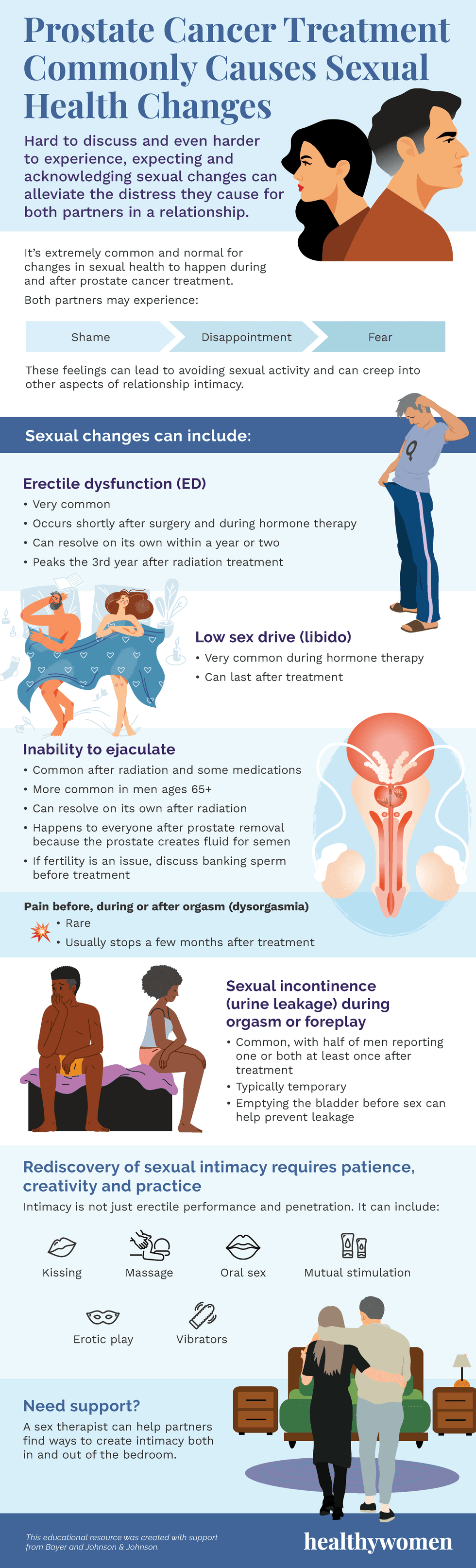
It’s extremely common and normal for changes in sexual health to happen during and after prostate cancer treatment .
Both partners may experience:
- Shame
- Disappointment
- Fear
These feelings can lead to avoiding sexual activity and can creep into other aspects of relationship intimacy.
Sexual changes can include:
Erectile dysfunction (ED)
- Very common
- Occurs shortly after surgery and during hormone therapy
- Can resolve on its own within a year or two
- Peaks the 3rd year after radiation treatment
Low sex drive (libido)
- Very common during hormone therapy
- Can last after treatment
Inability to ejaculate
- Common after radiation and some medications
- More common in men ages 65+
- Can resolve on its own after radiation
- Happens to everyone after prostate removal because the prostate creates fluid for semen
- If fertility is an issue, discuss banking sperm before treatment
Pain before, during or after orgasm (dysorgasmia)
- Rare
- Usually stops a few months after treatment
Sexual incontinence (urine leakage) during orgasm or foreplay
- Common, with half of men reporting one or both at least once after treatment
- Typically temporary
- Emptying the bladder before sex can help prevent leakage
Rediscovery of sexual intimacy requires patience, creativity and practice
Intimacy is not just erectile performance and penetration. It can include:
- Kissing
- Massage
- Oral sex
- Mutual stimulation
- Erotic play
- Vibrators
Need support?
A sex therapist can help partners find ways to create intimacy both in and out of the bedroom.
This educational resource was created with support from Bayer and Johnson & Johnson.








Popular
1

2

5 Ways to Help Him Last Longer in Bed
Aug 05, 2014
3

Why Some Women Don’t Have Orgasms
Nov 01, 2021
4

What to Do When Your Partner Is Addicted to Porn
Aug 18, 2017
5
Intimacy Without Intercourse
Sep 27, 2011
6

Support Our Mission
Keep Trusted Women’s Health Information Free
Your donation ensures every woman continues to have access to credible health content.More Stories






Everything you need to know about women’s health — in one place.