

Search
Latest Stories



Newsletter Sign-Up
Newsletter

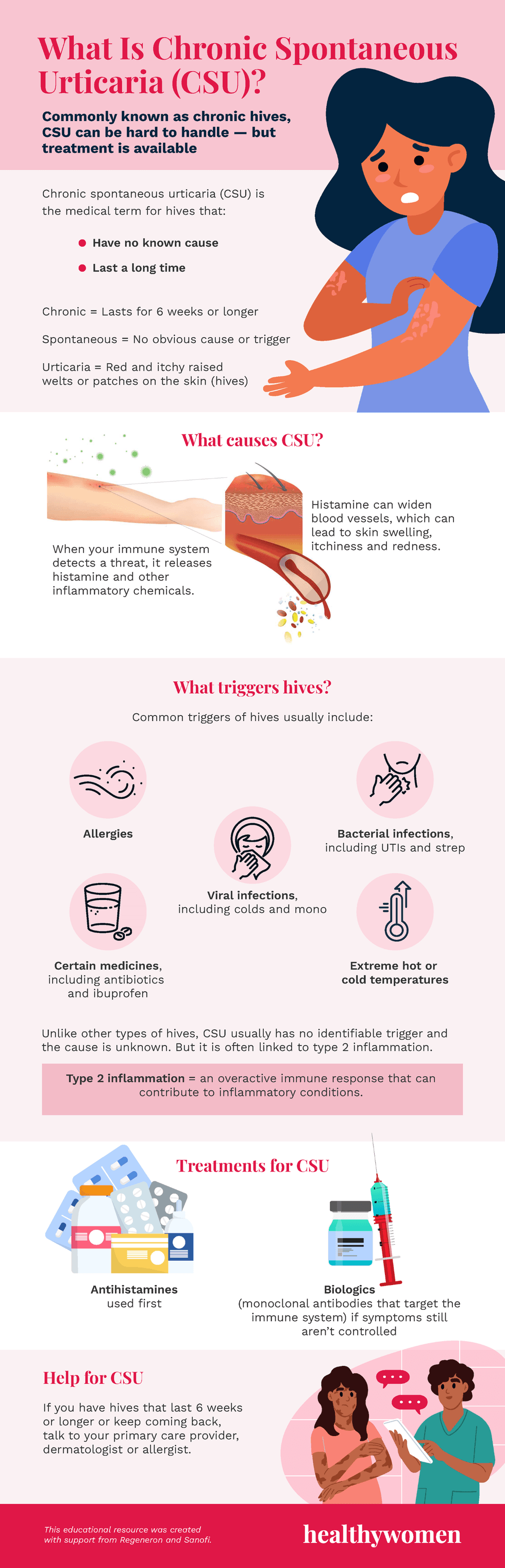
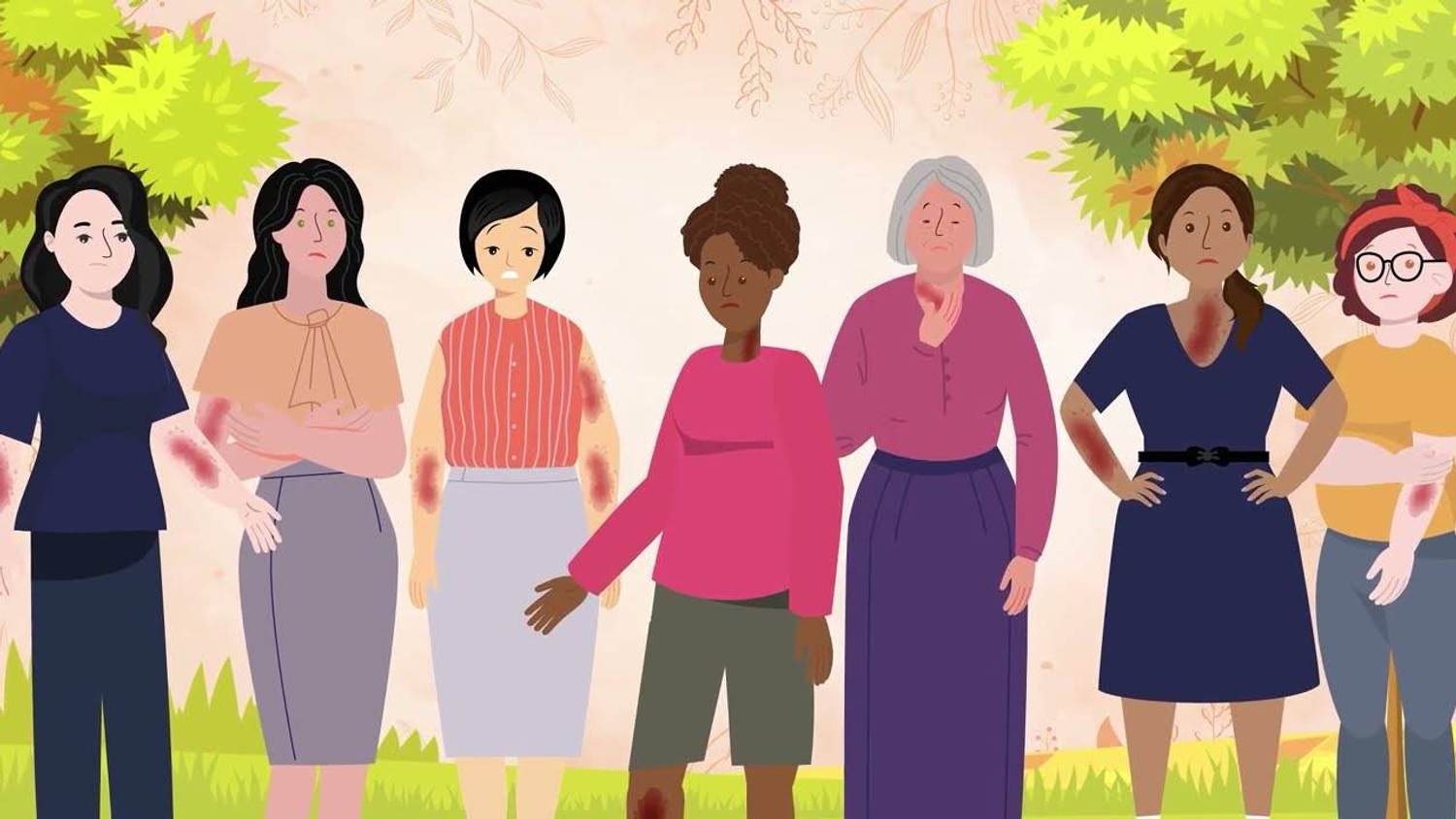
Chronic spontaneous urticaria (CSU) is the medical term for hives that:
- Have no known cause
- Last a long time
Chronic = Lasts for 6 weeks or longer
Spontaneous = No obvious cause or trigger
Urticaria = Red and itchy raised welts or patches on the skin (hives)
What causes CSU?
When your immune system detects a threat, it releases histamine and other inflammatory chemicals.
Histamine can widen blood vessels, which can lead to skin swelling, itchiness and redness.
What triggers hives?
Common triggers of hives usually include:
- Allergies
- Bacterial infections, including UTIs and strep
- Viral infections, including colds and mono
- Certain medicines, including antibiotics and ibuprofen
- Extreme hot or cold temperatures
Unlike other types of hives, CSU usually has no identifiable trigger and the cause is unknown. But it is often linked to type 2 inflammation .
Type 2 inflammation = an overactive immune response that can contribute to inflammatory conditions.
Treatments for CSU
- Antihistamines used first
- Biologics (monoclonal antibodies that target the immune system) if symptoms still aren’t controlled
Help for CSU
If you have hives that last 6 weeks or longer or keep coming back, talk to your primary care provider, dermatologist or allergist.
This educational resource was created with support from Regeneron and Sanofi.








Popular
1

2

¿Qué es la urticaria crónica espontánea (UCE)?
Jun 29, 2026
3

Metabolic Syndrome 101
Sep 28, 2026
4
Biologics for Treating Asthma
Sep 22, 2026
5
Comic: Edna Gets an Endoscopy
Aug 05, 2026
6
Historieta: Edna se hace una endoscopía
Aug 05, 2026
Support Our Mission
Keep Trusted Women’s Health Information Free
Your donation ensures every woman continues to have access to credible health content.More Stories




Everything you need to know about women’s health — in one place.