As told to Marnie Goodfriend
January is Cervical Cancer Awareness Month.
In March 2022, I was having lower back pain and started bleeding during intimacy and other activities. I felt bloated and tired, and the bleeding was concerning because my uterus was removed in 2016 because I had endometriosis and adenomyosis.
When I had my routine Pap test in August, I started bleeding heavily. My OB-GYN told me that my cervix looked “very angry.” The results showed inflammation and blood in the sample, which seemed consistent with the bleeding that occurred during the procedure. My cells seemed irregular, but not alarming, she assured me.
Something told me that the bleeding after the Pap test was not normal. I insisted that she look more closely, and she agreed to do a colposcopy and a biopsy of my cervix. I bled a lot after this procedure, too, so she ran more tests, looking for anything, including cancer, but thought it was something else or nothing. I was frustrated. I wanted to give my OB-GYN the benefit of the doubt, but I pushed for more testing because my cervix was clearly not healthy. During that time, she told me she felt confident it wasn’t cancer but provided no other answers.
A few weeks later, all of the results were back except for the cancer test. My OB-GYN suggested surgery to remove my cervix because it was very irritated and wasn’t healing. I’d already had six surgeries for other conditions, and told her I wouldn’t have another unless it was absolutely necessary.
On October 5, the same day I had my uterus removed six years earlier, my OB-GYN called to tell me the results indicated I had early-stage adenocarcinoma, a type of cervical cancer. She said they caught it early and immediately referred me to a gynecologic oncologist. I left my desk to call my mom and my now husband, and went back to work. I remember my husband texting me, “Could you please stop working and come home?” I think my lack of reaction was the shock of receiving a cancer diagnosis. I didn’t know how to process what was happening to me.
My husband and I went to the oncologist at Mitchell Cancer Institute the following day. It was an amazing experience to feel seen and heard. The oncologist immediately recognized I had a tumor and said I was at least stage 1. She did another biopsy, and I was scheduled for more tests, including a PET, CT and an MRI, and another appointment to review my results. I was overwhelmed with decisions about how to move forward with my life: When and how do I tell people? How do I manage all the tests I'll have, and how will they make me feel?
At the follow-up appointment, I was diagnosed with stage 1B3 cervical cancer, meaning the tumor, which measured just over four centimeters, hadn’t spread to my lymph nodes. The doctor said my case would be presented to the tumor board to finalize the diagnosis and treatment.
After additional review by the tumor board, they determined that I had stage 2B cancer because the tumor had just broken through the uterine lining. I was not able to have surgery to remove the tumor due to its size and spread. Radiation and chemotherapy were my only treatment options. During testing and staging, I continued to work around appointments and had the flexibility to work from home one day a week. Work was an escape — it distracted me and gave me a sense of control. I also spent a lot of time researching cervical cancer to understand what was happening to me.
Even though my diagnosis strengthened my relationship with my husband, I knew I needed emotional support and community. That’s when I found Cervivor, a global group for cervical cancer patients, and a local group called Sisterhood of Survivors (SOS) through my cancer center. Cervivor helped me understand what to expect and offered answers from people who had gone through similar experiences. The local SOS group came to my rescue — giving me rides to appointments and validating my experience. I was so grateful to have people in my life who knew what I was going through and could show up for me when I needed it most.
I started painting as a hobby during the pandemic, but it quickly became a form of therapy throughout diagnosis and treatment, and changed how I was creating. Earlier paintings during diagnosis featured colors, textures and patterns that represented my frustration. Later, my work became a way to provide hope to my survivor groups. I wanted to express what it’s like to not be seen and heard as a woman and how you’re perceived as a female cancer patient.
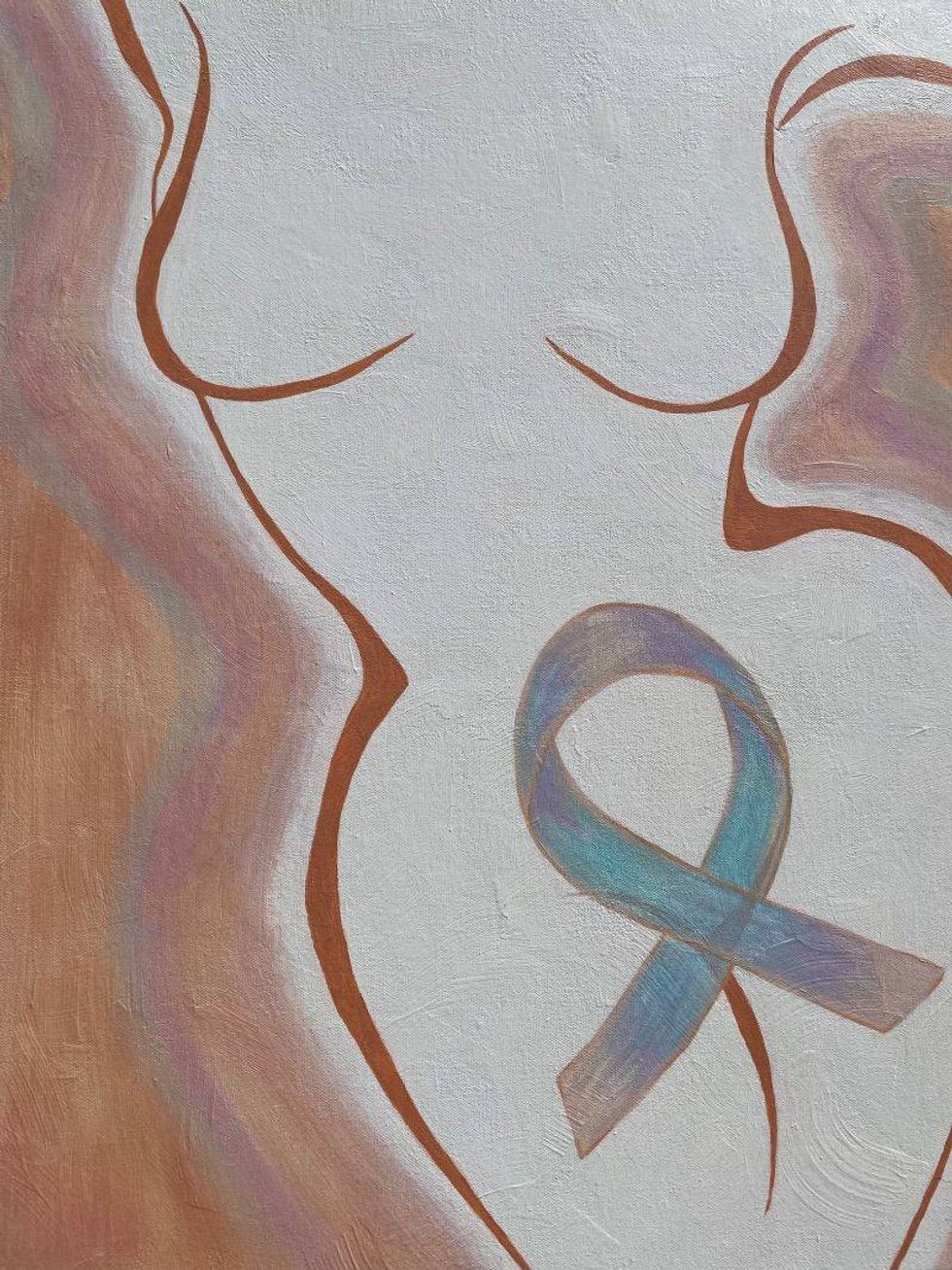 A painting by Dani, 2024
I had surgery in November to lift my bowels off my cervix to help clear the radiation area and remove my ovaries. Afterward, I went into immediate surgical menopause and started working from home until I began chemo and radiation treatment. By January, I was experiencing vertigo, and it was difficult just to sit upright. As a talent field recruiter, I kept moving projects forward as long as I could, but it became clear to me then that I couldn’t continue. I actually felt good about quitting work because I was finally able to completely focus on my own care.
Thankfully, my treatment was successful, and I was officially in remission by August 2023. Chemo takes its toll on your body, so, in addition to having a Pap test every six months, I see a myriad of specialists and take different medications for the side effects, including a newly diagnosed autoimmune disorder. By April, I was able to return to work, and the following year I was promoted to team manager. I love my job, but I was also financially motivated to return. Even though I have great health benefits, there are still a lot of out-of-pocket expenses.
I've also seen a therapist who has helped center and manage the trauma and PTSD I’ve experienced from parts of the cancer treatment. I advocate for self-care whenever I can. It’s not just getting your nails or hair done. Those are great things too, but self-care is about going to your doctor's appointments and getting those checkups and not ignoring something that feels off. It’s listening to that inner voice that says, “Something’s not right here.”
Don’t ignore your health symptoms. Taking the time to know what’s going on with your body can save your life.
Resources
This educational resource was created with support from Merck.
Have your own Real Women, Real Stories you want to share? Let us know.
Our Real Women, Real Stories are the authentic experiences of real-life women. The views, opinions and experiences shared in these stories are not endorsed by HealthyWomen and do not necessarily reflect the official policy or position of HealthyWomen.
- My Routine Pap Test Led to a Cervical Cancer Diagnosis ›
- Cervical Cancer Taught Me to Talk About My Vagina ›
- I Could Have Stopped Cervical Cancer With a Routine Test ›
- Ridding the World of Cervical Cancer ›
- 8 Things to Consider If You Have Cervical Cancer ›