As told to Nicole Audrey Spector
That night — the night that changed my life — it was late and I was in my home studio alone, deeply focused on my work.
I’m a florist and run my own business. I had a wedding coming up and was in the middle of processing flowers. Suddenly, I felt pain in between my shoulder blades — along my angel wings, as my father would call them. I wondered if maybe I tweaked something while carrying buckets of flowers. Maybe it would subside in a minute or two.
Then I began to feel nauseous. I walked out into the living room where my husband, Aaron, was working on his laptop. The nausea made me think perhaps my blood sugar was low. I’ve always been just on the cusp of hypoglycemia, but never dipped over into needing treatment.
“You probably need to eat something,” my husband said. “Why don’t you have some leftovers?”
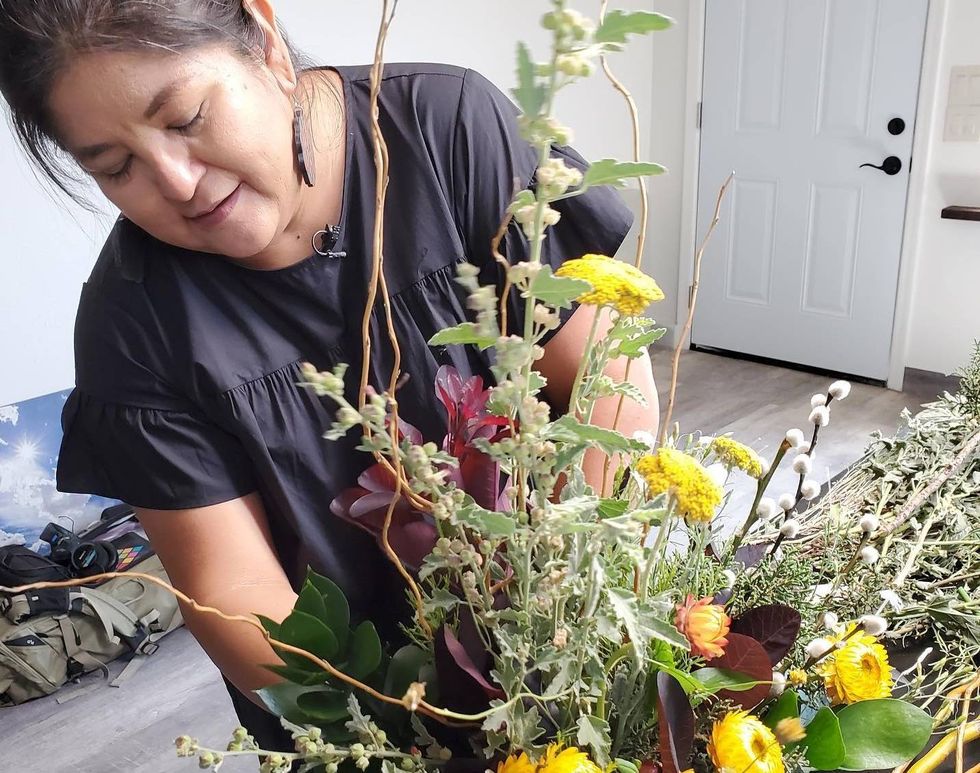 2021, Shayai making a floral design(Photo/Amanda Kinsey)
I warmed up some chicken in the microwave and took it back to my studio. As I took a bite, I cringed. The chicken, which had tasted delicious just a few hours earlier, tasted horribly wrong — just off. And that’s when I knew something more serious was going on with me.
When I was a child, I was diagnosed with a rare heart condition called supraventricular tachycardia (SVT), which can cause a rapid heart rate (tachycardia) and irregular heartbeat (arrhythmia). I also have Wolff-Parkinson-White (WPW) syndrome, a congenital heart condition that creates extra electrical pathways in your heart and also causes tachycardia.
Complications from these conditions had landed me in the ER in the past. In 2000, I had a cardiac ablation. This is a procedure that, to put simply, involves burning off the excess pathways in your heart.
Because of my conditions, I’ve always been deeply in tune with my heart. I get cardiology checkups regularly and can really feel when something isn’t right. Usually I’ll notice a flutter in my heart or brain fog. Not backache, nausea or sudden food aversion.
My husband and I agreed that I needed immediate medical attention — not easy considering how far away we live from a hospital ER and how few EMTs we have serving a 100-mile radius.
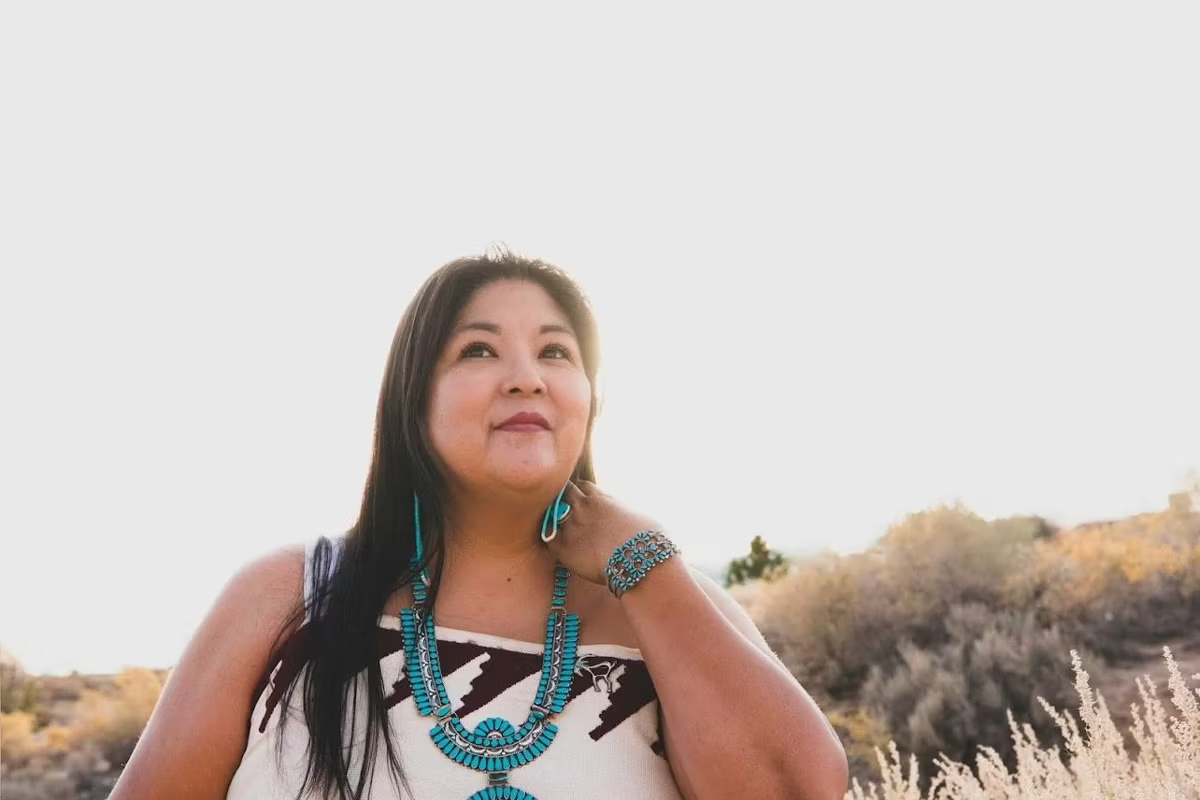
I am a Native American woman, a tribal citizen of two federally-recognized tribes: the Pueblo of Acoma and the Pueblo of Laguna. I was born and raised out on the reservations approximately 50 miles west of Albuquerque.
It's a rural life with a strong community spirit. We aren’t just neighbors, we’re a tribe, banded together through thick and thin. We feast together, celebrate together and do community service together. Because we’re all so incredibly close, my husband and I were able to leave our two sleeping children in their beds that night. My parents who live next door to us hurried over to keep watch.
As my husband sped along the interstate with me in the passenger seat, I worried — but not about myself. I figured this was just some minor heart incident related to my conditions that could be swiftly resolved. What I was worried about was my work — those floral arrangements. I didn’t want any hangups in getting that done. The wedding was just a few days away. I thought of how devastated the bride would be if her vision wasn’t brought to life.
On the way to the hospital, a new symptom arose: heartburn, or what I imagined heartburn felt like. I’d never had it before. Then another symptom: pain along with my jawline. This was also something completely new to me. I was puzzled.
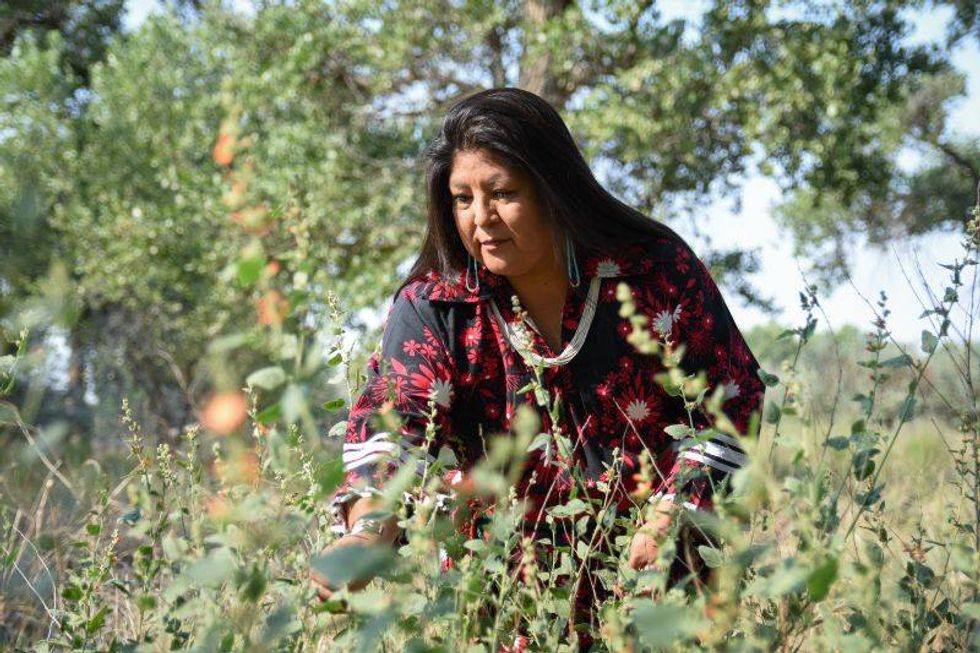 2023, Shayai gathering plant medicine (Photo/Joel Wigelsworth)
As soon as I walked into the ER and told a nurse that something seemed to be wrong with my heart, I was rushed into the main triage room, not even formally checked in. Within minutes I was attached to an IV, given aspirin (a blood thinner that can help prevent blood clots, the primary cause of heart attacks) and nitroglycerine (this improves blood flow to the heart). I was also hooked up to an EKG.
I was trying to keep the mood light by joking around with the nurses, and though they chuckled with me, it was clear they were concerned. I was very tired by then and wanted to sleep. They told me I must stay awake. What they said next truly shocked me.
“We believe this is all related to your heart, and we want to get you to a heart hospital in Albuquerque.”
With my thoughts spinning I asked if an ambulance was on its way.
“No, we’re going to fly you over.”
What? Everything was happening so fast now, even late at night. My husband and I made calls to our family to keep everyone in the loop.
Before flying, I was injected with a cocktail of medications to help stabilize my blood pressure and oxygen levels (which can be affected by changes in altitude). The helicopter ride, my first ever, was noisy, cramped and completely uncomfortable.I was still trying to keep the mood light by making the flight crew laugh and asking if they could fly over my house. Not even a near-fatal event can dampen my sense of humor.
Once at the heart hospital, I was seen by the on-call cardiologist who said to me blankly, “Well, you had a heart attack.” My husband and I looked at one another, gasping. It was the first time we’d heard those words. I broke into tears. I was only 43 years old. Then the cardiologist immediately left the room as though flustered. The nurse was the person who comforted us with the news.
I had heart conditions, yes, but never anything like a heart attack — and I’d later learn my heart attack had nothing to do with my other issues.
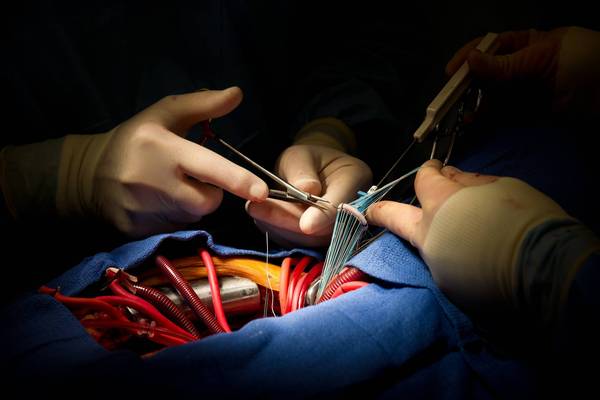
I asked for a different cardiologist because the one who broke the news to us had horrible bedside manner. I was then tended to by a far more professional cardiologist who, along with the warmhearted nurse, educated me on what needed to happen: an emergency angioplasty, where they put a stent in your heart to open up blood flow. My heart was 100% blocked.
Not only had I had a heart attack, I’d had what’s known as a widowmaker, a death sentence for most: Approximately 88% of people with these heart attacks die if they don’t have immediate medical attention. The odds for women dying are even higher.
The surgery required more time in the hospital, more time away from working on the wedding. I was so worried about letting down the bride. So a call to my community came through and I got a brilliant florist to step in for me.
As I was on my phone working, I finally got a chance to talk with my parents. Then my father told me. “Shayai,” he said, “You can’t rule the world if you’re sick.”
Those words hit me so profoundly. Women are told that they can’t be successful if they aren’t always busy. And so I was always busy, and not only with running my own demanding business but with serving on boards and working with various organizations. I seldom took it easy or said no to an opportunity.
I spent the time ahead of surgery sending out emails of resignation. I felt guilty doing it, but in that moment I knew it was time to make space for my own wellness.
The angioplasty was a success and it’s been several years since my heart attack, which doctors determined was caused by my body producing too much calcium. There had been a telltale sign I’d not known was a sign until after the heart attack: tiny white dots like little pimples on my arms. No cream or amount of exfoliation would erase them. Turns out they were caused by calcium leaching through my skin.
Now, I always tell people, scan your body for anything unusual and get your calcium levels checked.
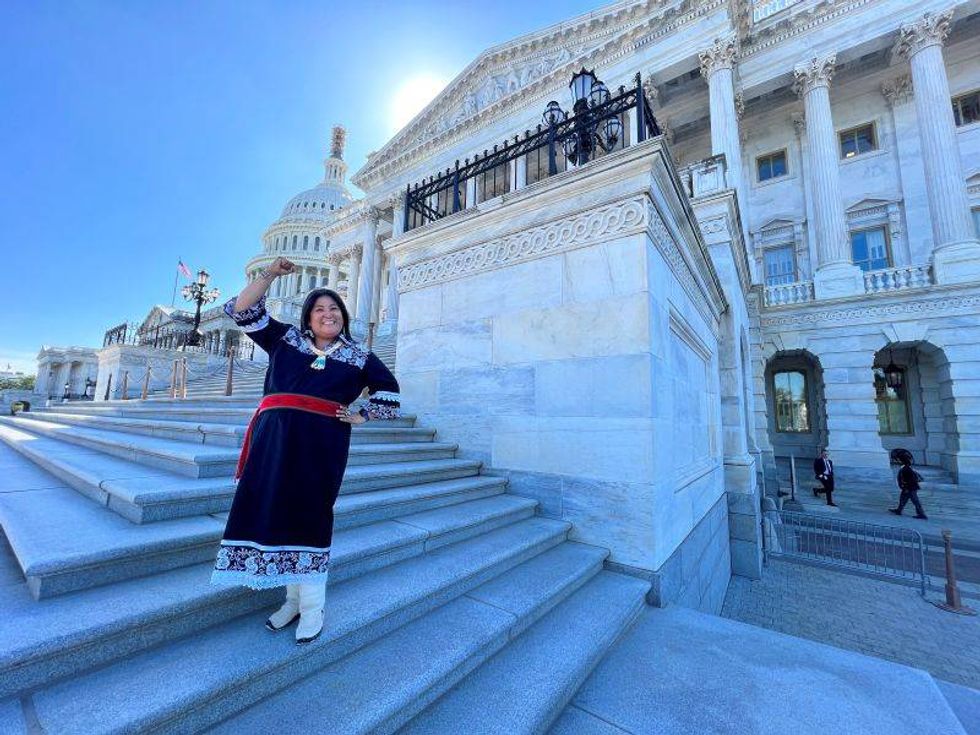 2023, Shayai advocating for rural entrepreneurship on Capitol Hill
A few years ago at a wellness convening for social justice advocates, a woman pastor gave the keynote speech. She said, “Brunch with the girls and getting mani/pedis isn’t real self-care. Self-care is saying no to disruptions that are affecting you physically or mentally. True self-care is saying ‘no.’”
When she said those words, my guilt over all those resignations melted away.
Today, I focus on my business, my community and on educating Native populations on heart disease prevention. Heart disease is the leading cause of death in American Indian/Alaska Native (AI/AN) people. And there’s a lot of political complexity that goes into that.
The U.S. government has historically limited Native communities’ access to proper medical care and nutrition. The Pueblo people have always been agricultural people who grew crops and foods. But now few of us can because we're dealing with water rights and land rights and other issues. A lot of historical complexities go into this current situation of heart disease.
I work passionately with others to advocate for our rights and move the needle, but I do not let this work consume me. I, along with my community, focus on making health fun. On our feast days we now offer heart-healthy dishes, gluten-free dishes, renal diet options and vegetarian meals. We’re always educating others on new delicious ways to cook our traditional and cultural foods.
Additionally, we cheer each other on when it comes to hydration and physical movement. As a people, our physical stature is short and sturdy because we were made to be working physically. It’s important that we stay true to what our bodies need and honor the heritage built in them. Our bodies are worthy. My body is worthy. And so is yours.
Have your own Real Women, Real Stories you want to share? Let us know.
Our Real Women, Real Stories are the authentic experiences of real-life women. The views, opinions and experiences shared in these stories are not endorsed by HealthyWomen and do not necessarily reflect the official policy or position of HealthyWomen.
- Symptoms of Heart Attacks in Women ›
- I Wasn’t Tired. I Was in Heart Failure. ›
- I Never Thought I Could Have a Heart Attack, But I Did ›
- It Wasn’t Stage Fright. I Was Having a Heart Attack at Age 39. ›
- I Never Felt Chest Pain, but I Had a Heart Attack ›
- My Heart Attack at 43 Was Terrifying. Then It Changed My Life for the Better. ›