Women’s Heart Health Has Been Overlooked for Decades. Tech Is Finally Catching Up.
New heart-health tools are redesigning how risk is assessed, conditions are detected and care is delivered for women

Brittany Barreto, Ph.D., is a podcaster, an entrepreneur, and a molecular and human geneticist. (In other words, she’s really smart.) Read her column here each month to learn about what’s happening in the world of technology and innovation in women’s health.
February is American Heart Month.
Heart disease is the number 1 killer of women in the United States. Yet women are still more likely than men to be misdiagnosed, dismissed or diagnosed too late, especially Black women, who are more likely to develop heart disease earlier, experience worse outcomes and face systemic bias at nearly every step of care. higher risks and worse outcomes at nearly every step of care.
For decades, most heart research, diagnostic tools and treatments were designed around male bodies. Women’s symptoms are more likely to be labeled as anxiety, stress or “normal aging.”
Now, a new wave of upcoming women-centered heart-health technology is working to close these gaps. These tools are redesigning risk assessment, data collection, diagnostics and care around women’s bodies and lived experiences.
Here’s how these innovations fit together and why they matter.
(Photo/Courtesy Adesso Health)
One of the biggest problems in women’s heart health is that many women don’t know they’re at risk until something goes wrong.
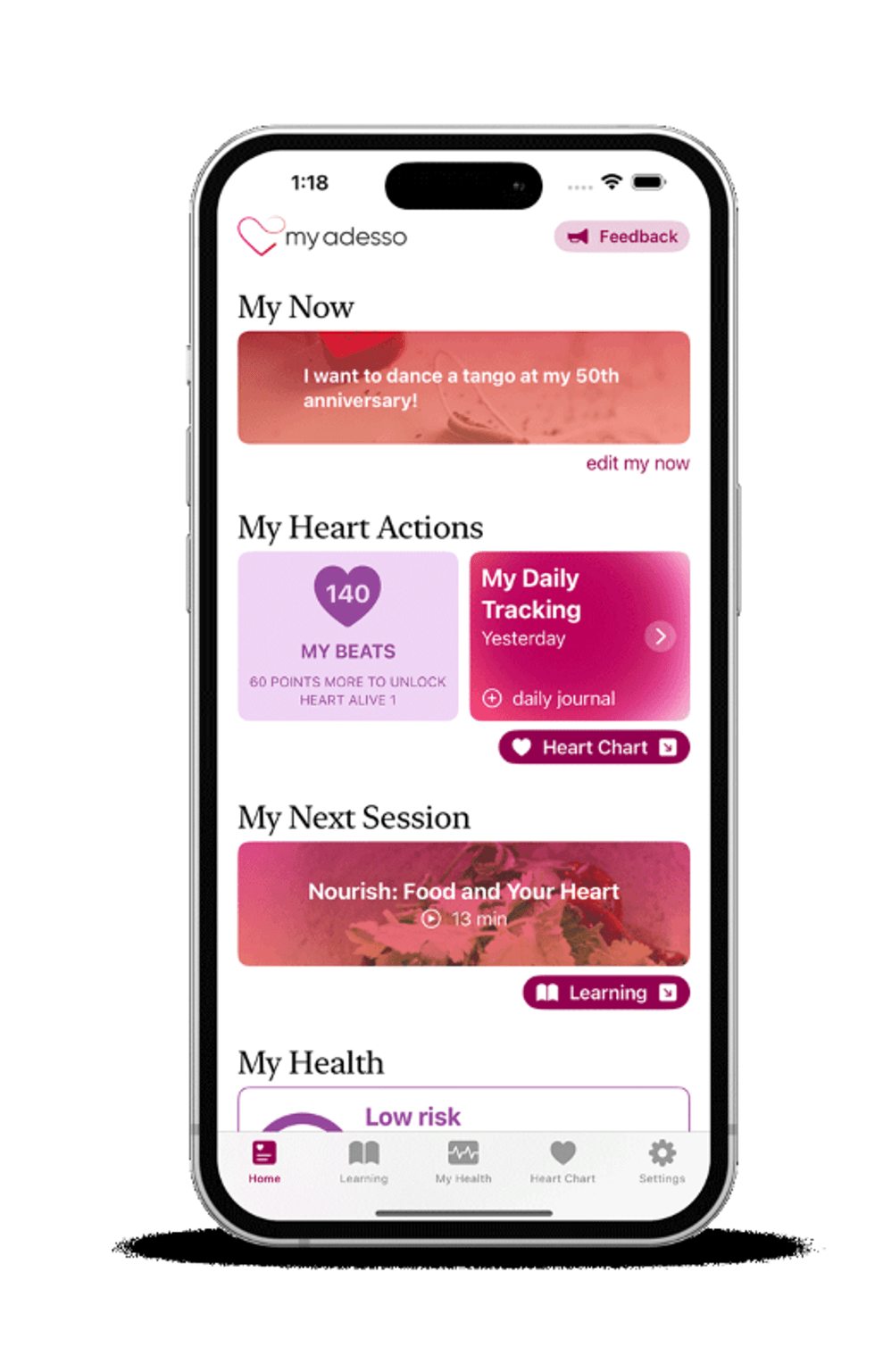
Adesso Health’s MyAdesso platform focuses on early risk awareness and prevention. The program starts with a short intake that generates a personalized Adesso Heart Score, designed to help women understand their potential heart-disease risk and what to do next.
Instead of focusing only on numbers like cholesterol, the platform takes a broader view, looking at movement, nutrition, sleep, stress, relationships, menopause, pregnancy history, and how to talk to your healthcare provider (HCP).
This kind of education can be especially important for women whose symptoms have previously been dismissed or who have been told they’re “too young” to worry about heart disease.
Adesso Health says the MyAdesso digital program is currently being redesigned, with an updated version expected to relaunch in spring 2026.

(Photo/Courtesy BloomerTech)
Many heart conditions in women are missed because HCPs don’t have enough high-quality, long-term data from female bodies.
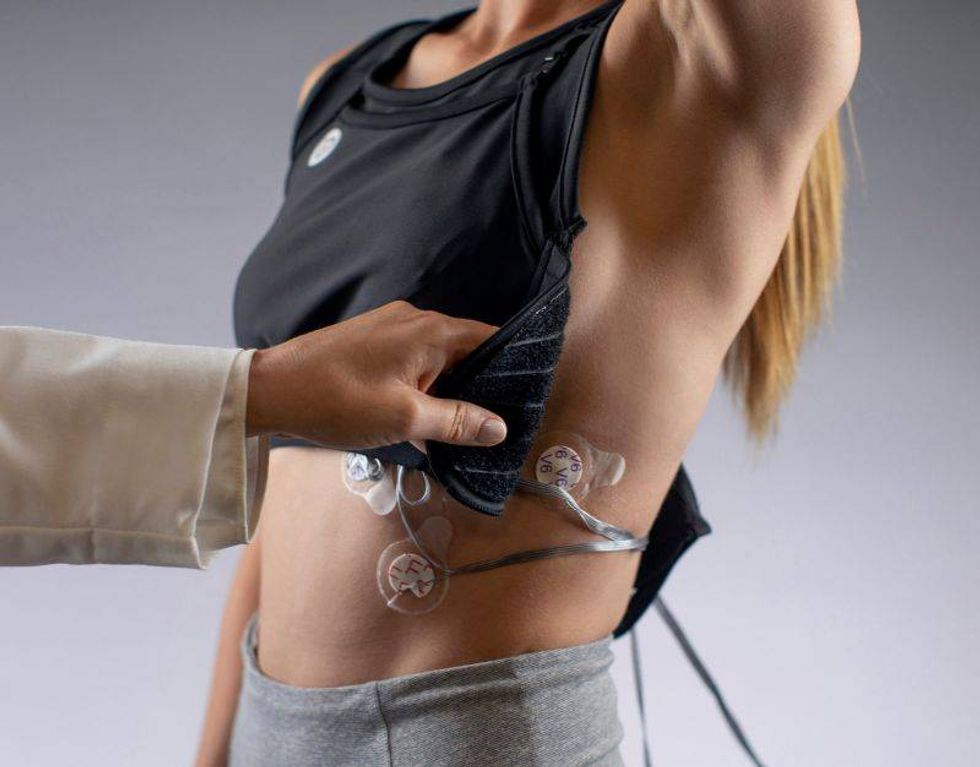
BloomerTech is tackling this problem with a smart bra–based wearable that continuously collects cardiovascular data, including ECG signals. The device is designed to fit into everyday life because most women already wear a bra for many hours a day.
By collecting continuous data rather than short snapshots in a clinic, the technology aims to help clinicians spot patterns and warning signs that might otherwise be missed, especially in women whose symptoms don’t look “textbook.”
BloomerTech also emphasizes inclusive data collection across different body types and skin tones, an important step toward addressing racial gaps in diagnosis.
At this time, BloomerTech’s wearable is available for research use only and is classified as an investigational device under U.S. regulations.
(Photo/Courtesy CardioBra)
Exercise stress tests are a common tool for diagnosing heart problems, but (surprise, surprise) they weren’t designed with women in mind.
Many women having a stress test are asked to exercise without breast support, which can cause pain, embarrassment or inaccurate ECG readings. Some women decline testing altogether because of modesty, religious concerns or discomfort.
CardioBra is a patent-pending medical garment designed specifically for women undergoing cardiac stress tests. It provides breast support while also improving ECG lead placement and reducing motion-related signal errors.
Better signal quality means fewer false results and fewer women being told their test was inconclusive.
CardioBra is still in development, and the company expects to sell the product directly to clinicians and healthcare facilities rather than to consumers.
(Photo/Courtesy Lighthearted AI)
Women with heart valve disease are more likely than men to be misdiagnosed and more likely to die from the condition. One reason is that traditional tools like stethoscopes can miss subtle, high-frequency signals that are more common in women.
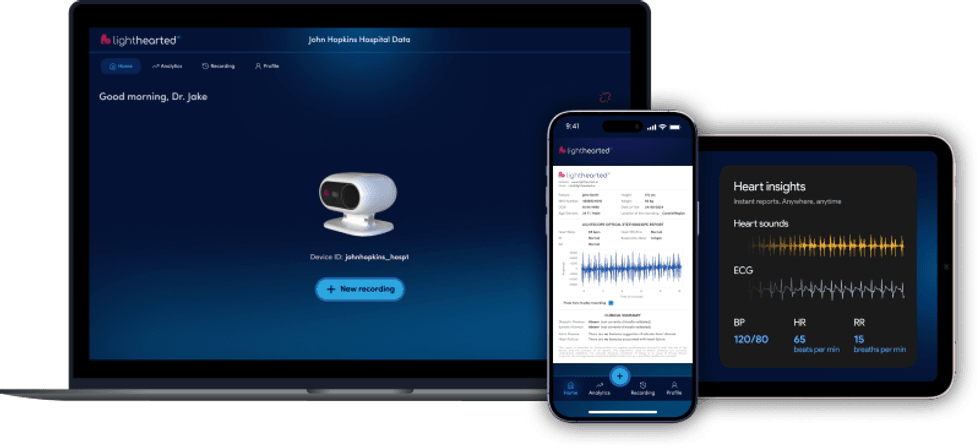
Lighthearted AI Health has developed LightScope, a point-of-care device that uses photonics and AI to detect heart valve and vascular conditions during routine vital checks.
The scan takes about 10 seconds and doesn’t require skin contact. Importantly, the system is designed to work across all skin tones, addressing another source of diagnostic bias.
By flagging potential problems earlier, tools like this could reduce the number of women, especially Black women, who are told nothing is wrong when something actually is.
Lighthearted AI Health says clinical trials are underway, and if the technology receives regulatory clearance, it would be available for HCPs to purchase and use as part of in-office heart health assessments.
Technology alone won’t completely close disparities when it comes to heart health, but tools designed with women in mind, validated across diverse populations, and paired with supportive care models can help close long-standing gaps.
The future of women’s heart health isn’t about a single breakthrough. It’s about redesigning the entire system — risk assessment, data collection, diagnostics and care — so women are finally seen, heard and treated in time. And these tools are a great start.
The information about products and/or services in this column does not constitute any form of endorsement or recommendation by HealthyWomen. Links are provided as a convenience and for informational purposes only. This column may occasionally cover companies in which Brittany Barreto is an investor.











Support Our Mission