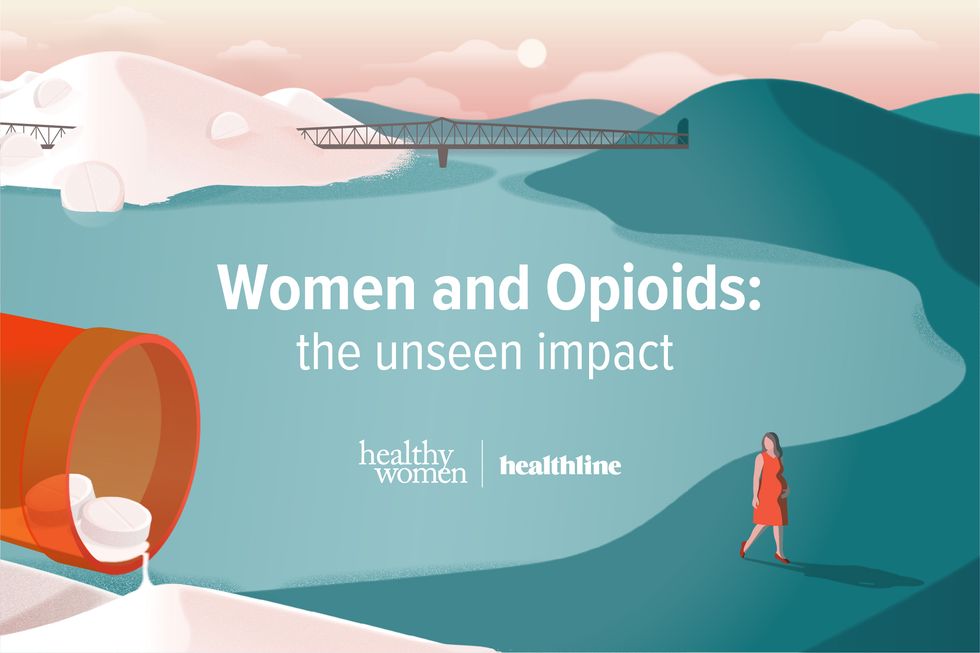
Launched by HealthyWomen and Healthline, Women and Opioids: The Unseen Impact is a national joint education campaign to promote visibility and awareness of opioid use disorder and its impact on women, their families and their communities.
This campaign features need-to-know information as well as real-life stories and solutions to help women, advocates and policy makers fight back against the epidemic that is killing thousands of Americans every year.
Why focus on women? For one, researchers do not yet realize the full extent that gender plays in opioid use disorder or treatment. For example, women "exposed to an addictive substance develop a drug use disorder more rapidly than men," according to a recent article by Carolyn M. Mazure, director of Women’s Health Research at Yale, and David A. Fiellin, MD, director of the Yale Program in Addiction Medicine.
"Women seeking treatment for opioid addiction also suffer increased limitations in their social and work lives, reducing their ability to maintain employment and housing," the article states. "This compounds negative effects for children and families because women are most often the primary caregivers."
What is clear from the national dialogue about this crisis is that there is no one solution — or even a set of solutions. It will require collaboration and cooperation across many groups, including clinicians, patients, insurers, regulators, legislators, law enforcement, first responders and the media.
That is why HealthyWomen and HealthLine have joined to launch this campaign with a comprehensive toolkit of important resources, including:
What You Need to Know About the Opioid Crisis Fact Sheet (download)
How to Talk to Your Health Care Professional About Opioid Abuse
How Communities Are Helping Women and Families Fight the Opioid Crisis
HealthyWomen Experts
HealthyWomen Resources
- HealthyWomen Opioid Use Disorder and Treatment Policy Center
- Legislative Toolkit: Resources for Strengthening Families and Communities by Improving Access to Treatment for Substance Use Disorder
HealthyWomen Partners
What You Need to Know
It's important to think of opioid use disorder (OUD) as a medical condition or disease rather than casting it as any type of personal or moral failing or weakness. Compare it to other diseases such as diabetes, depression or arthritis — all of which are biological conditions that can be treated medically, as can OUD.
Most people with opioid use disorder benefit from a combination of medication-assisted treatment (MAT) and behavioral counseling. (Watch this video to learn even more about how MAT treatments can help reconnect women to their families and communities.)
If you think that you might be misusing opioids — or are concerned that a loved one might be — start by talking to a trusted health care professional, such as your primary care physician. "People don't think that this is a medical problem, but it is," says internal medicine physician Jean Kutner, MD, chief medical officer of University of Colorado Hospital.
How to Talk to Your Health Care Professional About Opioid Abuse
If you and your health care professional decide that opioid medication is right for you, there are some steps you can take to reduce your chances of overuse, including:
- Using the lowest dose possible for the shortest amount of time necessary to get pain relief
- Following your doctor's directions; don't take pills more often than directed
- Telling your doctor if you notice any side effects (such as dizziness, nausea, or constipation)
Read More from HealthyWomen
Use Of Buprenorphine To Treat Opioid Addiction Proliferates In California
Could CBD Treat Opioid Addiction?
Violence Against Women Is Overlooked in Its Role in Opioid Epidemic
HealthyWomen Helping to Combat Opioid Epidemic – Better Treatment and Better Policies
Staying Alive: How to Fight an Opioid Addiction
As Treatable As Diabetes? Lawmakers Push New Ways To Stem Opioid Addiction
Postpartum Opioid Rx May Lead to Persistent Use
Insurers Making It Harder to Treat Opioid Addiction