How to Conduct a Skin Cancer Self-Exam If You Have a Darker Skin Tone
Skin cancer looks different in people of color. Learn what to look for and how to protect yourself.

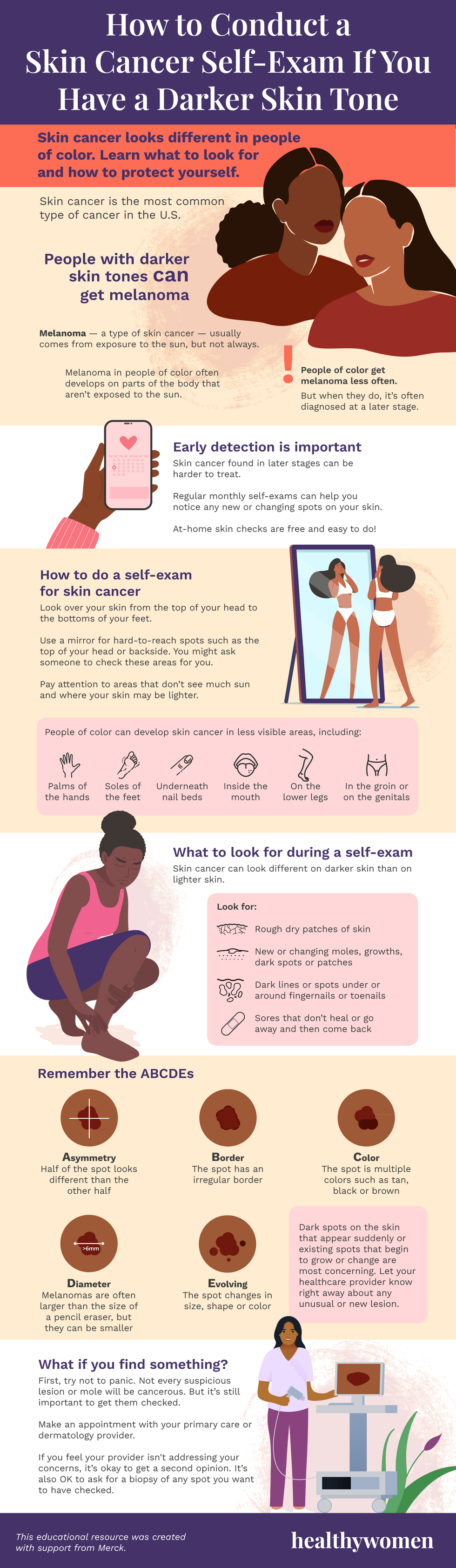
Skin cancer is the most common type of cancer in the U.S.
Melanoma — a type of skin cancer — usually comes from exposure to the sun, but not always.
Melanoma in people of color often develops on parts of the body that aren’t exposed to the sun.
People of color get melanoma less often. But when they do, it’s often diagnosed at a later stage.
Skin cancer found in later stages can be harder to treat.
Regular monthly self-exams can help you notice any new or changing spots on your skin.
At-home skin checks are free and easy to do!
Look over your skin from the top of your head to the bottoms of your feet.
Use a mirror for hard-to-reach spots such as the top of your head or backside. You might ask someone to check these areas for you.
Pay attention to areas that don’t see much sun and where your skin may be lighter.
People of color can develop skin cancer in less visible areas, including:
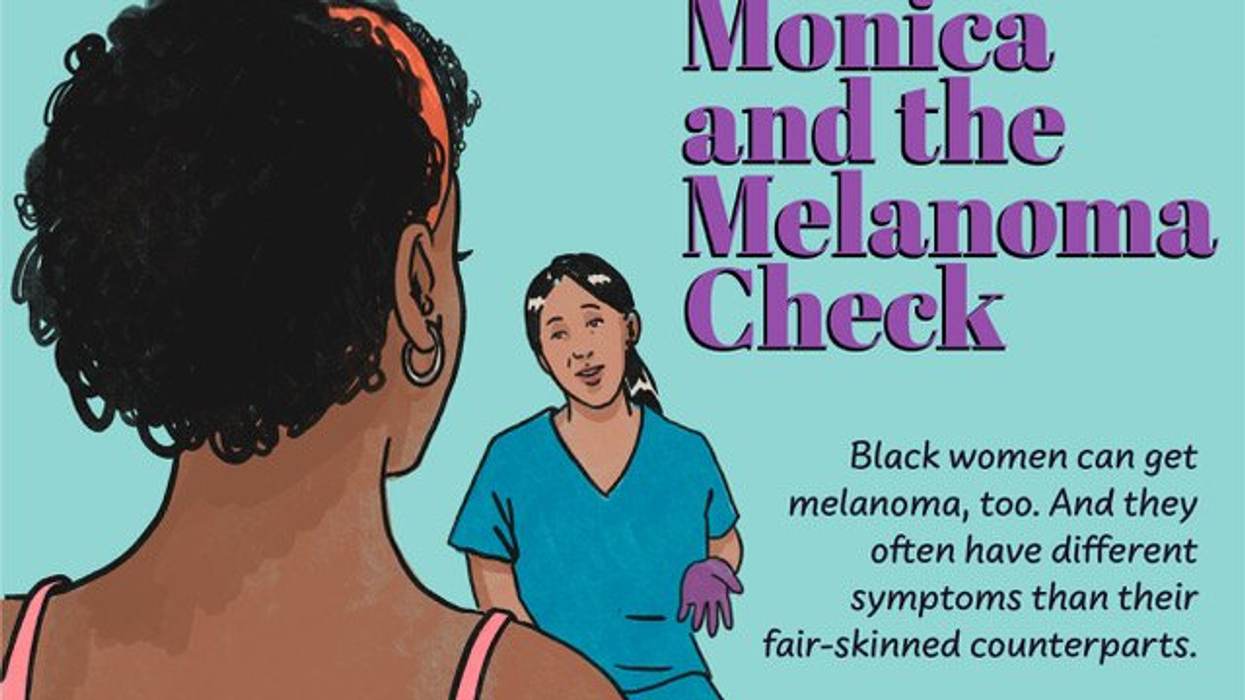
Skin cancer can look different on darker skin than on lighter skin.
Look for:
Dark spots on the skin that appear suddenly or existing spots that begin to grow or change are most concerning. Let your healthcare provider know right away about any unusual or new lesion.
First, try not to panic. Not every suspicious lesion or mole will be cancerous. But it’s still important to get them checked.
Make an appointment with your primary care or dermatology provider.
If you feel your provider isn't addressing your concerns, it’s okay to get a second opinion. It’s also OK to ask for a biopsy of any spot you want to have checked.
This educational resource was created with support from Merck.









Support Our Mission