Treatment of polycystic ovarian syndrome (PCOS) centers on lifestyle modifications and medication. Surgical procedures to destroy or shrink the ovarian cysts are less likely to be performed today given the success of hormonal treatments. However, if you fail to ovulate with conventional treatment (the fertility drug clomiphene citrate (Clomid)) and can't, for whatever reason, proceed to gonadotropin shots or in vitro fertilization (IVF), your doctor may recommend an outpatient surgery called laparoscopic ovarian drilling.
Because the primary cause of PCOS is unknown, treatment is directed at the primary symptoms of the disorder, which include excess hair growth, irregular periods and infertility.
Excess hair growth
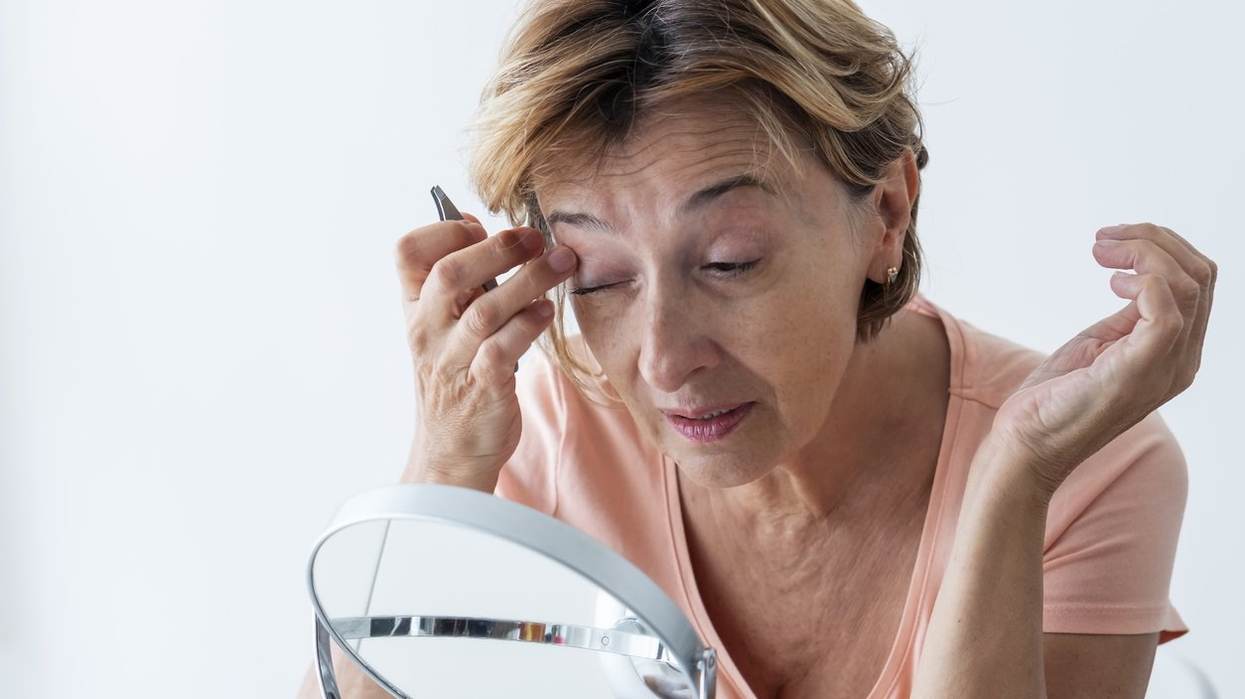
For some women, the most bothersome symptom is hirsutism (excess facial and/or body hair, often dark and coarse). This symptom, as well as acne and oily skin, stem from the overproduction of androgens. For women with these symptoms, an anti-androgen medication like spironolactone, finasteride or flutamide may be prescribed.
Spironolactone is a diuretic that works by blocking the action of testosterone at the hair follicle. Side effects are generally mild and may include heartburn and upset stomach, sun sensitivity, increased urination and lower blood pressure causing weakness or faintness. At high doses, it can clear oily skin and make unwanted hair finer.
Finastride, which is used to treat enlarged prostate and baldness in men, may also be useful in women with hyperandrogenism symptoms, including hirsutism. It may also help treat hair loss on the scalp associated with PCOS. Finasteride, however, can cause birth defects in a male fetus (pregnant women should not even handle the drug in crushed tablet form). And many insurance companies won't cover the drug for cosmetic reasons.
Flutamide, a drug used to treat prostate cancer in men, is also useful for the treatment of signs and symptoms due to hyperandrogenism in women with PCOS, although it carries the rare risk of liver toxicity.
If you are trying to conceive, you cannot take an anti-androgen medication because it could cross the placenta and cause defects in a male fetus. Usually, anti-androgen medications are used in combination with birth control pills, which not only prevent unplanned pregnancies, but also improve the success of these medications on excess hair growth.
None of these drugs is FDA-approved for the treatment of PCOS, but clinical experience and scientific study has shown that they can be effective.
Electrolysis, and possibly lasers, can remove any remaining hairs permanently.
Eflornithine hydrochloride cream (Vaniqa) may also help slow the hair growth on the face. It works well in about one-third to one-half of women using it. The medication is applied to the face twice a day like a moisturizer. It works by blocking a key enzyme that makes hair grow. Noticeable results take about six to eight weeks. It must be used regularly or the hair will grow back after about eight weeks.
Bear in mind that it can take up to nine months to see effects on hair growth and a year or longer to achieve peak effect. The hair will still be there, but it will generally grow more slowly and be lighter and finer.
Irregular periods
If irregular and/or infrequent menstruation is a problem, birth control pills that contain estrogen and progestin can generally regulate your cycles. Restoring regular periods is essential since it ensures that the lining of the uterus is shed, protecting against uterine cancer. Birth control pills also reduce the production of androgens by the ovaries.
Rare side effects of birth control pills include migraines, nausea and headaches, and, rarely blood clots (especially among smokers and women with persistent high blood pressure), gallbladder disease and high blood pressure.
If you don't want to take a daily medication, talk to your doctor about a course of progestogen (progesterone-like drugs) several times a year to start your periods. It is important to have at least six to eight periods a year to promote shedding of the endometrial lining; buildup can lead to cancer. However, periodic progesterone alone does not help reduce unwanted hair growth as birth control pills do.
Another drug that helps regulate periods in some women with PCOS, although less effectively than birth control pills, is the insulin-sensitizing drug metformin (Glucophage). Metformin regulates blood glucose (sugar) levels by reducing the amount of glucose the liver produces, reducing the amount of glucose absorbed from food and reducing the levels of insulin in the blood by helping the insulin that your body produces work better to reduce the amount of glucose already in your blood.
The drug is not FDA-approved for PCOS, but research done so far shows it helps modestly improve ovulation and may reduce androgen levels. If you are among the 10 percent or so of women with PCOS who already have type 2 diabetes, metformin is also a good therapeutic option. Experts aren't sure, however, if metformin is as effective at preventing endometrial cancer in women with PCOS as birth control pills or progesterone. In addition, some experts do not recommend metformin for women with PCOS who have excess hair growth (hirsutism).
If you are prescribed metformin, be sure to inform your health care professional of all other medications you are taking, including over-the-counter medicines, to prevent drug interactions.
Infertility
Infertility often is a consequence of PCOS. If you are overweight or obese, the first line of treatment is weight loss; even losing a little bit of weight may stimulate ovulation. Weight loss can also boost the effectiveness of other infertility treatments.
The second line of treatment is the ovulation-stimulating drug clomiphene citrate, which is used to treat infertile women with ovulation problems. It works by helping the pituitary gland send hormonal signals to stimulate the development of more eggs in the ovaries. Clomiphene stimulates ovulation in about 80 percent of women with PCOS, and about half of these women become pregnant.
Another option for women with PCOS who do not ovulate is letrozole, a medication FDA-approved for breast cancer treatment. Letrozole is sometimes used off label to induce ovulation. Some studies have shown live birth rates in obese women with PCOS who take letrozole are higher than in obese women with PCOS who take clomiphene.
If clomiphene doesn't work, your doctor may suggest using metformin in combination with clomiphene or gonadotropins injections.
Treatment with gonadotropins—purified solutions of follicle-stimulating hormone (FSH) with or without luteinizing hormone (LH)—may be administered by injection. Because many women with PCOS have elevated LH, some doctors may recommend treatment with FSH alone.
But treatment with gonadotropins, while effective, is more challenging to manage and more expensive. Some women also have some trouble self-administering the injections. Risks include multiple births and ovarian hyperstimulation syndrome. In many patients mild signs and symptoms of hyperstimulation may occur, including bloating, fluid retention, weight gain and a tender stomach. In more severe cases fluid from the bloodstream leaks into the abdominal cavity, causing it to swell, and making the blood thicker. This may lead to breathing difficulties, temporary kidney failure and blood clots. Thus, gonadotropins should only be prescribed by clinicians specifically trained in their use.
Another option for women who fail to ovulate with clomiphene or metformin therapy, or who are unwilling or unable to use gonadotropins (or can't afford to use them), is a surgical procedure known as laparoscopic ovarian drilling.
During this procedure, a surgeon makes a small incision in your abdomen and inserts a laparoscope (a telescope-like instrument attached to a tiny camera). The surgeon then makes other small incisions and inserts surgical equipment that uses electrical or laser energy to burn small holes in the enlarged follicles on the surface of your ovaries. The goal of the procedure is to stimulate ovulation by reducing LH and androgen levels.
Additionally, many women who failed to ovulate with clomiphene or metformin therapy are able to ovulate with these medications after ovarian drilling. The success rates for laparoscopic ovarian drilling appear to be better for patients at or near their ideal body weight, as opposed to those who are obese. Interestingly, women in these studies who are smokers rarely improved with the drilling procedure. Side effects are rare, primarily adhesions, although laparoscopic ovarian surgery requires general anesthesia, which carries its own risks.
Other Approaches
Long-term, nonmedical treatment is geared toward modifying your risk factors for health problems often associated with PCOS, including diabetes, uncontrollable weight gain and heart disease. A healthy, low-sugar, low-starch diet and an exercise program to stabilize your weight can reduce the risk of these conditions.
You can manage some problems associated with PCOS without medication. Excess hair can be removed by shaving, tweezing, waxing or using depilatory creams, or by electrolysis or laser techniques administered by a trained professional. Since lasers work by attacking a skin pigment, they should be used with caution by darker-skinned women.
If you are overweight and have PCOS, you need to lose weight. Losing even just a small amount of weight can lower androgen and insulin levels, reducing your risk of insulin resistance and diabetes. Some obese women with PCOS find losing just 5 to 10 percent of their body weight helps their periods become more regular.
Exercise alone, even without weight loss, is also beneficial since it helps improve insulin sensitivity.
It seems that some PCOS symptoms improve as women near menopause, but some of the complications may persist into or beyond menopause, particularly male pattern baldness or thinning hair, which sometimes gets worse after menopause. The risk for heart attack, stroke and diabetes also increases in menopause in women with PCOS. In cases where PCOS symptoms persist, the best recommendation is to monitor cholesterol, triglycerides and blood pressure, as well as glucose and insulin levels.