

Search
Latest Stories



Newsletter Sign-Up
Newsletter
What is ATTR-CM?
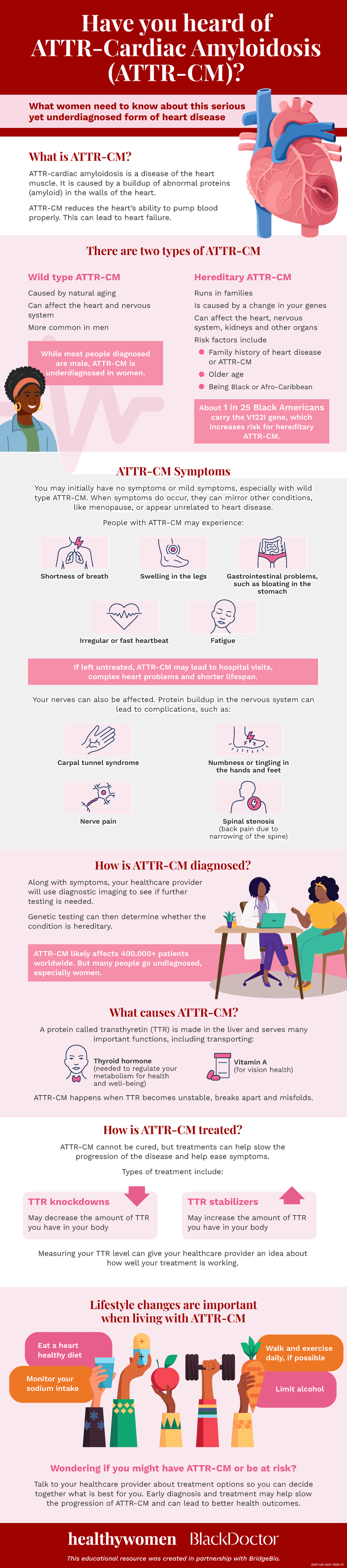
ATTR-cardiac amyloidosis is a disease of the heart muscle. It is caused by a buildup of abnormal proteins (amyloid) in the walls of the heart.
ATTR-CM reduces the heart’s ability to pump blood properly. This can lead to heart failure.
There are two types of ATTR-CM
- Wild type ATTR-CM
- Caused by natural aging
- Can affect the heart and nervous system
- More common in men
- Hereditary ATTR-CM
- Runs in families
- Is caused by a change in your genes
- Can affect the heart, nervous system, kidneys and other organs
- Risk factors include
- Family history of heart disease or ATTR-CM
- Older age
- Being Black or Afro-Caribbean
About 1 in 25 Black Americans carry the V122I gene, which increases risk for hereditary ATTR-CM.
ATTR-CM Symptoms
You may initially have no symptoms or mild symptoms, especially with wild type ATTR-CM.
Symptoms can mirror other conditions, like menopause, or appear unrelated to heart disease.
People with ATTR-CM may experience:
- Shortness of breath
- Swelling in the legs
- Gastrointestinal problems, such as bloating in the stomach
- Irregular or fast heartbeat
- Fatigue
If left untreated, ATTR-CM may lead to hospital visits, complex heart problems and shorter lifespan.
Your nerves can also be affected. Protein buildup in the nervous system can lead to complications, such as:
- Carpal tunnel syndrome
- Numbness or tingling in the hands and feet
- Nerve pain
- Spinal stenosis (back pain due to narrowing of the spine)
How is ATTR-CM diagnosed?
Along with symptoms, your healthcare provider will use diagnostic imaging to see if further testing is needed.
Genetic testing can then determine whether the condition is hereditary.
ATTR-CM likely affects 400,000+ patients worldwide. But many people go undiagnosed, especially women.
What causes ATTR-CM?
A protein called transthyretin (TTR) is made in the liver and serves many important functions, including transporting:
- Thyroid hormone (needed to regulate your metabolism for health and well-being)
- Vitamin A (for vision health)
ATTR-CM happens when TTR becomes unstable, breaks apart and misfolds.
How is ATTR-CM treated?
ATTR-CM cannot be cured, but treatments can prevent the disease from getting worse and help ease symptoms.
Types of treatment include:
- TTR knockdowns
- May decrease the amount of TTR you have in your body
- TTR stabilizers
- May increase the amount of TTR you have in your body
Measuring your TTR level can give your healthcare provider an idea about how well your treatment is working.
Lifestyle changes are important when living with ATTR-CM
- Eat a heart healthy diet
- Monitor your sodium intake
- Walk and exercise daily, if possible
- Limit alcohol
Wondering if you might have ATTR-CM or be at risk?
Talk to your healthcare provider about treatment options so you can decide together what is best for you. Early diagnosis and treatment may help slow the progression of ATTR-CM and can lead to better health outcomes.
This educational resource was created in partnership with BlackDoctor and with support from BridgeBio.








Popular
1

2

What Is Chronic Spontaneous Urticaria (CSU)?
Jun 29, 2026
3

¿Qué es la urticaria crónica espontánea (UCE)?
Jun 29, 2026
4

Metabolic Syndrome 101
Sep 28, 2026
5
Comic: Edna Gets an Endoscopy
Aug 05, 2026
6
Historieta: Edna se hace una endoscopía
Aug 05, 2026
Support Our Mission
Keep Trusted Women’s Health Information Free
Your donation ensures every woman continues to have access to credible health content.More Stories






Everything you need to know about women’s health — in one place.