February 28 is Rare Disease Day.
As told to Jacquelyne Froeber
When I was 6 years old, I was running around outside with my friends when I felt my body go limp.
I collapsed like a rag doll next to a bright-red fire hydrant — a matching stop sign loomed overhead. As my friends ran to get my mother, I used the fire hydrant to help me stand up. I wasn’t going to let a little fall stop me from having fun.
The truth was, that wasn’t the first time my body just stopped working. I had no clue what was going on, but my mom knew I was having some issues so she took me to see a healthcare provider (HCP).
At some point during the visit, a nurse guided me into the hall and gave me graham crackers and candy. I was thrilled, but when we went back into the room, my mom had tears streaming down her cheeks.
The HCP said I had myasthenia gravis (MG) — a rare disease that was hard to say and even harder to understand. There was a long list of things I couldn’t — shouldn’t — do like run around with my friends.
MG causes weakness in muscles you can control — like your arms and legs — and physical activity makes the weakness worse. If it’s not treated, it could be life-threatening and affect my ability to breathe.
Since MG is a rare disease and not typically diagnosed in children, the HCP didn’t know what I could expect long-term, but surgery to remove my thymus gland would stop the production of the antibodies that cause the muscle weakness.
I had the surgery, which was a great benefit throughout my life, and I made a vow with myself and mom that I would try not allow this disease to control my life. My family never put any limitations on what I could and couldn’t do. And I wasn’t going to limit myself, either.
During the early stage of my diagnosis, my HCPs told my mom I shouldn’t have children, but when I was 21, I got pregnant, and I was lucky that I had a wonderful pregnancy. In 2008, I gave birth to a healthy baby boy. Shortly after he was born, I went back to college and completed the first of many degrees and certifications.
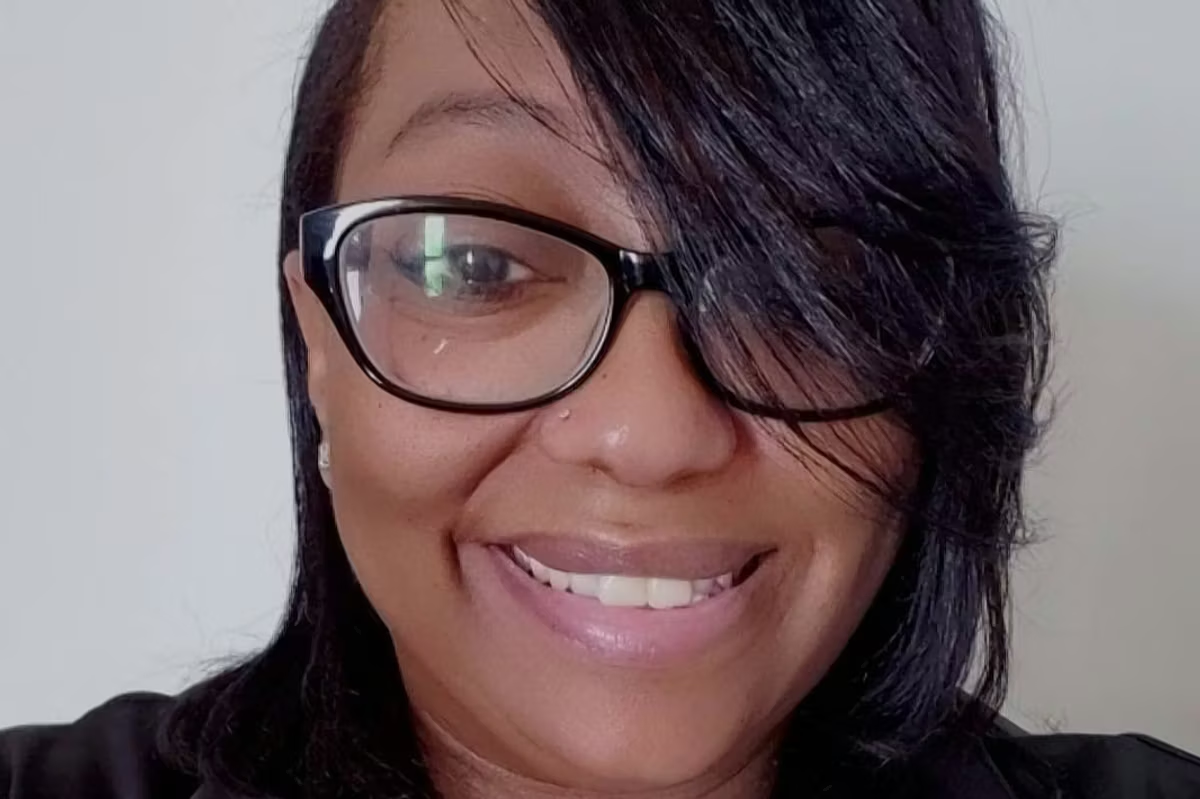
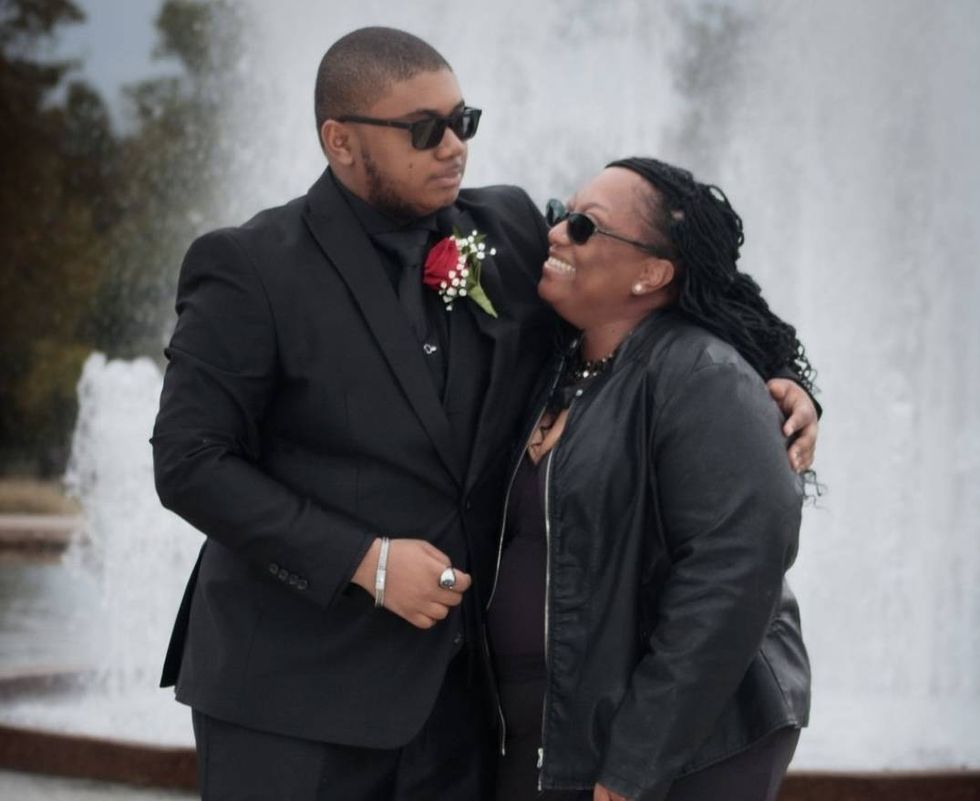 Tasha and her son, 2025 (Photo/912 Solutions Group)
For the most part, living with MG didn’t affect my day-to-day life. But I was curious about the disease. The only other person I knew who had MG was my aunt, and she had more severe symptoms than I had. She taught me everything I needed to know about MG and I’m so grateful that she did. Although she lost her battle with MG due to complications from the disease, she conquered so much in her life.
In 2015, I searched for MG groups on Facebook and was surprised to find a few different options. I clicked on one group for women with MG, wrote an introduction about myself and logged off.
The next day I had more than 100 comments.
I was stunned. I was excited. I’d posted that I liked to travel and drive and people wanted to know how I was able to do these things while living with MG.
I responded with encouraging words — my advice was to live life to the fullest — whatever that might mean for that person. Overall, people were kind and encouraging but there were some people who said I was spreading “false hope.”
I had no clue that things were about to change very drastically for me.
A few weeks after the post, my whole body started to feel heavy and I was tired, which was unusual for me. One morning, I woke up and had double vision in one eye. My tongue felt tingly, which caused me to slur a little when I talked. That same morning, I went to hand my son a glass, and it just fell from my hand.
After more than 20 years with no symptoms and no medications for MG, I was having what’s called an MG crisis caused by elevated stress. When I got to the emergency room, I checked in to see the on-call HCP, and he said I was having a stroke.
“I have myasthenia gravis,” I slurred. I struggled to get the words out and quickly realized that the doctor was not listening. “Myasthenia gravis!” I yelled.
Thankfully, one nurse understood what I was saying.
“You’re the second person I’ve met with myasthenia gravis in my 25 years of being a nurse,” she said to me.
All at once it hit me like a ton of bricks that I had a rare disease and there was a good chance no one at the hospital or anywhere knew how to help me. My mom was at home with my son. I was alone. And I was scared.
I was hooked up to an IV with medication to help stabilize my condition. Unfortunately, the treatment caused debilitating headaches. I wore my sunglasses in a dark room and cried. I was confused about what was happening to me and — after all these years — why this was happening at all.
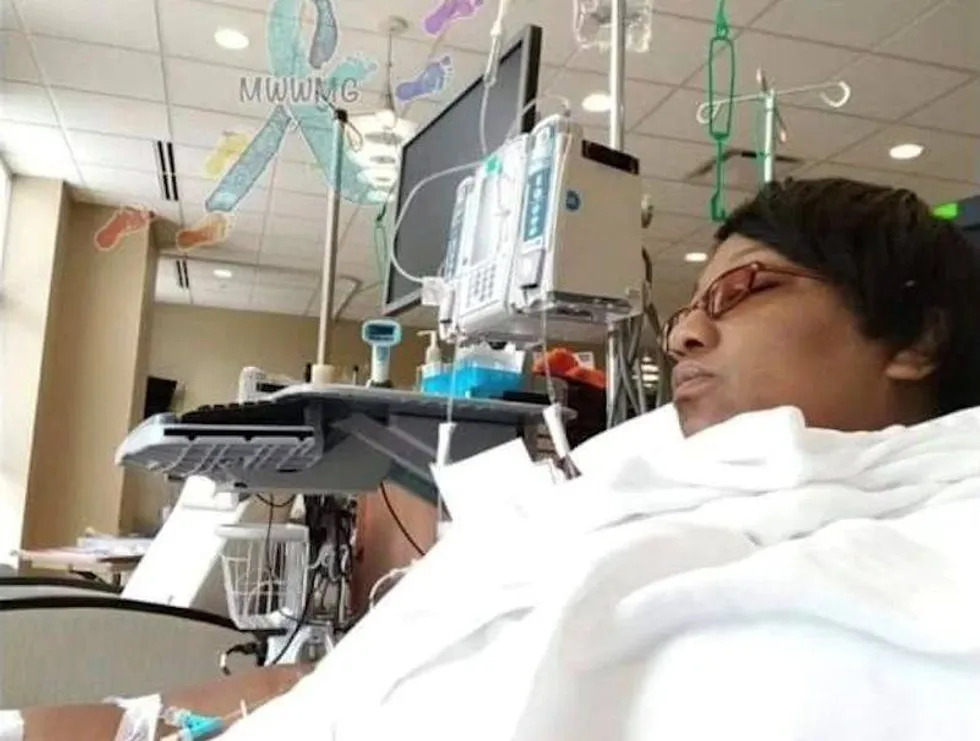 2024
2024
After five days in the hospital, my symptoms diminished and I went home. But I needed routine maintenance treatments of the medication, which meant more debilitating headaches among other side effects.
For months, I tried to find an HCP who would listen to me and take my concerns about migraine attacks seriously. But I felt dismissed — like what I had to say about my own healthcare didn’t matter.
Then, one day when I was getting treatment, I reached my breaking point. I told the nurse to take the IV out — I was going home.
That was apparently enough to have my HCP change medications. Unfortunately, the next one didn’t help, and I had another MG crisis not long after the switch.
I went to different HCPs and tried different treatments for years. Finally, in 2017, I found a specialist who took the time to listen to me and wanted to explore new treatment options.
For the first time in a long time, I felt seen. My doctor heard me and made sure I was included in my own healthcare.
That year, I went back to school again and created my nonprofit organization, My Walk With MG (MWWMG), from my hospital bed. I wanted to bring information, awareness and support to the MG community. I also provide informational packages and ID cards to show during an MG crisis. I thought back to my first hospitalization — when I was alone and scared and not able to speak for myself — and I hoped these cards and information would help give others a little peace of mind during a crisis.
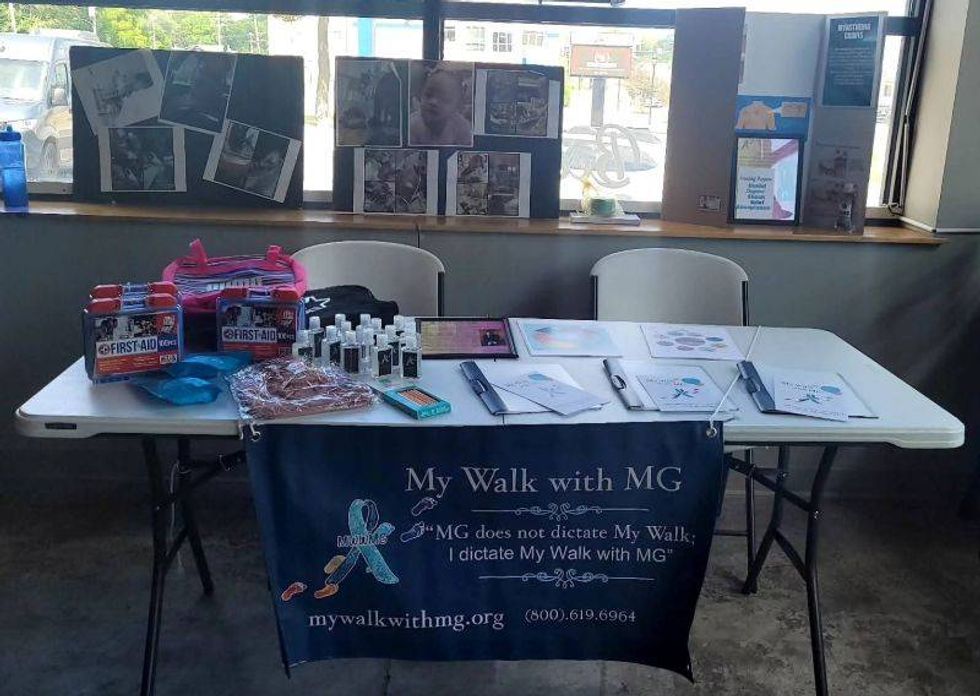 Tasha’s nonprofit, My Walk with MG, 2024
In 2019, I went public with the nonprofit and graduated college in 2020. And more recently, I’ve partnered with You, Me and MG — an online community that helps people share their personal experiences and offers resources for people living with the disease.
I’ve been through a lot over my 30-plus years living with MG. I credit my faith, my son and my family for helping me get through the tough times. Today, I’m on a routine treatment that doesn’t cause migraine attacks, and I’m hoping to get off of medication completely — at least that’s my goal.
For now, I’m grateful I can do all the things I love to do — hang out with my son, drive, travel and so much more. I’ll never stop living life to the fullest. My motto is: We only have one life, so live it with no regrets.
Resources
Have your own Real Women, Real Stories you want to share? Let us know.
Our Real Women, Real Stories are the authentic experiences of real-life women. The views, opinions and experiences shared in these stories are not endorsed by HealthyWomen and do not necessarily reflect the official policy or position of HealthyWomen.