March is Multiple Myeloma Awareness Month.
As told to Erica Rimlinger
I’m not in denial — I know having multiple myeloma is serious and I know what I have to do — but choosing a hopeful mindset helps guide me forward.
My cancer journey began when I visited my general practitioner thinking I might have food allergies. The blood work and tests she ordered that day were inconclusive about my stomach issues but getting that blood panel may have saved my life.
Most of the blood work results looked good — except for one number that fell far outside the normal range. I asked my doctor about it, and she didn’t seem concerned. While I trust her, I pushed for more blood work to investigate further.
Researching online, I learned there weren’t a lot of reasons that value would show up high on a blood panel. It was mostly unique to multiple myeloma, a blood cancer with no known cure.
I’m not prone to panicking. As a mom to three grown boys, I know life brings its share of surprises, but I’ve always kept an even keel.
If you read about multiple myeloma online, you’ll learn it has an average survival rate of three to five years. It isn’t in my nature to let my fears outrun information, so I set up an appointment with a multiple myeloma specialist right away.
At that first visit, I received both my official diagnosis and my first dose of hope: high-risk smoldering multiple myeloma. “Smoldering” meant the cancer hadn’t yet damaged my bones and organs, even though it was in my plasma cells. We’d caught it early. “High-risk” meant that without treatment, it would very likely progress within two years.
I began a four-month course of chemotherapy, a combination of infusions and pills. Fortunately, I tolerated treatment well with minimal side effects.
As I shared the cancer news with family and friends, I advised them not to look it up on the internet. Even my doctors agreed the information online is far behind the new and emerging treatment options. Multiple myeloma has so many new treatments, and with many options available, I wanted my loved ones to focus on hope instead of fear and outdated statistics.
At the time, we still lived in the long shadow of Covid, so we were extra careful about going out due to my compromised immune system. These precautions would be critical during the next phase of my treatment plan: the stem cell transplant. While I was dreading the transplant, which required a long, intense stay in the hospital, I was eager to get through it so I could get on with the more important business of living my life.
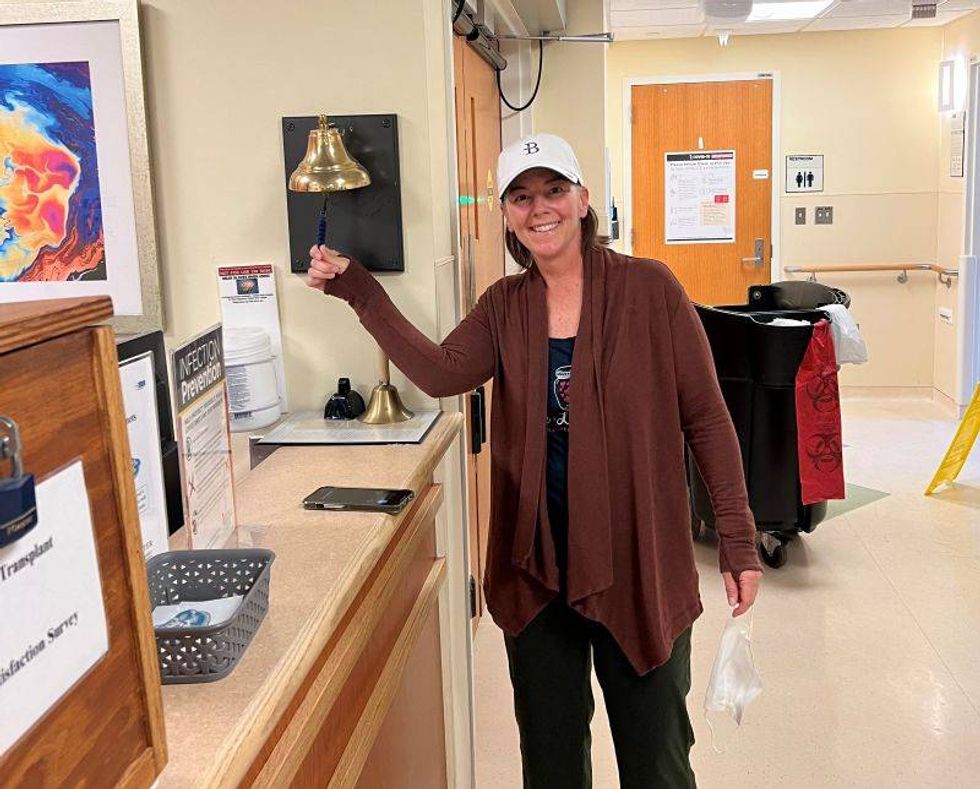
I spent two weeks in the hospital. I received high-dose chemotherapy that wiped out my existing bone marrow and took my entire immune system with it. All my childhood vaccines were gone. (I’ve spent the last two years repeating my childhood vaccinations, like polio, measles and hepatitis. I’m still not finished!)
Once the myeloma cells in my blood were destroyed, they put my stem cells (that were previously treated, collected and frozen with a procedure called apheresis) back into my blood, hoping they’d regenerate cancer-free.
 2023
2023
During those weeks on the transplant unit, I lost 18 pounds in 20 days and lost all my hair. I didn’t read and didn’t even watch TV: I just slept for 14 days. Seven days after the transplant, my white blood cells reached their lowest point, then started to rise. I’d be allowed to leave the hospital when the white cells reached a safe level.
My husband, Mitch, and my family and friends were incredibly supportive through all of this. Mitch took on all the heavy lifting of running our household and supporting me. I returned home to so much love and my dog going completely berserk with joy at seeing me.
 2023
2023
The amazing support from family and friends allowed me to focus on healing. The endless cast of loved ones bringing meals, surprises at the door, non-stop check-ins, shaven heads in solidarity, out of town stays — they all made me feel very loved and supported, which cleared my head to allow for positive movement forward.
I now had five months off from treatment while I recovered, but it was no vacation. I spent the first three weeks on the couch, unable to move and barely able to eat. After a week home I was so tired of being sick, I was determined to get up and move. I couldn’t tolerate or keep food down, but I found some Swedish fish in the kitchen and ate a few. The candy gave me just enough energy to start moving around the house and the push I needed to start eating, walking, working and living again.
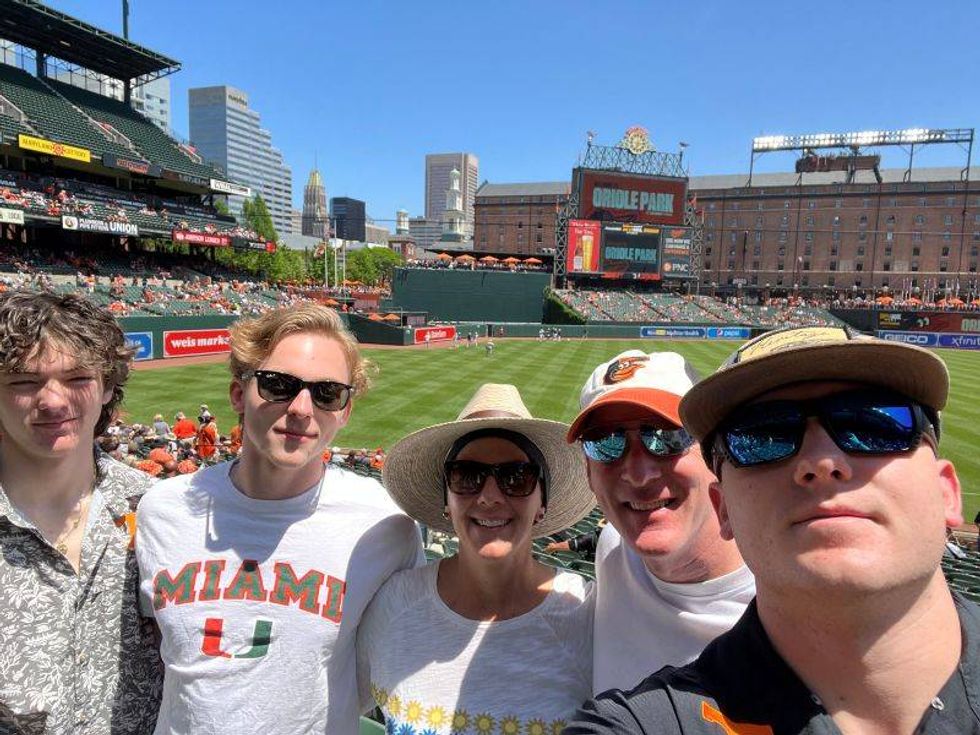 Keirney with her husband and three sons, six weeks after stem cell transplant, 2023
The next phase of my treatment trial was more infusions, which I again tolerated well and eventually reached “complete response.” This meant there was no evidence of cancer in my body. With multiple myeloma, many doctors don’t use the term “remission” since there is no cure — yet.
I have blood work drawn every three months, and for the past three visits, my lab work has looked great. I’m still taking one heavy-duty cancer pill at home. Recently, I’ve been wondering if I should stay on this treatment or give my body a break. Stopping this treatment carries the risks of a faster return of the cancer and losing the option to use this drug again: You can’t repeat treatments. Even though I still have numerous treatments open to me and they continue to introduce new treatments, I don’t want to run through all my options too quickly. This treatment is working and the side effects are minimal. For now, I probably won’t roll the dice.
I wouldn’t call cancer a blessing, but it has given me blessings and perspective. I notice the joy in the small moments more: watching the snow fall outside my window, walking the dog on a quiet afternoon and waking up each morning with the knowledge that I can choose hope today.
This resource was created with support from an educational grant from Johnson & Johnson.
Have your own Real Women, Real Stories you want to share? Let us know.
Our Real Women, Real Stories are the authentic experiences of real-life women. The views, opinions and experiences shared in these stories are not endorsed by HealthyWomen and do not necessarily reflect the official policy or position of HealthyWomen.