

Search
Latest Stories



Newsletter Sign-Up
Newsletter

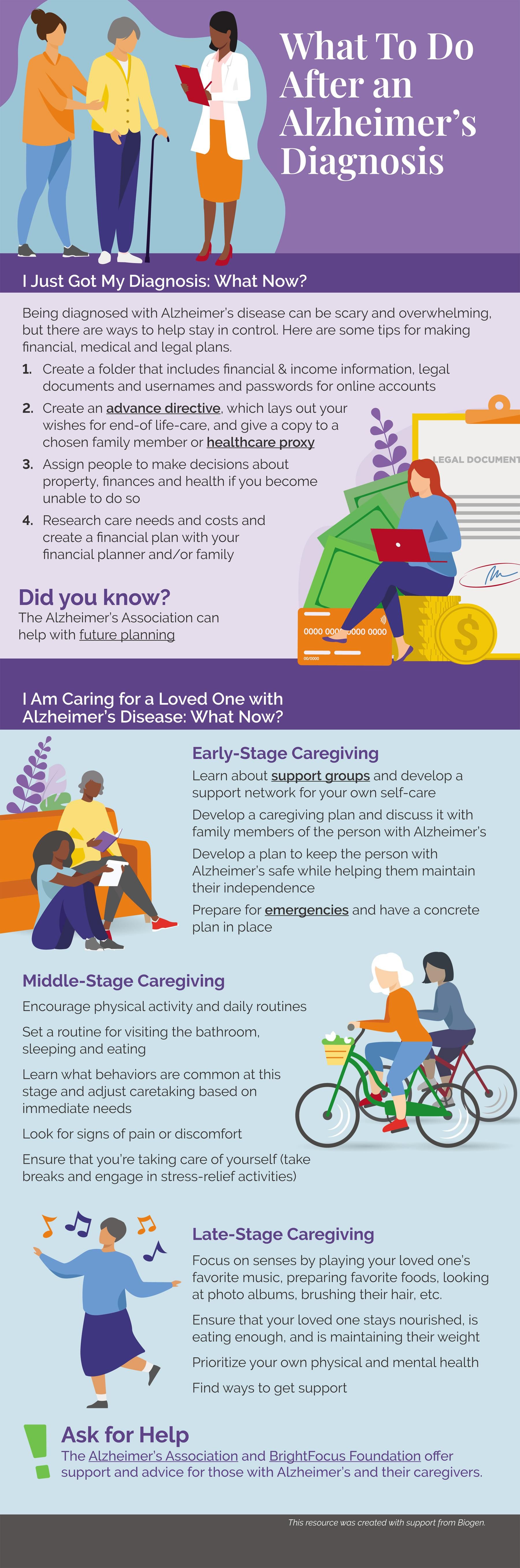
I just got my diagnosis: What now?
Being diagnosed with Alzheimer’s disease can be scary and overwhelming, but there are ways to help stay in control. Here are some tips for making financial, medical and legal plans.
- Create a folder that includes financial & income information, legal documents and usernames and passwords for online accounts
- Create an advance directive, which lays out your wishes for end-of life-care, and give a copy to a designated family member or healthcare proxy
- Designate people to make decisions about property, finances and health if you become unable to do so
- Research healthcare needs and costs and create a financial plan with your financial planner and/or family
Did you know?
The Alzheimer’s Association can help with future planning
I’m caring for a loved one with Alzheimer's disease: What now?
| Early-Stage Caregiving | Learn about support groups and develop a support network for your own self-care Develop a caregiving plan and discuss it with family members of the person with Alzheimer’s and your own family Develop a plan to keep the person with Alzheimer’s safe while helping them maintain their independence Prepare for emergencies and have a concrete plan in place |
| Middle-Stage Caregiving | Encourage physical activity and daily routines Set a routine for visiting the bathroom, sleeping and eating Learn what behaviors are common at this stage and adjust caretaking based on immediate needs Look for signs of pain or discomfort Ensure that you’re taking care of yourself (take breaks and engage in stress-relief activities) |
| Late-Stage Caregiving | Focus on senses by playing your loved one’s favorite music, preparing favorite foods, looking at photo albums, brushing their hair, etc. Ensure that your loved one stays nourished, is eating enough, and is maintaining their weight Prioritize your own physical and mental health Find ways to get support |
Don’t be afraid to ask for help
The Alzheimer’s Association and BrightFocus Foundation offer support and advice for those with Alzheimer’s and their caregivers.
This resource was created with support from Biogen.








Popular
1

What Happens in the Body During a Hot Flash
Sep 03, 2026
2

Understanding Menopause Stages and Terms
Sep 08, 2026
3

4

Biologics for Treating Asthma
Sep 22, 2026
5
Lo que ocurre en el cuerpo durante un bochorno
Sep 03, 2026
6
Support Our Mission
Keep Trusted Women’s Health Information Free
Your donation ensures every woman continues to have access to credible health content.More Stories








Everything you need to know about women’s health — in one place.