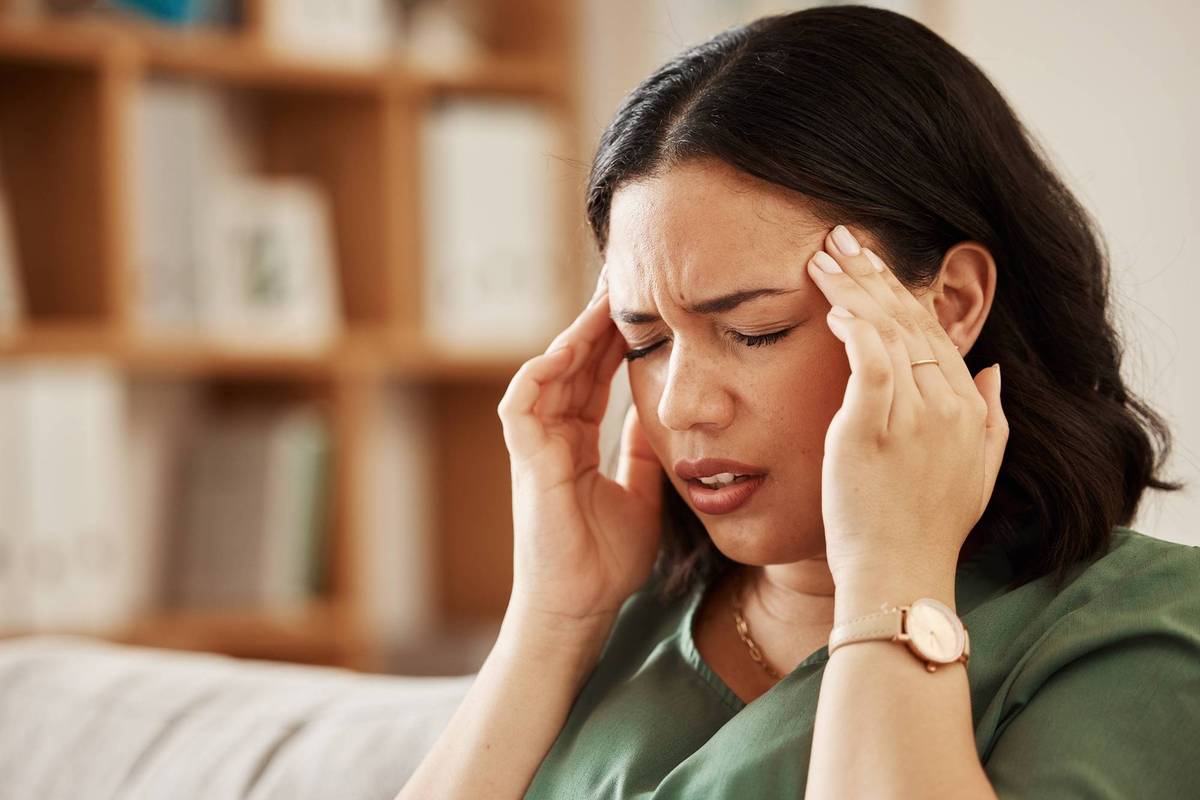
A dull, steady ache. Tightness or pressure on both sides of the head.
If these symptoms sound familiar — you’re not alone.
Tension headaches are the most common type of headache. About 3 out of 4 people in the U.S. experience tension headaches at some point in their lives. And women are more likely to get them than men.
Although tension headaches are common and not life-threatening, symptoms can vary per person. So how do you know if what you’re experiencing is just a headache or something more serious?
Primary vs. secondary headache
The big difference between primary and secondary headache is that a primary headache isn’t caused by a medical condition — it happens on its own.
A secondary headache is the result of an underlying health condition, medication or something serious like a brain tumor, blood clot or aneurysm.
“That's the question that doctors think about every time a new patient comes in with a headache that needs evaluation,” said Rashmi B. Halker Singh, M.D., a headache neurologist and member of HealthyWomen’s Women’s Health Advisory Council. “We ask ourselves if this is a primary headache disorder, like migraine or tension headache, or a secondary headache disorder where the headache is something else.”
Symptoms of secondary headache can include:
- A sudden, severe headache with a stiff neck
- A severe headache with nausea or vomiting and fever
- A headache with double vision or vision changes
- A headache that gets more painful over time
- A headache with weakness or numbness in any part of the body
- A headache with body convulsions or breathing problems
- Two or more headaches a week
- New onset of headaches that start after 50
- A headache triggered by coughing or straining
“The big one is what we call thunderclap headache,” Halker Singh said. “You have the worst headache of your life that goes from zero to 10 in less than 60 seconds. If this happens, you should go to the ER immediately because it might indicate something serious is going on that’s potentially life-threatening.”
If you’re having symptoms of secondary headache, you should see a clinician right away.
How to tell the difference between headache and migraine
While secondary headaches can be potentially life-threatening, primary headaches can also be serious and seriously affect quality of life.
Migraine attacks can have a wide variety of symptoms, but some common symptoms of a migraine attack include:
- Pain that pulses or throbs on one side of your head
- Pain that lasts 4-72 hours without treatment
- Sensitivity to sounds, light, smell and/or touch
- Nausea or vomiting
“If you have at least two of those symptoms, it's probably migraine,” Halker Singh said. “And if that’s the case, then it's a good idea to see a doctor because we have lots of things we can do to help.”
Treatment options such as hormone therapy, prescription triptans taken with non-steroidal anti-inflammatory drugs, like ibuprofen, and CGRP antagonists may help with migraine.
Perimenopause increases the risk for migraine
“Migraine is very common in women, and it's much more common in women compared to men. In fact, about 1 out of 5 women have migraine whether they know it or whether they've recognized it or not,” Halker Singh said.
This is especially important to note for women in perimenopause as migraine disease can flare up or even start during this time because of fluctuating estrogen levels. Women may also have heavier or more frequent periods during perimenopause, which can trigger menstrual migraine attacks.
Don’t ignore headache symptoms
Headache is common, and for some people, just an occasional annoyance. But if you’ve noticed new or developing symptoms including more frequent headaches or headaches that don’t go away, talk to your clinician. And any sudden or severe symptoms should get checked out right away.
“If someone is concerned about their symptoms, it’s worth getting checked out,” Halker Singh said. “It could be a secondary problem or it could be a primary headache disorder like migraine and we can put them on a treatment plan that can really impact their quality of life.”
- When It's More Than Just a Bad Headache - HealthyWomen ›
- 8 Types of Migraine Attacks ›
- How to Know If You’re Experiencing Migraine ›
- Migraine Toolkit ›
- Clinically Speaking: Questions and Answers About Migraine Disease ›