

Search
Latest Stories


Newsletter Sign-Up
Newsletter

May is Healthy Vision month.
If you’re holding your smartphone at arm’s length to read the screen — not to take a selfie — you could have presbyopia.
Presbyopia is when your eyes lose the ability to focus on objects that are close-up. That sounds scary, but presbyopia is a natural part of aging and it happens to everyone.
Over time, the lens of your eyes hardens and becomes less flexible, which makes it more difficult for your lens to change shape in order to focus on objects that are close — think reading a book or looking at your watch.
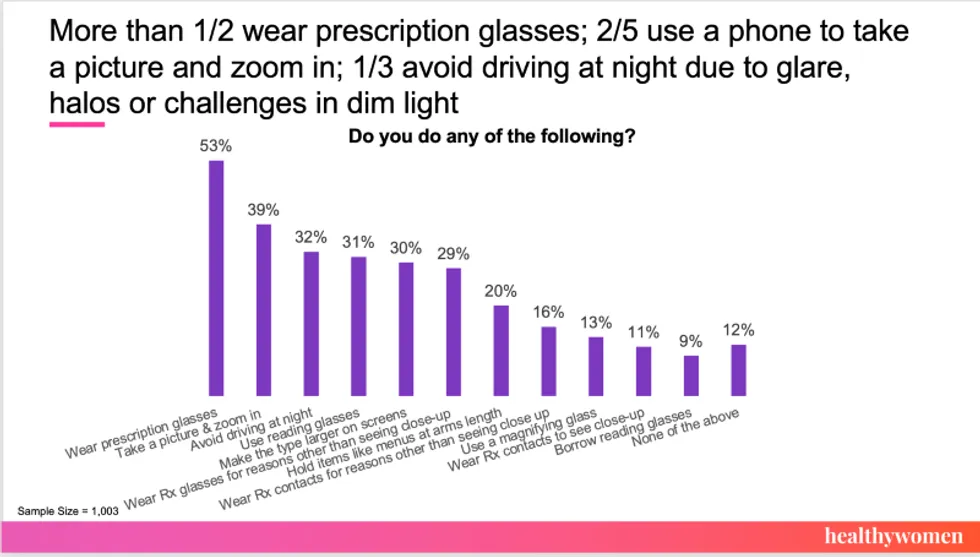
In our recent survey, we asked women and people assigned female at birth (AFAB) about eye health and their experience with presbyopia. Overall, prescription glasses were the go-to to help with symptoms of presbyopia (65%).
A few creative ways that participants said they adjusted to symptoms of presbyopia included:
- Holding items at arms length
- Borrowing reading glasses
- Making fonts larger
- Using a magnifying glass
- Zooming in on pictures
Here’s more information on presbyopia, treatments for presbyopia and our survey results.
Risk factors for presbyopia
Age is the top risk factor for presbyopia. Most people start to see symptoms — blurred vision, headaches, eyestrain, inability to read close-up — in their 40s.
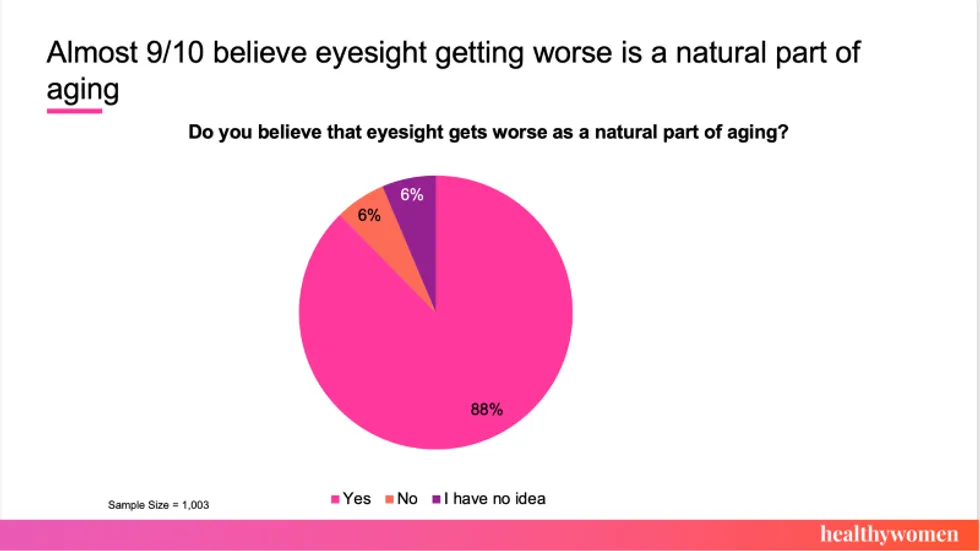
In our survey, nearly 9 out of 10 people were aware that age has a negative effect on eyesight. But participants who were diagnosed with presbyopia were significantly more likely to believe eyesight gets worse with age compared to participants who haven’t been diagnosed with presbyopia.
Although presbyopia happens to pretty much everyone, risk factors for premature presbyopia can include:
- Being farsighted (the inability to see things that are near to the eyes)
- Having specific health conditions such as diabetes, cardiovascular disease and multiple sclerosis
- Taking certain medications such as antidepressants, diuretics and antihistamines
How to diagnose presbyopia
Presbyopia is diagnosed during a routine eye exam.
Your healthcare provider (HCP) will give you a few different tests to check your vision.
- Visual acuity test (the big letters on a wall chart) to check your eyesight
- Refraction test for prescription lenses
- Slit lamp exam to check the structure of the eyes
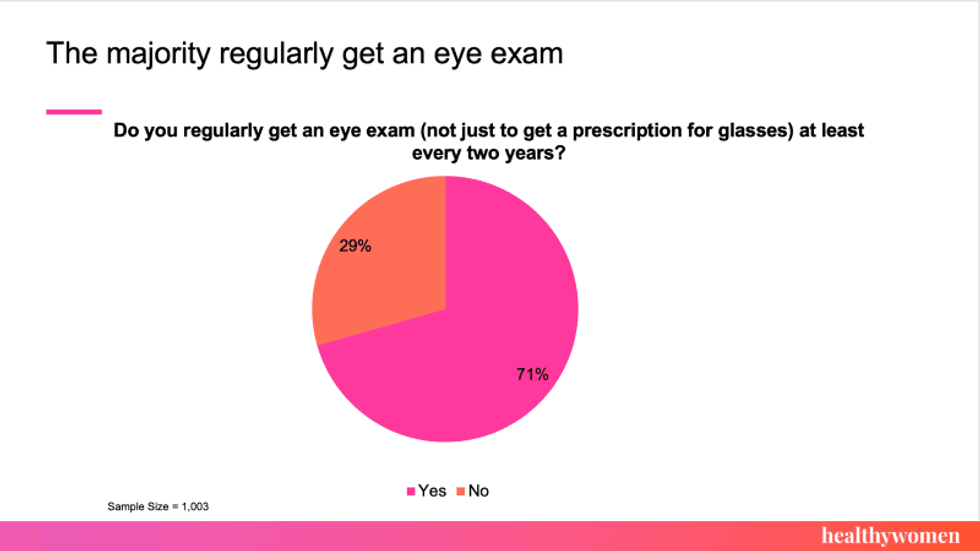
Per our survey, most participants — 7 out of 10 — get a regular eye exam.
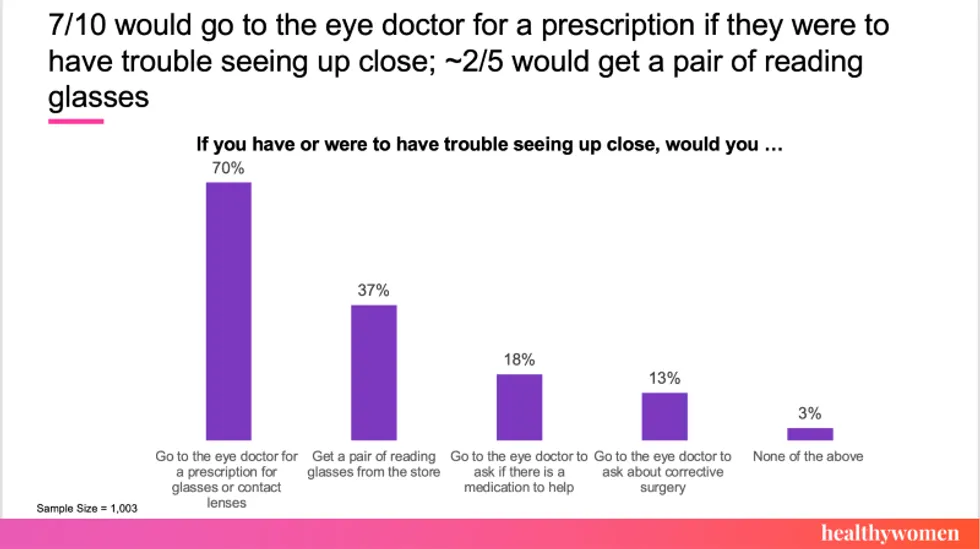
And most people — also 7 out of 10 — would see an HCP if they were having symptoms of presbyopia, which is crucial for catching changes in eye health.
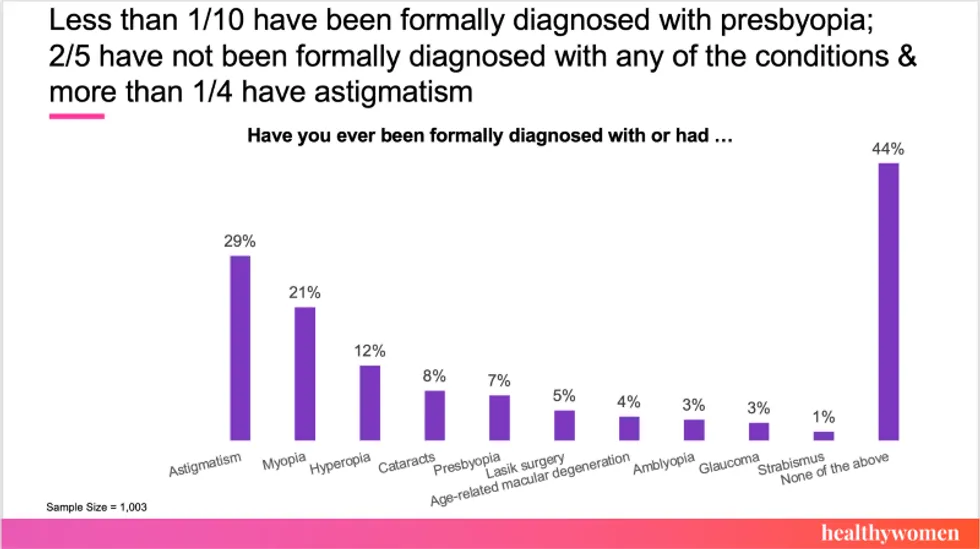
While only a few people surveyed had been diagnosed with presbyopia, it’s crucial to talk to your HCP if you notice any vision changes — however small — and get regular eye exams to catch any problems early when they are easier to treat.
Treatments for presbyopia
Presbyopia happens with age — so we can’t put the genie back in the bottle. But there are treatment options that can help you see clearly.
Treatments for presbyopia include:
- Glasses (with or without prescription)
- Contact lenses
- Surgery
- Prescription eye drops
Survey participants living with presbyopia were more likely to get prescription reading glasses (62%) than people who were not diagnosed with presbyopia (34%).
Eye exams are a clear winner
Without treatment, presbyopia can cause headaches, eye strain and overall lower quality of life. So, if you’re in your 40s, get your eyes checked and save the arm extensions for taking selfies in your new glasses.
This educational resource was created with support from Viatris, a HealthyWomen Corporate Advisory Council member.






Popular
1
2
What Is Chronic Spontaneous Urticaria (CSU)?
Jun 29, 2026
3

¿Qué es la urticaria crónica espontánea (UCE)?
Jun 29, 2026
4

Metabolic Syndrome 101
Sep 28, 2026
5
Comic: Edna Gets an Endoscopy
Aug 05, 2026
6
Historieta: Edna se hace una endoscopía
Aug 05, 2026
Support Our Mission
Keep Trusted Women’s Health Information Free
Your donation ensures every woman continues to have access to credible health content.More Stories


Everything you need to know about women’s health — in one place.