Stress
Stressors are the external events, including pressures in people's lives, such as divorce, marriage, children, and work and money pressures. The experience of stress, however, is related to how you respond to these stressors. READ MORE

What Is It?
Stressors are the external events, including pressures in people's lives, such as divorce, marriage, children, and work and money pressures. The experience of stress, however, is related to how you respond to these stressors.
Stress can be your friend or your foe. When stress fuels the spark of personal achievement, it can work to your benefit by making you more perceptive and productive, acting as a motivator and even making you more creative. But when stress flames out of control—as it often does for many of us—it can take a terrible toll on your physical and emotional health, as well as your relationships.
While stress is not considered an illness, it can cause specific medical symptoms, sometimes serious enough to send you to the emergency room or your health care professional's office. According to the American Psychological Association's 2010 Stress in America survey, the majority of Americans report living with moderate or high levels of stress. And on average, those who report their health as fair or poor have more stress (an average stress rating of 6.2 on a 10-point scale) compared with those who rate their health as excellent or very good (an average stress rating of 4.9 on a 10-point scale).
In today's fast-paced world, women are experiencing more stress at every stage of their lives than ever before. Juggling job pressures, family schedules, money issues, career and educational advancement and child and elder-care concerns are only a few of the common stressors confronting women.
Stressors are the external events, including pressures in people's lives, such as divorce, marriage, children, work and money. The experience of stress, however, is related to how you respond to these stressors. One person's stressor can be another person's motivator.
You can learn to manage how you respond to stressors through relaxation, meditation, some forms of psychotherapy and exercise, among other methods. However, you can also work to reduce the stressors in your life, such as learning to say no to some commitments, simplifying your life or leaving a bad job or relationship. Sometimes techniques that are originally designed to simply reduce your stress response and improve coping (for example, meditation and psychotherapy) can lead you to choose to reduce the stressors in your life because you begin to see more clearly what needs to change.
Working mothers, regardless of whether they are married or single, face higher stress levels—both in the workplace and at home. The National Institute for Occupational Safety and Health (NIOSH), the US agency responsible for conducting research and making recommendations for the prevention of work-related illness and injury, provides these statistics regarding stress in the workplace:
Stress has been linked with a variety of physical ailments from headache to depression to symptoms that mimic a heart attack. The balance between stressors and your ability to cope with them, however, can determine your mental health. When the stressors in your life match your coping abilities, you feel stimulated, engaged and appropriately challenged. Too many stressors in your life that overwhelm your attempts to cope can result in depression or anxiety.
Depression can feel like a pervasive sense of hopelessness, a feeling of wanting to give up, tearfulness or a sadness that does not seem to go away after a couple weeks. Anxiety can feel like a chronic state of feeling "keyed up" or "on edge." Some people who are depressed or anxious have physical symptoms, such as changes in sleep or appetite (too much or too little).
Chronic depression and anxiety have been linked to other physical problems, such as cardiovascular disease, chronic pain, hypertension and diabetes. If you notice symptoms of depression or anxiety, it is important to get them treated. Your health care professional or mental health professional can help.
Regardless of your physical or mental symptoms, talk about the stress in your life with your health care professional. A thorough assessment by your health care team will help determine the cause of these symptoms. You may find that stress has triggered an illness, such as high blood pressure.
Stress and Your Body
Research indicates that women's biological response to stress is to "tend and befriend"; this is, make sure the children are safe and then network with other women in stressful times. Men's biological reaction to stress is to go into the "flight-or-fight" mode. Studies indicate that the hormone oxytocin, which has a calming effect, is released during stressful times in both men and women.
Estrogen may enhance oxytocin release, while testosterone may diminish it; this may be one reason that women seem to seek social support more often then men when under stress. However, women have also been socialized from an early age to look to their social group, particularly their female friends, for support when under stress, whereas men tend to engage in activities, such as exercise or even using substances, when under stress.
During stress, hormones including adrenaline and cortisol flood the body, resulting in:
All this can strain your heart and artery linings. In fact, if you already have coronary heart disease, stress might lead to chest pain, called angina. Plus, the increased tendency for blood to clot during stress may lead to a clot in your coronary arteries, causing a heart attack.
Other physical dangers of stress include stomach problems as your bowel and intestinal muscles constrict and depression and anxiety. While stress doesn't cause these mental illnesses, it can activate them in people who may already be prone to them.
Stress can also cause what has been termed "toxic weight gain." Cortisol, a hormone released when you're under stress, is an appetite trigger. That's why so many women eat more—and less-than-healthy food—when under a lot of stress. Those extra calories are converted to fat deposits that gravitate to the waistline. These fat deposits, called visceral fat, are associated with life-threatening illnesses such as heart disease, diabetes, high blood pressure, stroke and cancer. Chronically high levels of cortisol may stimulate the fat cells inside the abdomen to fill with more fat. As you age, this expanding waistline can be life threatening.
Too much stress can also affect your immune system, weakening it and making you more susceptible to colds, coughs and infections.
Other symptoms of stress include muscular tension, headaches, gastrointestinal illnesses and sleeping more or less than normal.
Stress Triggers
It is important to distinguish between the acute stress response—when your heart beats faster and your breath comes faster as you get a rush of adrenalin—and the chronic stress response, in which you are continually under stress.
This chronic stress response is the one that causes the most problems as it literally wears out your body functions, leading to disease. That's because our physical stress response was designed for emergency situations, such as fleeing an attacking animal, not for the everyday stressors we experience in modern society.
You may feel stressed in response to external or internal triggers, such as stressors in your life or your own way of relating to yourself. These include:
Stress is an individualized experience. What may be stressful to you may not affect someone else. Your past experience, other stressors in your life and even heredity can affect what you experience as stressful.
If you are suffering from stress, you may be experiencing a variety of symptoms that feel severe enough to prompt you to see a health care professional. These include:
There is no specific test to diagnose stress. Typically, your health care professional conducts a variety of tests (which may include a personal and family health history, blood and urine tests and other assessments) to rule out various medical conditions.
Because your symptoms may be similar to those of depression, your health care professional should also evaluate your mental state to determine if you may be suffering from a depressive or anxiety disorder. Symptoms associated with stress, anxiety and sleeplessness, for example, typically subside when the stress triggering them subsides. When these same symptoms are caused by depression or another mood disorder, however, they may not go away without medication or therapy.
If stress is identified as the culprit for your symptoms, you may want to ask your health care professional for stress management strategies and consider ways to control the stressors in your life—before your health is affected.
Reducing or eliminating the things that cause stress and changing how you react to it are the safest and most effective ways to treat stress. No single method of stress management is always successful, so you might want to try a variety of approaches. It's also important that you treat any medical symptoms stress exacerbates. However, keep in mind that treating the stress may not cure the medical problem.
Reducing stress can be difficult. Often, people succeed in relieving stress in the short term but return to old stress-producing habits. Plus, personal responsibilities don't alwayslend themselves to stress-reducing tactics. The process of learning to control or redirect stress is lifelong, but working to master it will improve your lifelong health.
Cognitive-behavioral therapy, which helps you substitute desirable responses and behavior patterns for undesirable ones, is one proven way to reduce stress. It is very important that you learn cognitive-behavioral coping skills from a professional. They include:
In addition to cognitive-behavioral methods to approaching stress, learning a relaxation technique—the natural unwinding of the stress response—can also help. A stress management specialist can teach you some relaxation techniques, including:
Your health care professional will probably discuss other issues with you, such as the necessity of:
You can't simply wish away stressful events from your life. The key is to handle the stress appropriately. The following may enhance your ability to manage stressful events in your life:
You don't need to do all of these. Some may work for some people and others for other people. The key is to use the ones that work for you. Some of these become more effective with practice. If you are feeling especially overwhelmed, seek help. There is no need to suffer and there are trained people out there to help.
Review the following Questions to Ask about stress so you're prepared to discuss this important health issue with your health care professional.
What causes a person to experience stress is different for different people; what may be one person's stressor can be an exciting motivator to another person. However, this doesn't mean one person is weak and the other is strong. That being said, some common causes of stress are changes in your life like marriage, divorce, a new job or the birth of a child; trauma or crises, like illnesses, death of a loved one, or a traumatic event like a burglary; excessive demands on you and your time; conflicts or unpleasant people; small daily hassles; barriers that prevent you from reaching your goals; feeling little control over your life; and boring or lonely work.
You need to seek care immediately to rule out heart disease or to begin treatment for any heart-related illness you might have. While you might not have a physical illness, you do need to have this symptom diagnosed. If you don't have a serious illness—rather the stress in your life is causing this symptom—you need to address this issue so your health doesn't deteriorate further.
While stress is not itself considered an illness, it is a common cause of specific medical symptoms from high blood pressure to muscle aches and stomach ulcers. According to the American Psychological Association (APA), in 2010, 51 percent of people surveyed reported fatigue, 40 percent reported headaches, 49 percent reported lack of motivation or energy, and 56 percent reported irritability or anger as a result of stress.
According to the APA, women report higher levels of stress than men, and women are less likely to think they are doing enough to manage the stress in their lives. On a 10-point scale, 28 percent of women report an average stress level of eight, nine or 10, versus 20 percent of men. In addition, those most likely to report frequent mental stress include younger adults, working mothers, divorced or widowed individuals, the unemployed and those with low incomes.
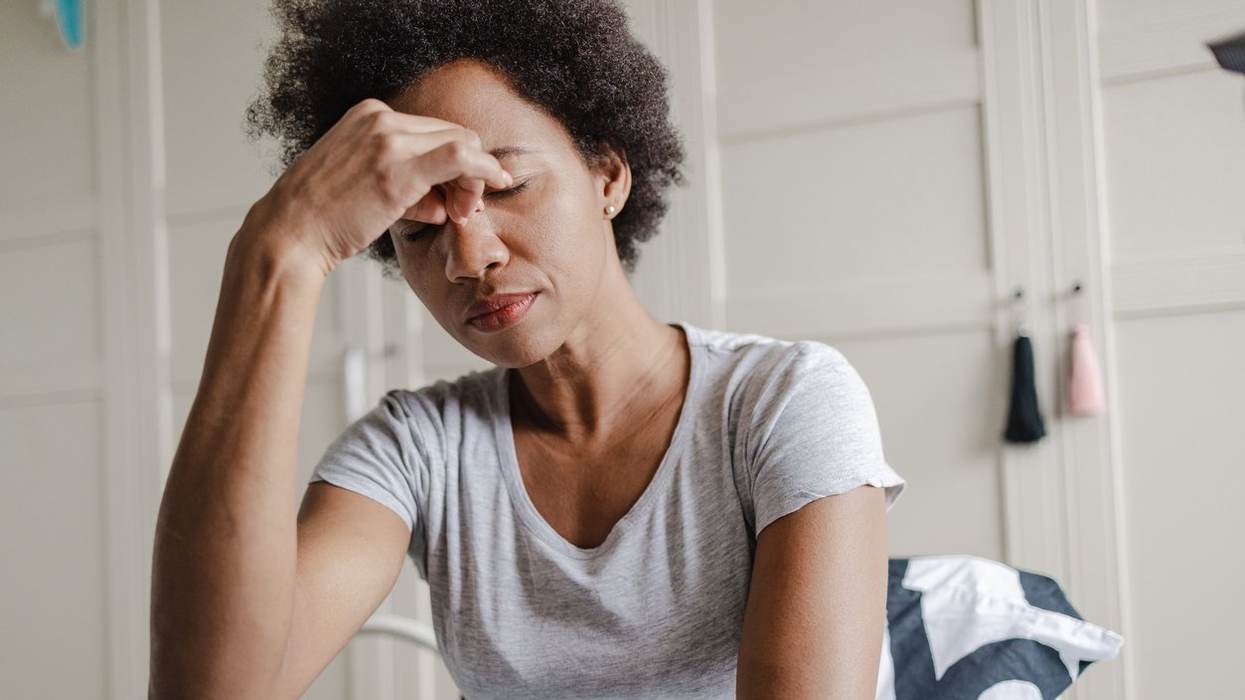
Stress can cause symptoms of a variety of physical and mental illnesses and make you more susceptible to other illness. Some specific symptoms of stress include feeling anxious, depressed or irritable; stomach upset, diarrhea or appetite changes; muscular tension; headaches; mental or physical fatigue and apathy; sleep disturbances and frequent minor illnesses.
You probably can't completely avoid stressful situations, but you can alter your reaction to those situations, resulting in far fewer physical symptoms of stress and negative results. With enough "tools," some stress may actually feel motivating.
While you can't necessarily control the events that cause you stress, you can control how you manage the stress. Cognitive-behavioral methods, a form of psychological treatment that is used to help you substitute desirable responses and behavior patterns for undesirable ones, are the most effective ways to reduce stress. These methods include identifying sources of stress and then altering or avoiding these circumstances; restructuring your priorities and goals; and adjusting your responses to stress by discussing your feelings, keeping your perspective, looking for the positive and using humor. In addition, learning relaxation techniques—the natural unwinding of the stress response—can be helpful. Finally, working with someone to change your life in ways that reduce the external stressors is also helpful. Improving how you cope with stress as well as reducing stressors in your life go hand in hand. Mental health professionals can help you do both of these things.
For information and support on coping with Stress, please see the recommended organizations, books and Spanish-language resources listed below.
American Institute of Stress
Website: https://www.stress.org
Address: 124 Park Ave.
Yonkers, NY 10703
Phone: 914-963-1200
Email: stress125@optonline.net
American Psychological Association
Website: https://www.apa.org/
Address: 750 First St., NE
Washington, DC 20002
Hotline: 1-800-374-2721
Phone: 202-336-5500
American Self-Help Group Clearinghouse
Address: 375 E. McFarlan St.
Dover, NJ 07801
Hotline: 1-800-367-6274
Phone: 973-989-1122
Emotions Anonymous
Website: https://www.emotionsanonymous.org
Address: EA International Service Center
P.O. Box 4245
St. Paul, MN 55104
Phone: 651-647-9712
Email: infodf3498fjsd@emotionsanonymous.org
Heal Within, an element of InnerSite, Inc.
Website: https://www.healwithin.com
Address: 208 S. Louise
Glendale, CA 91205
Phone: 818-551-1501
Email: lizab@healwithin.com
Pulmonary Hypertension Association
Website: https://www.phassociation.org
Address: 801 Roeder Road, Suite 400
Silver Spring, MD 20910
Hotline: 1-800-748-7274
Phone: 301-565-3004
Email: adrienne@phassociation.org
Women's Health Initiative (WHI)
Website: https://www.whi.org
Address: 2 Fred Hutchinson Cancer Research Center
1100 Fairview Ave N, M3-A410
PO Box 19024
Seattle, WA 98109
Phone: 800-218-8415
Email: helpdesk@whi.org
Books
10 Steps to Take Charge of Your Emotional Life: Overcoming Anxiety, Distress, and Depression Through Whole-Person Healing
by Eve A. Wood, M.D.
Calm at Work: Breeze Through Your Day Feeling Calm, Relaxed and in Control
by Paul Wilson
The Food and Feelings Workbook: A Full Course Meal on Emotional Health
by Karen R. Koenig
MindWalks: 100 Easy Ways to Relieve Stress, Stay Motivated, & Nourish Your Soul
by Mary H. Frakes
RealAge Makeover: Take Years Off Your Looks and Add Them to Your Life
by Michael F. Roizen
Relaxation and Stress Reduction Workbook
by Martha Davis, Elizabeth Robbins Eshelman, Matthew McKay and Patrick Fanning
Relax: You May Only Have a Few Minutes Left: Using the Power of Humor to Overcome Stress in Your Life and Work
by Loretta LaRoche
The 6 Stress Points in a Woman's Life
by Kevin Leman
Stress: Living and Working in a Changing World
by George Manning, Kent Curtis, and Steve McMillen
Stress Management Sourcebook: Everything You Need to Know
by J. Barton, Phd Cunningham
Take Back Your Life: Smart Ways to Simplify Daily Living
by Odette Pollar
The Women's Concise Guide to Emotional Well-Being
by Karen J. Carlson M.D., Stephanie A. Eisenstat M.D., and Terra Ziporyn Ph.D.
The Worry Cure: Seven Steps to Stop Worry from Stopping You
by Robert L. Leahy
Your Body Speaks Your Mind: Decoding the Emotional, Psychological, and Spiritual Messages That Underlie Illness
by Deb Shapiro
Spanish-language resources
Medline Plus: Stress
Website: https://www.nlm.nih.gov/medlineplus/spanish/stress.html
Address: US National Library of Medicine
8600 Rockville Pike
Bethesda, MD 20894
Email: custserv@nlm.nih.gov
American Academy of Family Physicians
Website: https://es.familydoctor.org/prevencion-y-bienestar/bienestar-emocional/salud-mental/




Support Our Mission