

Search
Latest Stories





Newsletter Sign-Up
Newsletter

Chronic spontaneous urticaria (CSU) are kind of like your least favorite aunt. They show up unannounced and stay well past their welcome.
These red, itchy welts have no obvious cause and last for 6 weeks or longer. And the effects of the continuous itching caused by CSU go far beyond just your skin. Living with CSU can affect your mental health, as well as your work and personal life.
Symptoms of chronic spontaneous urticaria
CSU isn’t predictable. Unlike hives that appear when you’ve been exposed to something you’re sensitive or allergic to, CSU hives come and go, seemingly at random. And they can stay for a long time. This means you might be having a “good” week, with few or no hives and you make plans to go out. Suddenly the hives appear, making you miserable. Or they could come out just before a big presentation at work or a much anticipated (and needed) vacation. This unpredictability can make you uncertain about making plans and frustrate you if you need to cancel them. It also can affect your relationships if those around you don’t understand how hard it can be to have recurring hives like this.
Here are four ways living with CSU might affect your life.
Increased anxiety and depression
Researchers have found that people living with CSU have higher rates of anxiety and depression — up to six times higher — than those who don’t have the condition. If left untreated, depression can lead to physical problems, including heart disease and stroke. Both anxiety and depression can also affect your ability to get medical help, follow treatment plans, go to work or school, and take care of yourself and your family.
A form of talk therapy, cognitive behavior therapy (CBT), is helpful for many people with anxiety and depression. The goal with this type of therapy is to find coping strategies and help you manage your thoughts and feelings. Speak with your healthcare provider (HCP) about getting help if you’re experiencing anxiety or depression. There are also groups that can offer support, such as WeCU and the Allergy & Asthma Network.
Sleep deprivation
We know that if we have pain, our sleep can suffer, but many people don’t realize how disruptive itching can be, so they might not understand how tired or fatigued you are. More than half of people with CSU can’t sleep properly. This in turn can worsen depression and anxiety, as well as other mental health issues. Sleep deprivation can also increase your risk of having accidents, injuries and long-term health issues, like heart disease and some types of cancer.
If CSU is affecting your sleep, it’s important you speak to your HCP about it. If you’re taking second-generation antihistamines, which don’t make people sleepy, your HCP might suggest adding another one at night that does cause sleepiness. There may be other medication options that can help, too.
Working on mind-body and relaxation approaches might be helpful. There are many self-help options to help people sleep, but working with a therapist might be the best way to start, especially one who works with people living with CSU or similar health problems.
Reduced enjoyment of social and work life
There are several reasons CSU might have a strong impact on your social life, work or education.
Adults with CSU miss more work than those with other allergy-related conditions, and they don’t perform as well while they’re at work. According to one study, those with mild CSU lost about 12% of their work productivity, and those with severe CSU lost as much as 44%. The same happens with children with CSU. They do worse at school than their classmates who don’t have these long-term hives.
Daily tasks and intimacy can be affected as well. It’s not unusual for some people with CSU to have trouble keeping up with personal care, family life and housekeeping. Sexual activity and intimate relationships can also become difficult. Maintaining a relationship can be challenging if you’re self-conscious of how your skin looks, you’re itching all the time, you’re fatigued, and your mental health is affected.
Hobbies and just getting out to have fun are usually a good way to relax and recharge. But if you’re living with CSU, they might be the last thing you’re thinking of.
Finding clothing that feels comfortable can be tough. Tight clothes rub against your skin and some clothing is made of irritating fabrics, like wool, or they have textures or seams that can feel uncomfortable on your skin. If you have a particular style that you like to follow, it can be disappointing if you have to choose looser fitting clothing in different fabrics that don’t match what you’d like to wear. If you have to wear a uniform at work or school, this can also be an even bigger problem, and you might need to ask for accommodations either in style or fabric.
Increased risk for infection
Although it’s not common, if you scratch your hives enough to break the skin, you can get an infection, which can become serious if not treated. If you do break the skin, be sure to clean the area, apply antibiotic ointment and cover the broken skin to protect it. See your HCP if you develop any redness or swelling, or if you see any discharge or pus coming from the area.
Taking charge of CSU
CSU is more than “just hives.” It has a significant impact on your life. Discussing your condition with your HCP to ensure that you find the right medication to control your hives and seeking support from the people around you as well as groups and communities that understand CSU can go a long way in helping you live a full life with this chronic condition.
This educational resource was created with support from Regeneron and Sanofi.








Popular
1

Biologics for Treating Asthma
Sep 22, 2026
2
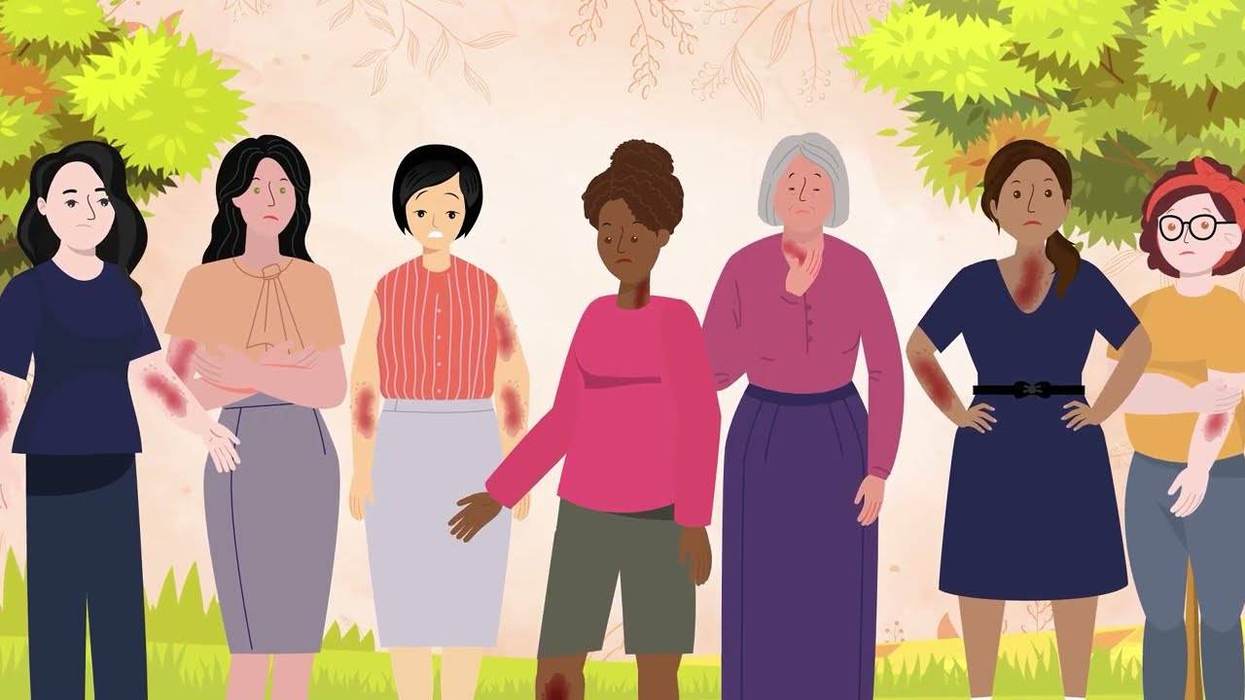
Bye, Bye, Itch! Managing Chronic Hives at Home
Sep 23, 2026
3
Biofármacos para el tratamiento del asma
Sep 22, 2026
4

¿Qué es la urticaria crónica espontánea (UCE)?
Jun 29, 2026
5

The Skinny on Microdosing GLP-1 Drugs
Mar 06, 2025
6

10 Reasons You Might Have Blood in Your Urine
Feb 24, 2025
Support Our Mission
Keep Trusted Women’s Health Information Free
Your donation ensures every woman continues to have access to credible health content.More Stories






Everything you need to know about women’s health — in one place.