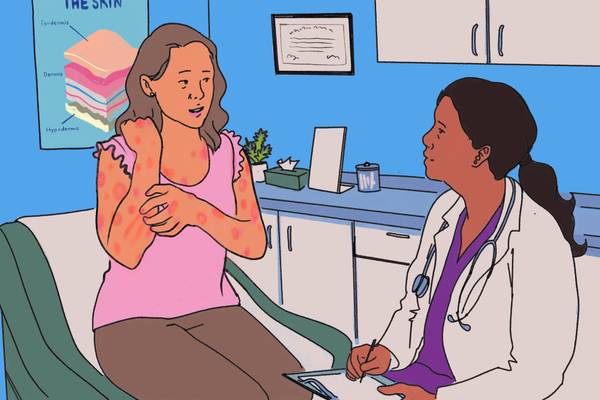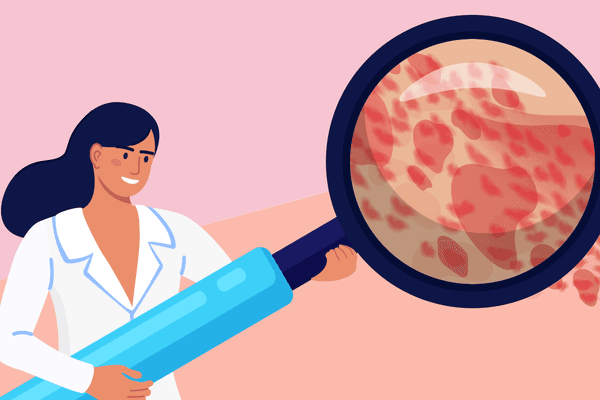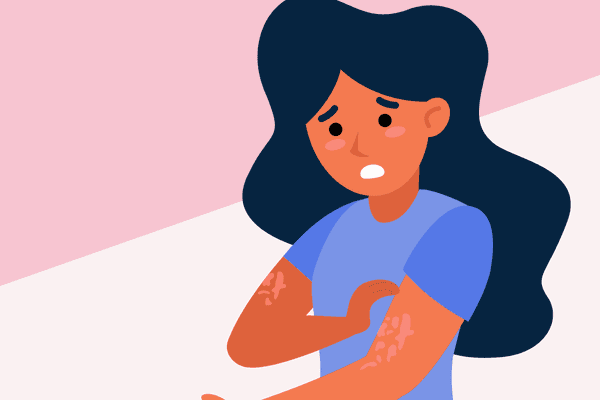
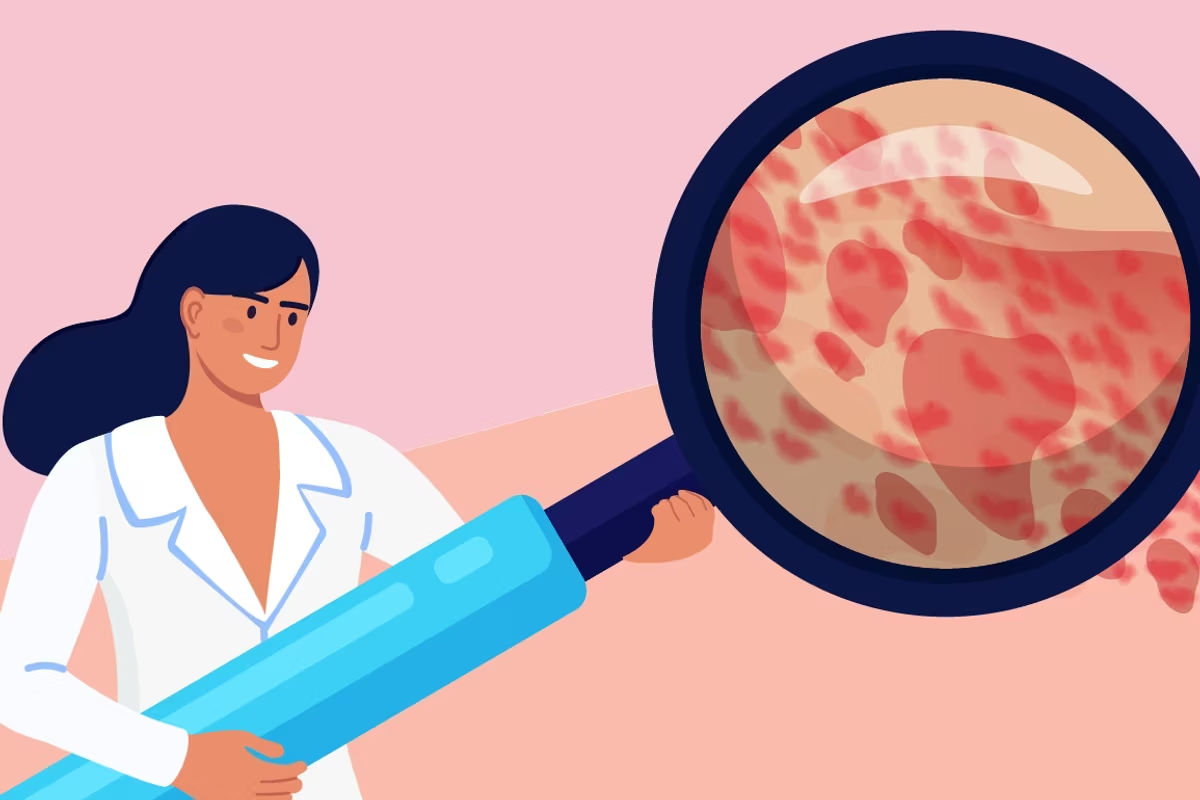
Hives are red, itchy raised welts or patches on the skin.
The medical term for hives is urticaria.
What is chronic spontaneous urticaria?
- Chronic = Lasts for longer than 6 weeks
- Spontaneous = Happens on its own, without an obvious trigger
- Urticaria = Hives
Why do hives happen?
Cells in your body store histamine, a chemical released by the immune system when it recognizes a threat.
Histamine affects blood vessels
Histamine released by your body opens up your blood vessels to allow for more blood flow. This can lead to skin symptoms like:
- Swelling
- Redness
- Itchiness
What triggers hives?
Some common triggers of hives are:
- Allergies
- Bacterial infections, including UTIs and strep
- Viral infections, including colds and mono
- Certain medicines, including antibiotics and ibuprofen
- Extreme hot or cold temperatures
But with CSU, there are no identifiable triggers and the cause is usually unknown.
CSU and inflammation
CSU is often linked to type 2 inflammation , which is damaging inflammation caused by an overactive immune system that goes on the attack when there’s nothing to fight.
What to do about CSU
It can be tricky to figure out what exactly triggers CSU, making it hard to handle.
If your hives are not going away or keep coming back, consider seeing an allergist. Allergists are doctors who specialize in treating allergy-related health issues.
How an allergist can help
An allergist will talk to you about your CSU symptoms, give you a physical exam and possibly do some lab work to help figure out what’s triggering your hives.
Treating CSU
In addition to helping identify your triggers, your allergist may suggest treatments to help control your CSU. These include:
- Antihistamines
- Biologics (Monoclonal antibodies that target the immune system)
For more information
To learn more about CSU, talk to your healthcare provider.
This educational resource was created with support from Regeneron and Sanofi.
- Like an Itch That Couldn’t Be Scratched, My Hives Kept Coming Back ›
- More than Just Skin Deep: The Impacts of Living with Chronic Spontaneous Urticaria ›
- Managing Chronic Hives That Come Out of Nowhere ›
- What Is Chronic Spontaneous Urticaria (CSU)? ›
- Chronic Spontaneous Urticaria 101 ›
- Holly has chronic spontaneous urticaria - HealthyWomen ›