
womenTALK: Blog

Click to rate
Your rating: None Average: 5 (1 vote)

Thursday, May 13th 2010

Things Every Woman Must Know About Strokes

authored by Sheryl Kraft

I was shocked when my son told me about his friend who, at age 24, had suffered a stroke. Since then, I've been more aware of the fact that you don't have to be anywhere near elderly for strokes to happen. That's what I always thought – that strokes were for much older people; people who smoked, were overweight and all in all, did not live healthy lives.

Not so true.

Another case in point: Beau Biden, the son of the Vice President who, at 41 and in seemingly tip-top shape, had a mild stroke this week. Fortunately by all indications, he's going to make a full recovery. Doctors haven't figured out what caused Biden's stroke, but what they do know is that mild strokes could be caused by a number of things, including a blockage that ensues from a tear in the wall of one of the major arteries that leads to the brain. What accounts for this? It can be a structural abnormality or a sudden twisting movement (like whiplash, or even a tennis serve or other physical activity).

Scary, isn't it? What is even more frightening is that strokes at younger ages are more common than most of us realize – 10 to 15 percent, in fact. for people younger than 45.

If you're reading this and don't know all that much about the risks or symptoms of strokes, you're hardly alone. But what you don't know can absolutely hurt you. The best thing you can do for yourself is to be aware of the symptoms and get immediate attention.  It could be the difference in surviving or not; it could mean no disability or lingering after-effects vs. a lifetime of resulting speech, memory or mobility problems. 

Each year, 55,000 more women than men suffered strokes. That's partly a result of our longer life expectancy (yay, us!), but also because we’re not familiar with the warning signs.

An interesting and helpful survey was done recently. When healthywomen partnered with the National Stroke Association and the American College of Emergency Physicians, they found that women may be dramatically underestimating their risk and warning signs. For every minute the brain is deprived of oxygen, it may lose up to 1.9 million brain cells, says Angela Gardner, M.D., President of the American College of Emergency Physicians.

Do you know the six symptoms of a stroke? (I didn't).

  • Sudden numbness or weakness on one side of the face, or facial drooping
  • Sudden numbness or weakness in an arm or leg, especially on one side of the body
  • Sudden confusion, trouble speaking or understanding speech
  • Sudden trouble walking, dizziness, loss of balance or coordination
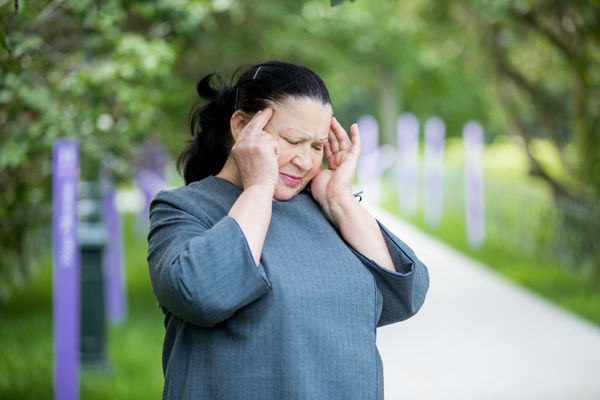
  • Sudden severe headache with no known cause.

Another surprising finding: Women in the survey believed that breast cancer is five times more prevalent than stroke. But in truth, women are twice as likely to die from stroke as from breast cancer, according to James Baranski, CEO of the National Stroke Association.

Here's a quick screening tool to identify stroke symptoms that is easy to remember…just think of the word "FAST":

  • Face – Ask the person to smile; does one side of the face droop?
  • Arms – Ask the person to raise both arms; does one arm drift downward?
  • Speech – Ask the person to repeat a simple sentence; are the words slurred? Can they repeat the sentence correctly?
  • Time – Time is important if the person shows any of these symptoms. Call 911 or get right to the hospital!

Can strokes be prevented?  It might be more realistic for some than for others (family history and age are strong contributors to stroke risk). That doesn’t mean, though, there are not things within your power to help control the risk of stroke:

  • Keep medical conditions like high blood pressure, diabetes, heart disease, atherosclerosis and high cholesterol well under control.
  • Eat a heart-healthy diet, low in saturated fat, calories and sodium.
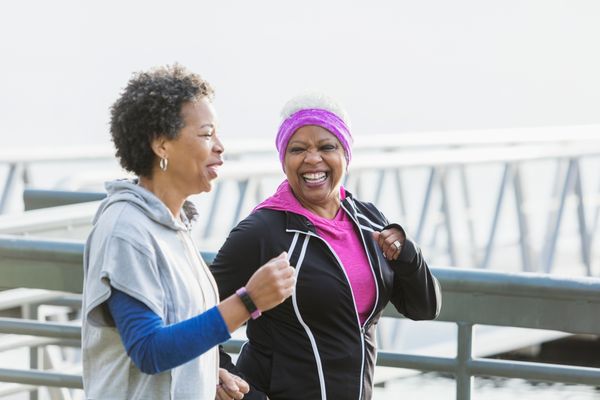
  • Walk, exercise – just move!
  • Keep your weight – and waistline – under control (a waistline above 35" is a big no-no).
  • Give up the cigarettes. Plain and simple. Just stop.
  • Re-think your hormone replacement therapy or birth control pills. These can both increase your risk of blood clots.

Want to learn more?

Read how walking 2 or more hours a week may help cut your risk of strokes.

More on strokes from healthywomen.

Stroke information from the National Institutes of Health.

Reducing your stroke risk from the American Stroke Association.

Subscribe to Midlife Matters by Email

Comments

May 16, 2010 17:May 5 | Meredith said

So good that you're keeping

So good that you're keeping this at the forefront and that list you created is a great resource.

May 15, 2010 01:May 1 | Kristen said

I have a friend whose

I have a friend whose daughter has been on stroke medication since she was 3. Her daughter, now a teen, still has regular seizures--so scary.

May 14, 2010 19:May 7 | Almost Slowfood said

So interesting you're writing

So interesting you're writing about this. I became more educated about strokes recently because my 6 year old nephew's best friend - also 6 - died of a stroke. I couldn't believe it, but after looking into the stats, I learned children also suffer from strokes way more often than we realize!

May 17, 2010 17:May 5 | Sheryl said

Kristen and A.Slow Food - How

Kristen and A.Slow Food - How absolutely frightening to know this. Such young children - that is really shocking.

May 14, 2010 13:May 1 | Melanie said

I had a stroke at 36. Because

I had a stroke at 36. Because my neuro exam was normal, it took me multiple visits to my GP and the ER to get someone to look deeper into the horrible pain I had behind both eyes. Having a history of migraines only made me easier for them to dismiss, but the headache I had was different.

After my second visit to the ER they said would do a CT scan but "it was totally pointless and we won't find anything". That is when they found the bleed. Take home message? Trust yourself, you know your body better than anyone else. Be persistent, I had to keep digging to get a better answer than "you are dehydrated" or "you just have a migraine that is atypical for you". A year on, I'm still recovering, but I know what happened.

May 17, 2010 08:May 8 | Sheryl said

That's a really dramatic

That's a really dramatic story, Melanie, and an excellent example about pushing for what you feel is 'right.' It's scary to know that your stroke was dismissed as simple dehydration. There's a lesson for all of us in here. Thanks for sharing your story and all the best for continued recovery!

May 14, 2010 09:May 9 | ruth pennebaker said

strokes

What's especially freaky is that strokes have such nebulous symptoms. Your list of symptoms and what to do is really helpful.

May 14, 2010 06:May 6 | kerry said

thanks

Sheryl.
thanks for this practical and timely information.

May 14, 2010 00:May 12 | Melanie Haiken said

Valuable information for women

Stroke is still one the health issues that most of us know too little about. Since it's important to get treatment right away, it's particularly sad that so many people still don't recognize the signs. Thanks for shining a light on this subject!

May 13, 2010 22:May 10 | sarah henry said

Timely advice, Sheryl. Thanks

Timely advice, Sheryl. Thanks for the FAST tips -- that should stick with me.

May 13, 2010 19:May 7 | Alisa Bowman said

The headache one gets me

The headache one gets me every time because what exactly is "no known cause"? I get migraines. I don't know what causes them. I know I'm not having a stroke, but I always wonder. I mean, how can I know for sure?

May 17, 2010 08:May 8 | Sheryl said

I'm in the same boat as you,

I'm in the same boat as you, Alisa. I guess we have to trust our instincts and persist when we think we're right. Many things I've read say that a stroke headache is sudden and absolutely the most severe headache you've ever had; however, as someone who has migraines, you'd swear lots of them are the worst pain you've ever felt in your life.
Perhaps knowing the other symptoms of stroke, like slurred speech and numbness or weakness can help sort it out a bit better.

May 13, 2010 17:May 5 | marthaandme said

Thanks so much - I didn't

Thanks so much - I didn't really know any of this. These are important lists to have.

May 13, 2010 17:May 5 | Alexandra said

What an incredibly useful

What an incredibly useful post! Thanks so much. My mom had several small strokes. It's something we all do need to be aware of. Now I now what to look for and FAST!!

May 17, 2010 08:May 8 | Sheryl said

And small strokes shouldn't

And small strokes shouldn't be ignored, either - they can, many times, be the lead-in for a much more serious stroke.

Post new comment

If you do not wish to leave your name, please leave the "name" field blank.
The content of this field is kept private and will not be shown publicly.
CAPTCHA
This question is for testing whether you are a human visitor and to prevent automated spam submissions.