Design by Megan Schofield
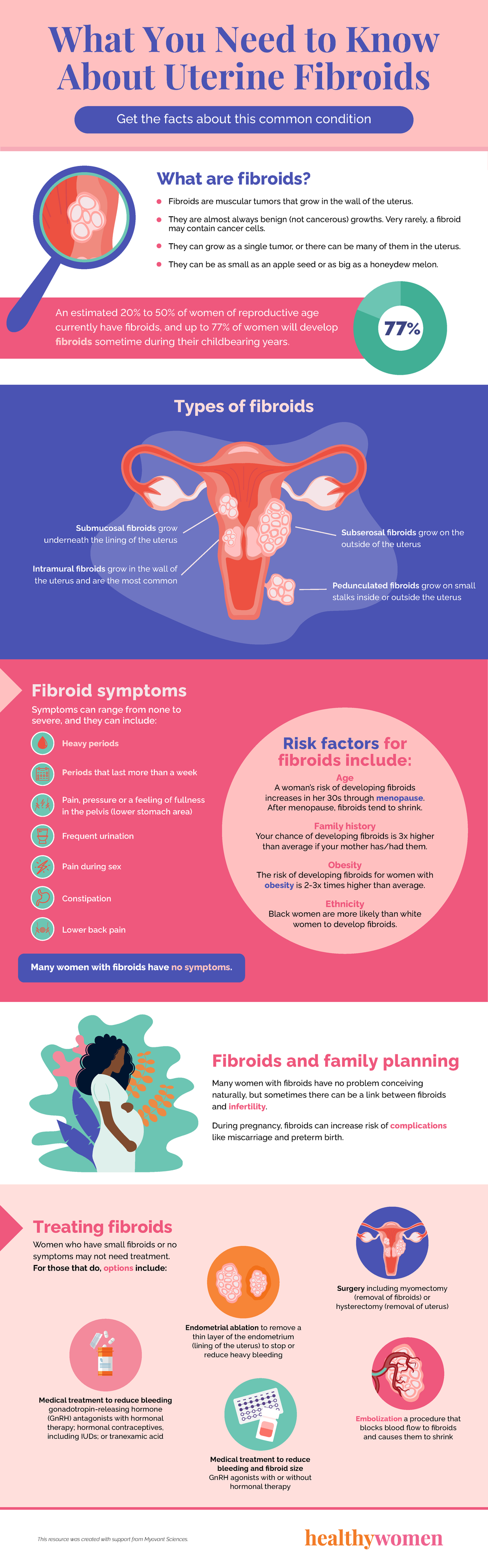
An estimated 20% to 50% of women of reproductive age currently have fibroids, and up to 77% of women will develop fibroids sometime during their childbearing years.
What are fibroids?
- Fibroids are muscular tumors that grow in the wall of the uterus.
- They are almost always benign (not cancerous) growths. Very rarely, a fibroid may contain cancer cells.
- They can grow as a single tumor, or there can be many of them in the uterus.
- They can be as small as an apple seed or as big as a honeydew melon.
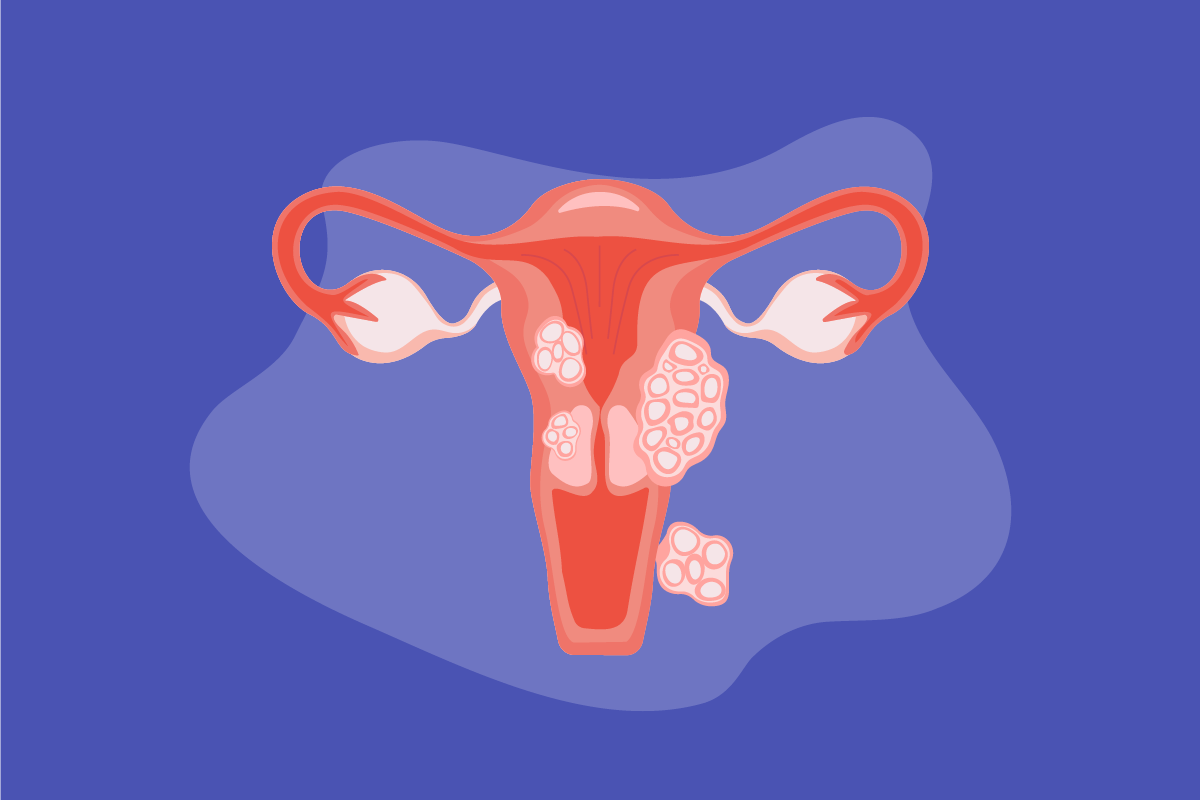
Types of fibroids
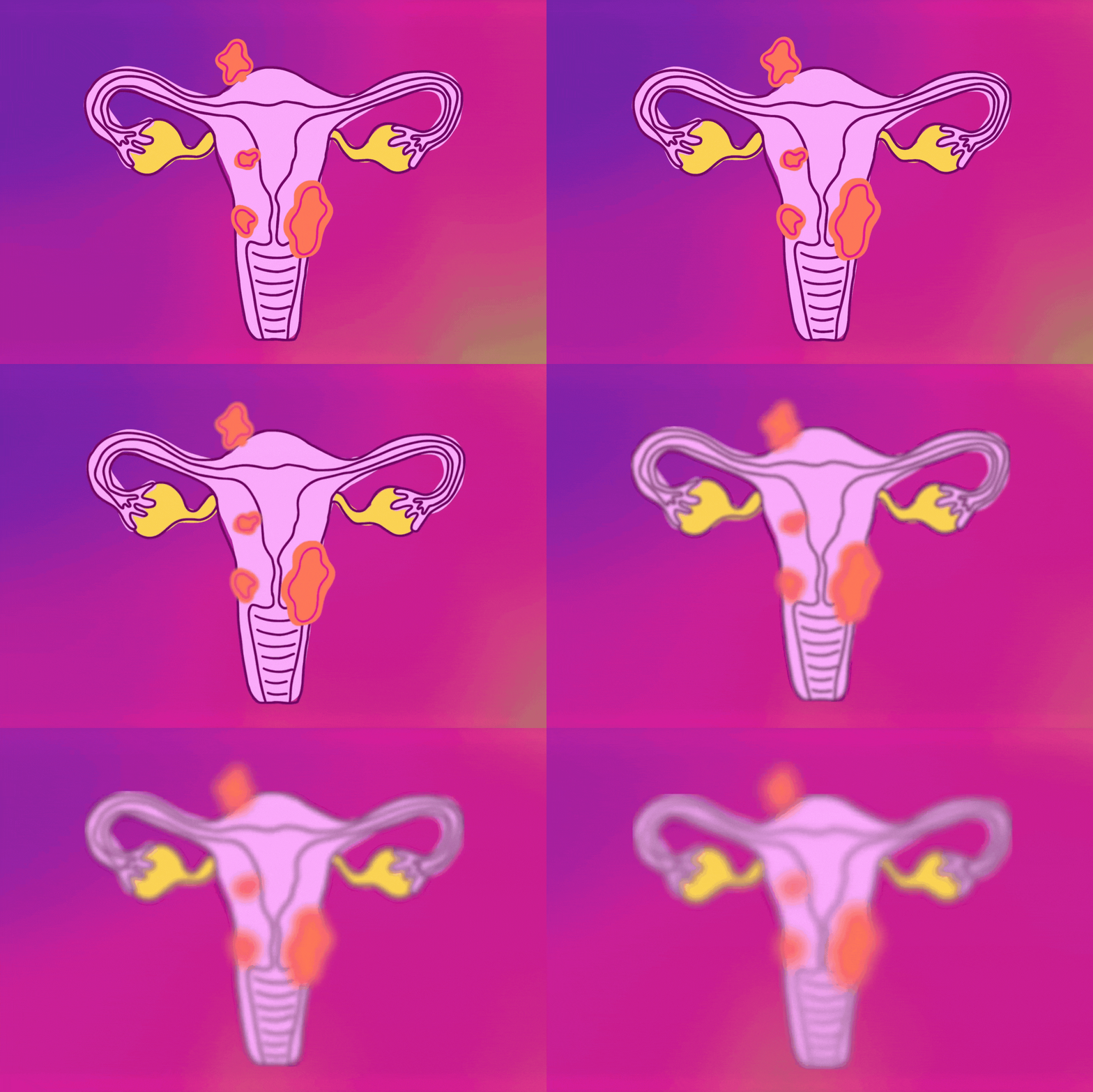
- Intramural fibroids grow in the wall of the uterus and are the most common
- Subserosal fibroids grow on the outside of the uterus
- Submucosal fibroids grow underneath the lining of the uterus
- Pedunculated fibroids grow on small stalks inside or outside the uterus
Fibroid symptoms
Symptoms can range from none to severe, and they can include:
- Heavy periods
- Periods that last more than a week
- Pain, pressure or a feeling of fullness in the pelvis (lower stomach area)
- Frequent urination
- Pain during sex
- Constipation
- Lower back pain
Many women with fibroids have no symptoms.
Risk factors for fibroids include:
Age
A woman’s risk of developing fibroids increases in her 30s through menopause. After menopause, fibroids tend to shrink.
Family history
Your chance of developing fibroids is 3x higher than average if your mother has/had them.
The risk of developing fibroids for women with obesity is 2-3x times higher than average.
Ethnicity
Black women are more likely than white women to develop fibroids.
Fibroids and family planning
- Many women with fibroids have no problem conceiving naturally, but sometimes there can be a link between fibroids and infertility.
- During pregnancy, fibroids can increase risk of complications like miscarriage and preterm birth.
Treating fibroids
Women who have small fibroids or no symptoms may not need treatment. For those that do, options include:
- Medications like over-the-counter pain relievers or birth control pills to help control heavy periods
- Surgery to remove fibroids
- Embolization, a procedure that blocks blood flow to fibroids and causes them to shrink
- Prescription medicine, called gonadotropin-releasing hormone (GnRH) therapy, to help improve heavy bleeding and relieve pain
This resource was created with support from Myovant Sciences.
- Heavy, Prolonged or Painful Periods? That Could Be a Sign of ... ›
- Clinically Speaking: What to Ask Your Healthcare Provider If You ... ›
- Clinically Speaking: What Are My Options Following a Uterine ... ›
- What to Know About Uterine Fibroids - HealthyWomen ›
- What Are Fibroids? - HealthyWomen ›
- How Fibroids Can Affect Your Fertility - HealthyWomen ›
- How Living with Fibroids Impacts the Whole Person - HealthyWomen ›
- Talking to Patients About Uterine Fibroids - HealthyWomen ›
- Sateria Venable Talks Fibroids and Fertility - HealthyWomen ›
- Facts About Hormone Treatments for Uterine Conditions - HealthyWomen ›
- True or False: Fibroids - HealthyWomen ›