If winter has you feeling 50 shades of blah — you’re not alone. Between the gray skies and the gray sludge and the paranoia that colors were something you just made up in your head, the dark days of winter can be rough.
Although it’s perfectly natural to feel less than sunny in months with less sun, if the season has a significant impact on your mood and behavior you could be experiencing seasonal affective disorder (SAD).
SAD is a type of depression that’s most common in the winter and typically lasts until the spring. It can cause a range of symptoms including feelings of hopelessness, tiredness and melancholy.
The good news is science says there’s a relatively easy treatment option that may help treat symptoms of SAD: light therapy.
Light therapy for SAD
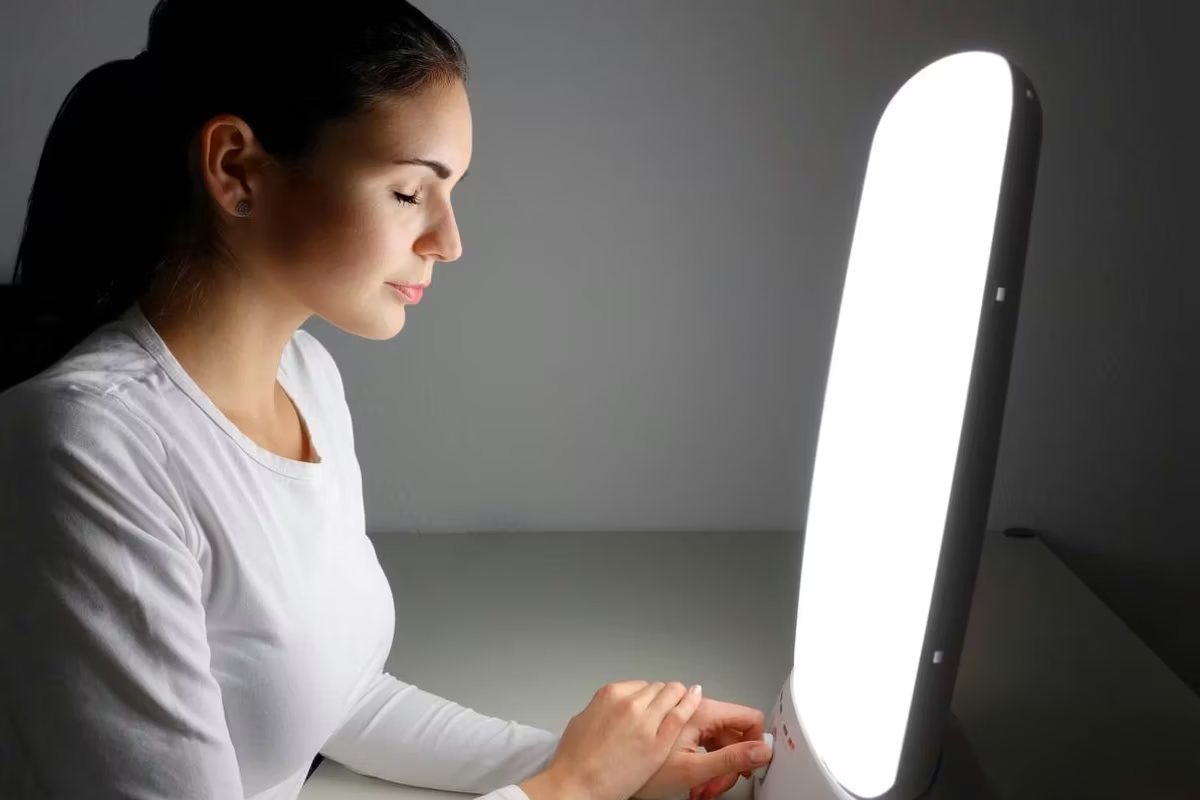
Light therapy treatment involves sitting in front of a custom bright light (usually called light therapy boxes or light therapy lamps) for about 30 minutes a day. Most light therapy devices for SAD have an exposure of 10,000 lux, which is around the amount of outdoor light you’d get on an overcast day.
The light therapy device mimics natural sunlight, which may help boost mood and energy.
How light therapy works for SAD
Winter means shorter days and less sunshine. The theory behind light therapy is that exposure to light over time can improve symptoms of SAD.
Jamie M. Zeitzer, Ph.D., professor of the Department of Psychiatry and Behavioral Sciences and co-director of the Center for Sleep and Circadian Sciences at Stanford University, said light therapy has a positive impact on our circadian system, which helps regulate important things like sleep and wake cycles and is involved in pretty much all brain and body functions.
“Lots of things are impacted by the circadian setting and it’s why — for some people — shorter days might lead to problems,” Zeitzer said. So, if your internal clock isn’t aligned with your schedule, you might experience SAD, and artificial light therapy can help.
“In some individuals there seems to be a direct impact of light on mood. We're not totally clear on why or how it happens but what we do know is if you're outside, you're happier than when you're inside in general,” Zeitzer said.
Light therapy for nonseasonal depression
In addition to SAD, research shows light therapy can have a positive effect on people with other types of depression. One recent study showed bright light therapy improved symptoms and attention in people with depressive symptoms.
Another study of 22 women found light therapy in the morning was associated with a significant reduction in symptoms of perinatal depression.
Zeitzer noted that light therapy can treat symptoms of depression in some people, but it doesn’t cure the disorder. It’s important to work with a healthcare provider (HCP) to treat the cause of any type of non-seasonal depression.
Is light therapy safe?
Light therapy is safe for most people, but people who are sensitive to the sun, sensitive to light or have eye conditions like glaucoma should talk to their HCP before trying light therapy.
The pros of light therapy for SAD
In addition to a boost in mood and energy, light therapy is easy to use and won’t put a huge dent in your wallet.
- It’s convenient — you can purchase a light therapy box online or in big box shops and do the treatment at home
- Light therapy boxes are relatively inexpensive — you can purchase one online for around $100
- Some people see improvements within days
The cons of light therapy for SAD
In order to get the benefits of light therapy, you have to commit to the treatment. That means sitting in front of the light pretty much every morning from the end of fall into spring. Keep in mind that you should not stare directly into the light.
Time and effort is required to see results, but, on the bright side, you can do other things while in front of the sunshine box.
Talk to your healthcare provider before lighting up
If you’re having symptoms of depression, talk to your HCP before trying light therapy.
“It's important for people to see a doctor to make sure this is a potential solution because what you don't want to have is someone having clinical depression that's not seasonally related doing light therapy and not having it work and then having depression get worse,” Zeitzer said.
- The Life-Changing Hope of New Treatments for Clinical Depression ›
- For Years, I Lived with Seasonal Affective Disorder, Thinking It Was Just the Winter Blues ›
- 5 Ways to Cope with Seasonal Affective Disorder ›