

Search
Latest Stories

Newsletter Sign-Up
Newsletter

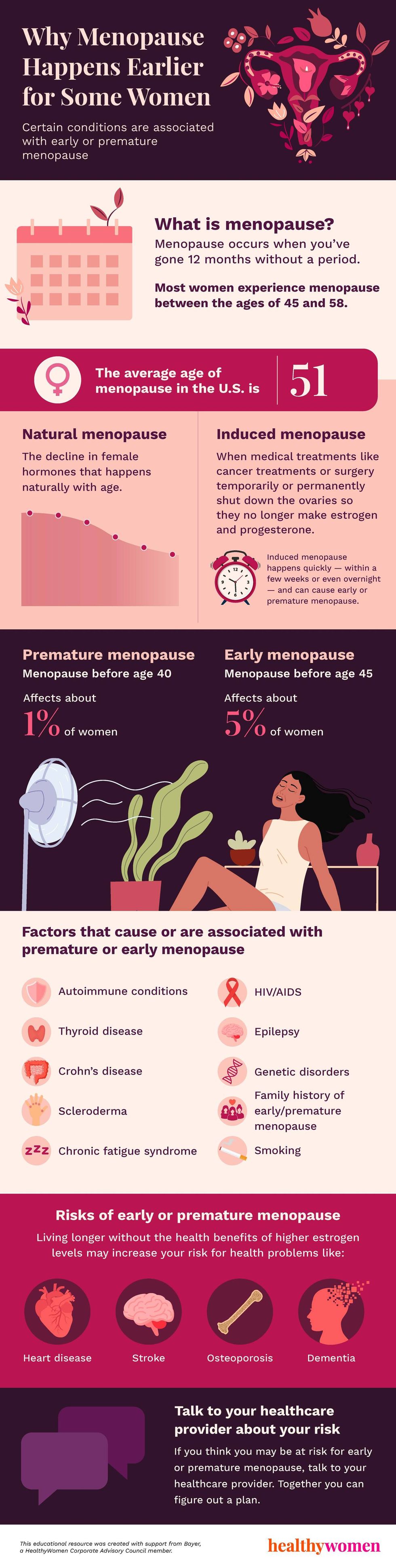
What is menopause?
Menopause occurs when you’ve gone 12 months without a period.
Most women experience menopause between the ages of 45 and 58.
The average age of menopause in the U.S. is 51
Natural menopause
The decline in female hormones that happens naturally with age.
Induced menopause
When medical treatments like cancer treatments or surgery temporarily or permanently shut down the ovaries so they no longer make estrogen and progesterone.
Induced menopause happens quickly — within a few weeks or even overnight — and can cause early or premature menopause.
Premature menopause = Menopause before age 40
-
Affects about 1% of women
Early menopause = Menopause before age 45
-
Affects about 5% of women
Factors that cause or are associated with premature or early menopause
-
Autoimmune conditions
-
Thyroid disease
-
Crohn’s disease
-
Scleroderma
-
Chronic fatigue syndrome
-
HIV/AIDS
-
Epilepsy
-
Genetic disorders
-
Family history of early/premature menopause
-
Smoking
Risks of early or premature menopause
Living longer without the health benefits of higher estrogen levels may increase your risk for health problems like:
-
Stroke
-
Osteoporosis
-
Dementia
Talk to your healthcare provider about your risk
If you think you may be at risk for early or premature menopause, talk to your healthcare provider. Together you can figure out a plan.
This educational resource was created with support from Bayer, a HealthyWomen Corporate Advisory Council member.








Popular
1
What Happens in the Body During a Hot Flash
Sep 03, 2026
2
Understanding Menopause Stages and Terms
Sep 08, 2026
3

4
Biologics for Treating Asthma
Sep 22, 2026
5

6
Lo que ocurre en el cuerpo durante un bochorno
Sep 03, 2026
Support Our Mission
Keep Trusted Women’s Health Information Free
Your donation ensures every woman continues to have access to credible health content.More Stories






Everything you need to know about women’s health — in one place.