
As told to Jacquelyne Froeber
September 21, 2026, is World Alzheimer's Day.
I kept thinking maybe I’d get lucky.
That’s why I put off getting tested for the mutation many of my family members have for years. If I had it, I was basically guaranteed to have early-onset Alzheimer’s disease.
The presenilin mutation is rare, but 16 people on my mother’s side — including my mother — had tested positive for the mutation, and there was a 50/50 chance that I had it, too. But I was holding out hope that my test results would be negative. After all, my two sisters didn’t have it.
Unfortunately, I didn’t get lucky.
My older sister and I were together when the doctor told me that I did, in fact, have the mutation. My whole body went into shock, and my stomach churned. I couldn’t find my words, so my sister asked the tough questions as tears streamed down my face.
The questions that had loomed in the back of mind for so long played on a loop in my brain. But there was no more, “What if I can’t remember dad?” Or “What if I can’t take care of myself?” It was when.
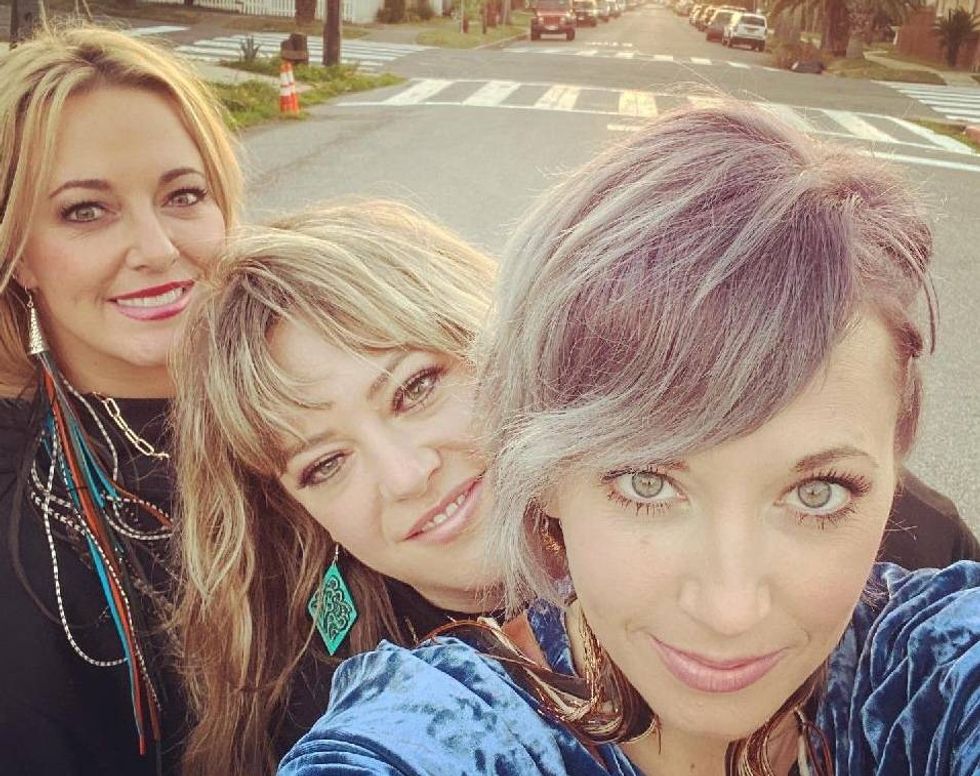 Robin, with her sisters, Chelsey (front right) and Jess McIntyre (rear left).
I was horribly nauseated for days after I found out. It was like my body was rebelling against me — furious with the knowledge.
But I knew in my heart that I had made the right decision. I was 29 years old and I wanted to know if I should be thinking about having kids. I’d always pictured having children at some point, but once I knew my status, I had to make the decision not to — to give up on being a mom. And that broke my heart.
If I wasn’t going to be a mother, I wanted to honor my family and continue my family’s legacy of research.
My mother and uncles were strong role models. They’d dedicated their lives to Alzheimer’s research. The studies they were part of in the early 2000s helped answer questions about Alzheimer’s disease, a form of dementia, that had baffled scientists for years. Knowing how rare it is to have the presenilin mutation, I wanted to do my part to help find a cure.
Not long after finding out my status, I enrolled in an ongoing trial called the Dominantly Inherited Alzheimer Network (DIAN) to help researchers learn more about how to diagnose, treat and prevent dementia.
Over the next decade, I went through countless scans, procedures, infusions and injections, all with the hope that the medications could stop Alzheimer’s disease from forming.
I was in my late 30s when I learned that, based on my mothers age when she started showing symptoms of Alzheimer’s disease, my estimated age of onset was 45 years old.
I was shocked. I’d never been told that I had an estimated age that symptoms would start. I didn’t even know one existed. I also wasn’t sure that I wanted to know that information. But I couldn’t unhear it.
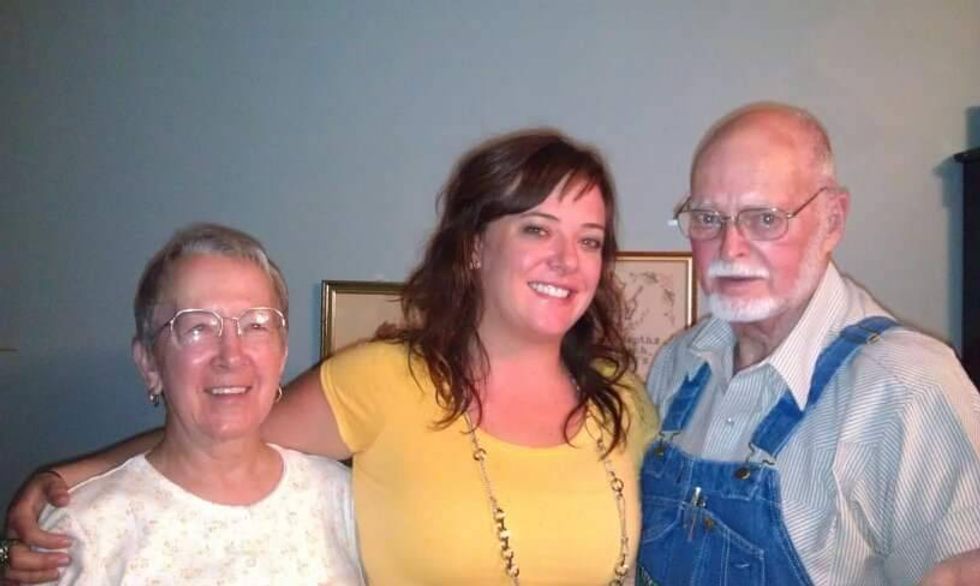 Robin, with her grandparents, Rutherford and Jack McIntyre.
The panic was swift. I felt like a ticking time bomb.
There were so many things I wanted to do. I wanted to swim and ride bikes and soak up the sun, so that’s what I did. My (now) husband and I moved from Wyoming to the desert and we bought a house with a pool.
Around this time, I made a vow to myself to become more of a “yes” person and not to let the fear of the estimated age hold me back from living my life to the fullest.
I started doing more public speaking events and advocacy efforts to help raise awareness about Alzheimer’s disease. Most recently, I started my own nonprofit with my husband called the White Flower Foundation. The White Flower represents the first Alzheimer's survivor. The foundation is dedicated to my 15 family members — including my mother — with the mutation who have passed away from Alzheimer’s under the age of 60.
Their bravery allowed me the opportunity to be proactive instead of reactive — and not everyone gets that chance.
Today, I’m happy to say that I don't have any symptoms of early-onset Alzheimer’s disease. I’ve been on amyloid removal treatment for 11 years, and I’m currently one of only 80 people in the world on a drug that researchers are hoping will prevent the onset of the disease before symptoms begin.
Most days, it’s hard to wrap my head around the fact that these clinical trials and medications could change the lives of millions of people around the globe. But I’ve been thinking a lot more about it lately.
I turn 44 in March 2027. Time is ticking but I still could be the first survivor of Alzheimer's disease. Maybe I’m luckier than I thought.
Resources
Have your own Real Women, Real Stories you want to share? Let us know.
Our Real Women, Real Stories are the authentic experiences of real-life women. The views, opinions and experiences shared in these stories are not endorsed by HealthyWomen and do not necessarily reflect the official policy or position of HealthyWomen.
- Brain Health Hub | HealthyWomen ›
- 7 Easy Ways to Prevent Alzheimer's ›
- Busted! 5 Myths About Alzheimer’s Disease ›
- New Hope in the Fight Against Alzheimer’s ›