

Search
Latest Stories





Newsletter Sign-Up
Newsletter

Emily Jamea, Ph.D., is a sex therapist, best-selling author and keynote speaker. You can also find her here, sharing her latest thoughts about sex.
May is Mental Health Awareness Month.
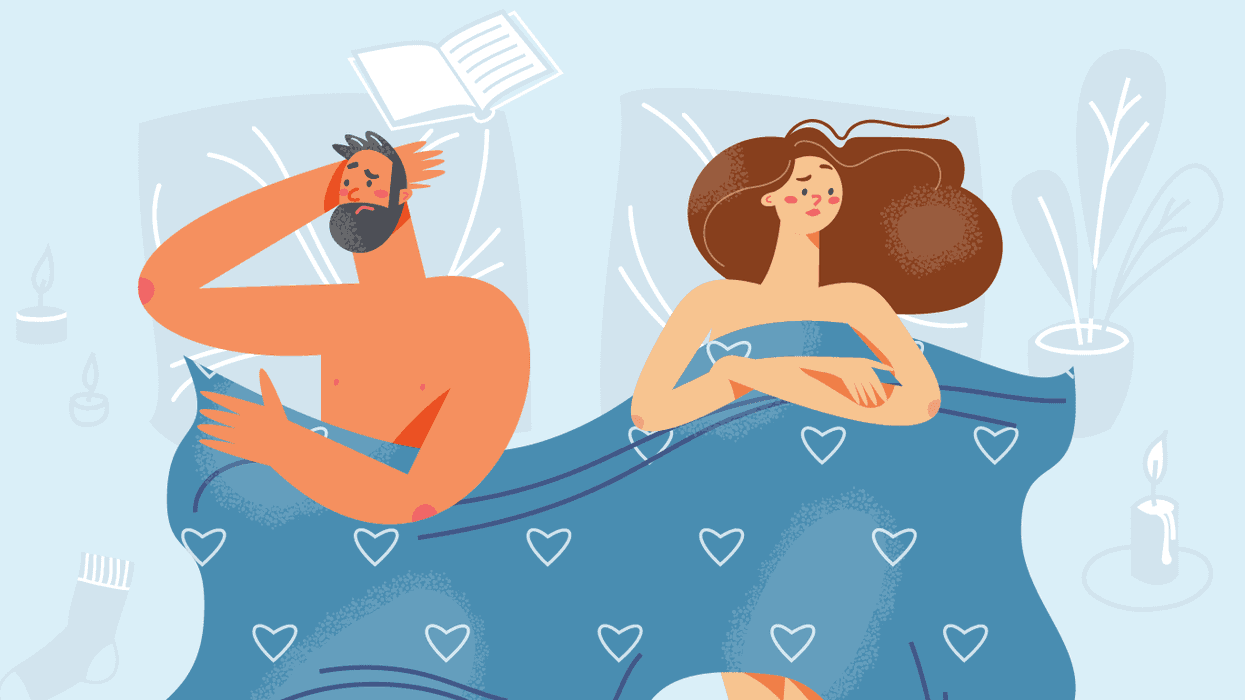
If you’re in midlife, you might be wondering why you’ve gone from “Let’s get it on” to “Please get off me.” And you wouldn’t be alone. Many women assume changes in libido in their late 30s, 40s or 50s are purely hormonal. But, while hormones certainly play a role, they’re just one of many potential pieces to the puzzle.
Sexual desire can be affected by relationship conflict, stress and so much more, including one often overlooked piece: mental health. Anxiety, depression, ADHD, trauma and other mental health concerns can each have a significant impact on your sex drive.
There’s a lot going on psychologically during midlife. Hormonal transitions, shifting identity, caregiving pressures and relationship changes all come together at the same time. Research consistently shows that the menopausal transition is associated with an increased risk of depression and anxiety, including in women with no prior history. Diagnoses of ADHD in women ages 30-49 nearly doubled among women between 2020 and 2022. And while trauma-related disorders are not being increasingly diagnosed, they can play a role in dampening your sex drive.
Midlife's onslaught of stressors can destabilize coping systems that have kept earlier trauma at bay, causing symptoms to surface or intensify for the first time.
Each of these mental health issues affect desire in unique ways, and understanding the pattern is the first step in taking back control.
Anxiety
Anxiety has a specific and direct effect on sexual desire. Clinically, anxiety activates the brain’s threat-detection system. The nervous system shifts into a state of vigilance, scanning for danger and bracing for what’s next. For most people, that state is fundamentally incompatible with desire, which requires feeling a sense of safety.
For women with anxiety, this can show up in the bedroom as hypervigilance about a partner’s reactions, anticipatory worry about performance or vulnerability, or a persistent inability to feel truly at ease in their own body. Even when nothing is overtly wrong, the nervous system is operating as though something might be, and that low-level alarm makes it nearly impossible to access pleasure.
One client in her early 40s described feeling physically present during sex, but emotionally guarded, as though she were waiting for something to go wrong. Her description was a distinctly anxious experience. Her racing mind was about more than a full calendar. It represented a nervous system that had forgotten how to settle and surrender.
Depression
If anxiety is too much activation, depression is too little. Women experiencing depression often describe a loss of interest in things that once brought pleasure, including sex.
A client in her late 30s described it this way: “It’s not that I don’t love my husband. I just don’t feel anything.” Her days felt flat, her energy was low, and even small tasks felt overwhelming. It wasn’t that she was opposed to sex, it just felt irrelevant in her life.
Depression dampens the brain’s reward system. The pathways that support motivation, anticipation and pleasure become less responsive. It can also affect self-worth and body image, making it harder to feel desire or openness to connection.
ADHD
ADHD is increasingly being recognized in women, particularly because it was historically underdiagnosed in female patients whose symptoms often looked different from the hyperactive presentation more commonly identified in boys.
Research has shown that ADHD can affect your sexuality in several different ways. ADHD can lead to hypersexuality, but in some women, it has been associated with both low sex drive and/or low sexual satisfaction. Perhaps most obviously, women may be unable to quiet and focus the mind enough to immerse themselves in the sensations of sex. Getting easily distracted by a noise in the other room or realizing you forgot to buy milk at the store can be enough to completely ruin the mood.
Another way that ADHD can interfere with your sex life is through emotional dysregulation, which is a well-documented feature of ADHD. When daily life involves heightened emotional reactivity, frustration or a chronic sense of overwhelm, it can erode the emotional ease and safety that are necessary to feel desire. It’s less about a lack of interest and more about having trouble achieving fulfilling intimacy when you are already depleted or your emotions are dysregulated.Trauma
Trauma-related disorders can have a profound effect on sexual desire. Trauma exists on a spectrum. “Big T” traumas (as we refer to them in the clinical world) — think sexual assault or a car accident — can more obviously affect desire. But we don’t often give enough attention to “little t” traumas — think ongoing relationship conflict, coping with a child with special needs or unresolved issues from your family of origin. “Little t” traumas can also affect desire. Desire is not just mental, but deeply embodied. One client in her early 50s had a history of sexual trauma she believed she had “worked through.” Yet she found herself shutting down during intimacy with her partner. She described a pattern of going numb or feeling suddenly irritated without understanding why.
Trauma can live in the nervous system long after the conscious mind has made sense of it. Intimacy, vulnerability, and physical touch can unconsciously trigger protective responses — fight, flight, or freeze. For many women, this shows up as avoidance, low desire, or difficulty staying present during sex.
What about medications?
Many women wonder whether their medications are to blame when it comes to reduced sex drive or even reduced sexual pleasure. And, sometimes, they do play a role. Certain antidepressants, particularly SSRIs, are known to affect libido, arousal and orgasm. Medications for anxiety and mood stabilization can also have sexual side effects. ADHD meds, on the other hand, rarely have sexual side effects. If you suspect your medication is affecting your sex life, it’s worth having a conversation with your prescribing provider. There are often adjustments or alternatives that can help.
Reclaiming sexual desire
If you see yourself in any of these patterns, know that you’re not alone, and there is a path forward.
Start by asking yourself:
- How is my nervous system functioning most of the day? Is it overactivated, underactivated or scattered?
- Do I feel safe, present and connected in my body?
- What emotional weight am I carrying that might be crowding out desire?
From there, small shifts can make a meaningful difference:
- One of the most effective strategies is to build in transition time between the demands of your day and intimacy.
- Practice mindfulness or grounding to help your body settle.
- Communicate openly with your partner about what you’re experiencing.
- Seek support from a therapist who understands both mental health and sexuality.
Desire doesn’t exist in a vacuum. It’s a reflection of your internal world — your stress, your emotional state, your sense of safety and your capacity for presence. The good news is that when you begin tending to your mental health, desire often finds its way back — not as performance — but as a natural extension of feeling more like yourself again.






Stories We Love
1

2
Is Anxiety Ruining Your Sex Life?
Jan 31, 2020
3

How to Rekindle Your Sexual Connection at Midlife
Jul 23, 2020
4

5

6

Can Couples Therapy Help Your Relationship?
Oct 01, 2026
Support Our Mission
Keep Trusted Women’s Health Information Free
Your donation ensures every woman continues to have access to credible health content.
More Stories





Everything you need to know about women’s health — in one place.