
Search
Latest Stories


Newsletter Sign-Up
Newsletter
Video/Image | Voiceover/Audio |
[HealthyWomen logo] Why the HPV Vaccine Matters | |
SUPER: HPV = human papillomavirus HPV affects almost everyone Image: Large group of people with almost everyone the same color | Narrator: You’ve probably heard of HPV, but did you know that almost all of us will get it at some point? HPV stands for human papillomavirus. It’s the most common sexually transmitted infection, and it spreads so easily that almost everyone who has sex will get HPV at some point in their lives. Using condoms can help protect you from some HPV, but they don’t provide complete protection from the virus. |
SUPER: HPV can cause cancer of the:
SUPER: More than 9 out of 10 cervical cancer cases Image: 9 out of 10 people | HPV is often harmless. It doesn’t cause any symptoms, and it can go away on its own. Many people don’t even notice it. But when your body doesn’t clear the virus, it can cause cervical cancer, head and neck cancers, and cancers of the anus, vulva, vagina and penis. In fact, more than 9 of 10 cervical cancer cases are caused by HPV. |
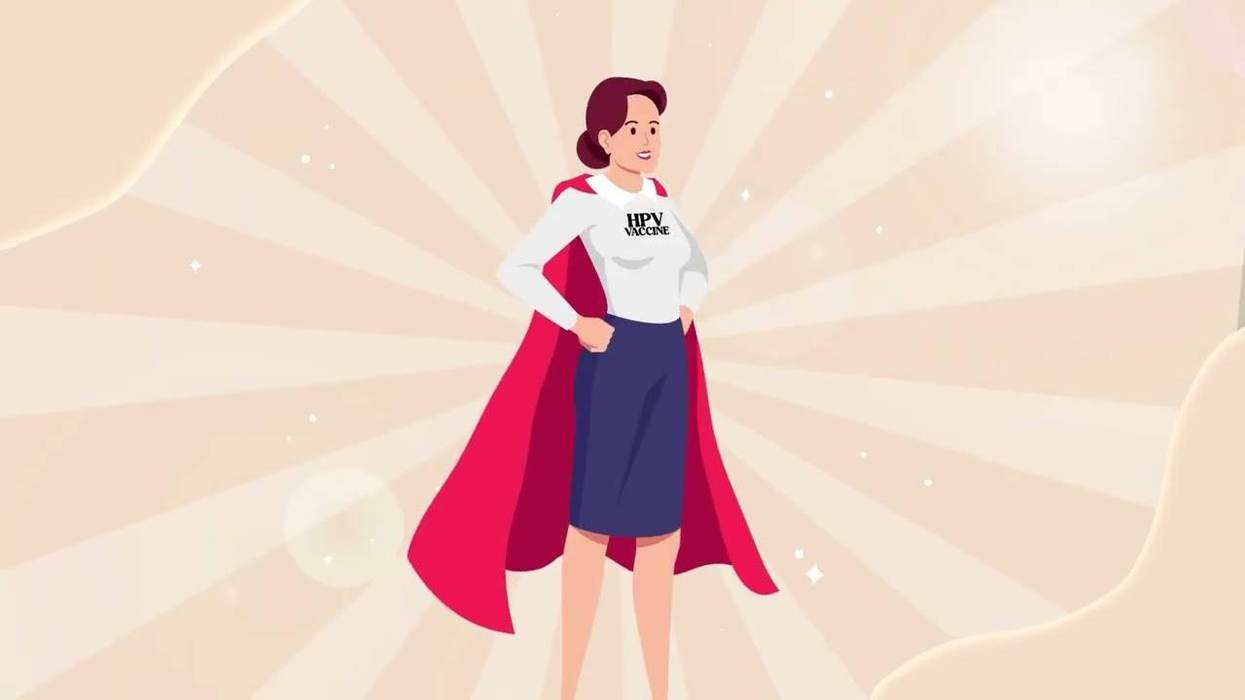
Cartoon superwoman in a cape with “HPV VACCINE” emblazoned on the front of their suit, standing with hands on hips in “I’m here to save the day” pose SUPER: 9 out of 10 cancers prevented | The good news? There’s an HPV vaccine, and it works really well. More than 9 out of 10 cancers caused by HPV can be prevented with the vaccine. |
SUPER: HPV vaccine ≠ live virus Show superwoman at a blackboard writing X’s and O’s like a football plan. | The vaccine doesn’t actually contain HPV, but it teaches your immune system to recognize the virus, so it can protect you if you’re ever infected. |
SUPER: Who should get the HPV vaccine?
(Show images of people to go with the words.) | The HPV vaccine works best if you get it years before you start having sex, which is why it’s recommended for kids between 11 and 12. Also, younger people have a stronger immune response to the vaccine, meaning the protection can be more effective and last longer. The CDC also recommends the HPV vaccine for people up to age 26 who haven’t had it yet, as well as some adults between 26 and 45. |
IMAGE: HCP and person talking | Your healthcare provider can help you figure out if you should get the vaccine. |
Woman in doctor’s office, wearing a gown with feet in stirrups on exam table with doctor at end of table SUPER: Keep getting screened and practice safe sex | Even though the HPV vaccine works really well, it doesn’t protect against all types of cervical cancer. And it doesn’t protect against other sexually transmitted infections. So, you should still get regular Pap and HPV tests even if you’ve been vaccinated — and always practice safe sex by using a condom. |
Woman sitting with her tween daughter and son in a doctor’s office, talking to their pediatrician Kids get the vaccine. | HPV is hard to avoid, but you can take steps to protect yourself and your children from cancers caused by the virus. Talk to your family’s healthcare providers about scheduling the vaccine. |
This resource was created with support from Merck.






Popular
1
2
Biologics for Treating Asthma
Sep 22, 2026
3

¿Qué es la urticaria crónica espontánea (UCE)?
Jun 29, 2026
4
Biofármacos para el tratamiento del asma
Sep 22, 2026
5

The Skinny on Microdosing GLP-1 Drugs
Mar 06, 2025
6
10 Reasons You Might Have Blood in Your Urine
Feb 24, 2025
Support Our Mission
Keep Trusted Women’s Health Information Free
Your donation ensures every woman continues to have access to credible health content.More Stories


Everything you need to know about women’s health — in one place.