Search powered by AI
Healthy Women Image

Michelle Sabia, MPH, CPH

Michelle Sabia has a passion for health equity and has dedicated her career to supporting underserved populations through education, direct service programming and advocacy. She is certified in public health and received her master's in public health from George Washington University. She has over a decade of experience in healthcare nonprofits and healthcare delivery settings. Most recently, Michelle managed federal payment programs and community health initiatives at a local health system in Washington state. Her proudest accomplishment was designing and implementing a social determinants of health program to address the social needs of patients in clinical settings.

Michelle's professional passions bleed into her volunteer work where she serves on the board of directors of the Neighborhood Clinic Tacoma, a free clinic serving those who can't access or afford healthcare services.

Though she currently resides in Washington and loves the unique natural beauty of the area, Michelle was born and raised in the Northeast and is quick to tell you that her heart will always be in New York. In her free time, she and her husband enjoy raising backyard chickens, hiking, cooking and traveling.

Full Bio
The Power of the Kidneys infographic

The Power of the Kidneys

Find out how these organs work and what can damage them

Conditions & Treatments

power of the kidneys infographic. Click to view PDF


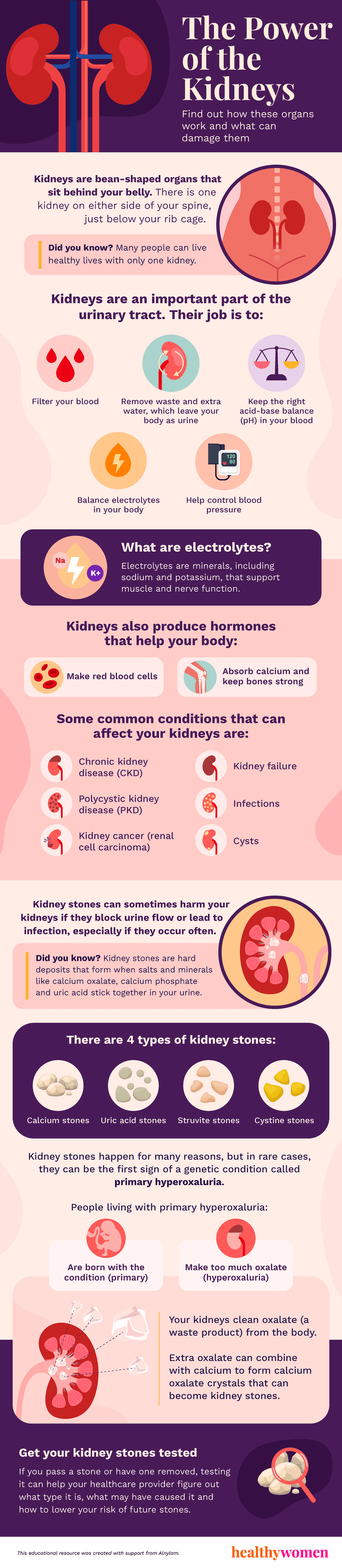
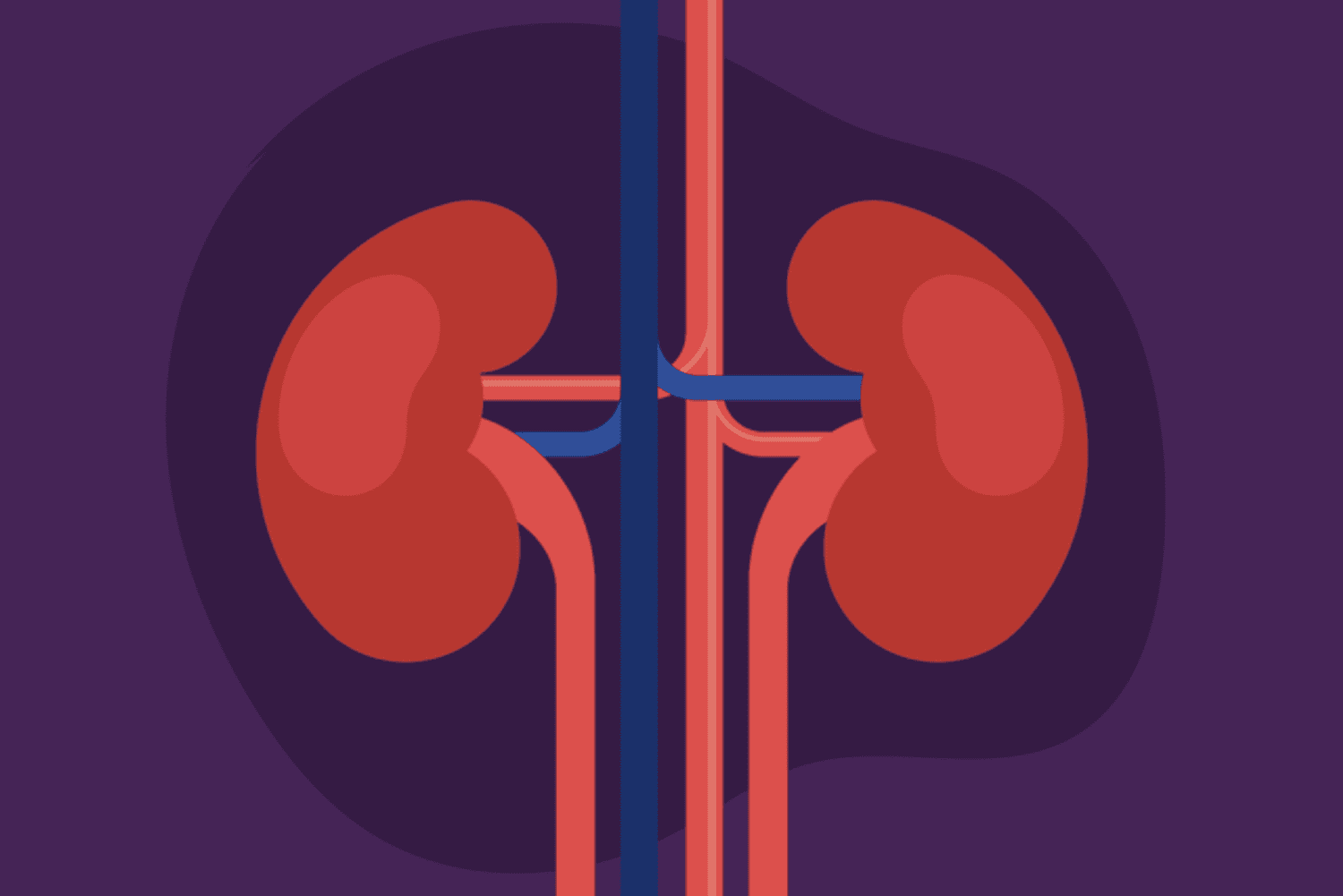
Kidneys are bean-shaped organs that sit behind your belly. There is one kidney on either side of your spine, just below your rib cage.

Did you know? Many people can live healthy lives with only one kidney.

Kidneys are an important part of the urinary tract. Their job is to:

  • Filter your blood
  • Remove waste and extra water, which leave your body as urine
  • Keep the right acid-base balance (pH) in your blood
  • Balance electrolytes in your body
  • Help control blood pressure

What are electrolytes?

Electrolytes are minerals, including sodium and potassium, that support muscle and nerve function.

Kidneys also produce hormones that help your body:

  • Make red blood cells
  • Absorb calcium and keep bones strong

Some common conditions that can affect your kidneys are:

  • Chronic kidney disease (CKD)
  • Polycystic kidney disease (PKD)
  • Kidney cancer (renal cell carcinoma)
  • Kidney failure
  • Infections
  • Cysts

Kidney stones can sometimes harm your kidneys if they block urine flow or lead to infection, especially if they occur often.

Did you know? Kidney stones are hard deposits that form when salts and minerals like calcium oxalate, calcium phosphate and uric acid stick together in your urine.

There are 4 types of kidney stones:

  • Calcium stones
  • Uric acid stones
  • Struvite stones
  • Cystine stones

Kidney stones happen for many reasons, but in rare cases, they can be the first sign of a genetic condition called primary hyperoxaluria.

People living with primary hyperoxaluria:

  • Are born with the condition (primary)
  • Make too much oxalate (hyperoxaluria)

Your kidneys clean oxalate (a waste product) from the body. Extra oxalate can combine with calcium to form calcium oxalate crystals that can become kidney stones.

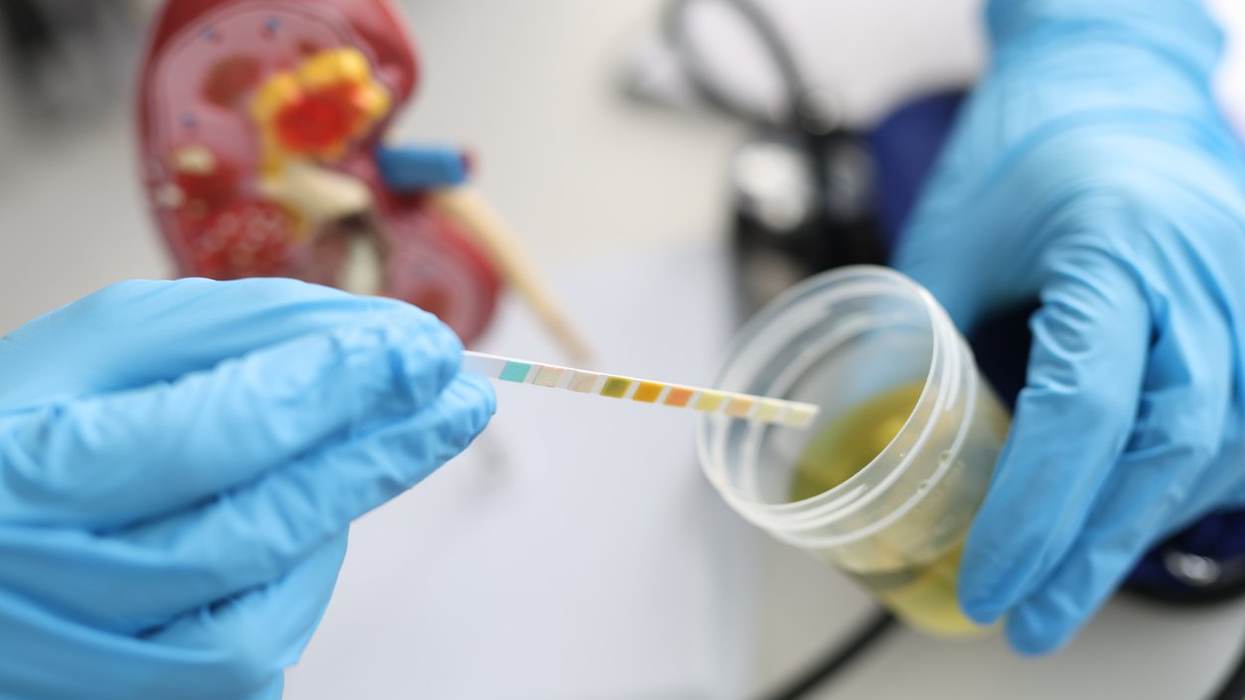
Get your kidney stones tested

If you pass a stone or have one removed, testing it can help your healthcare provider figure out what type it is, what may have caused it and how to lower your risk of future stones.

This educational resource was created with support fro m Alnylam.

You might be interested in
Trending Topics