June is Dysphagia Awareness Month.
Eosinophilic esophagitis (EoE) is a condition that causes chronic inflammation in the esophagus. This inflammation results in symptoms like trouble swallowing, chest pain and food impaction (when food gets stuck in the esophagus). While there is no cure for EoE, there are effective treatments to control symptoms and keep the condition in check. Without treatment, EoE typically worsens.
EoE is becoming more common, and can affect people of any age. We spoke with Evan S. Dellon, M.D., MPH, gastroenterologist, and professor of medicine and adjunct professor of epidemiology at the University of North Carolina Chapel Hill, to learn more about EoE symptoms, how to get help and treatment options.
What symptoms of EoE should prompt you to go to the doctor?
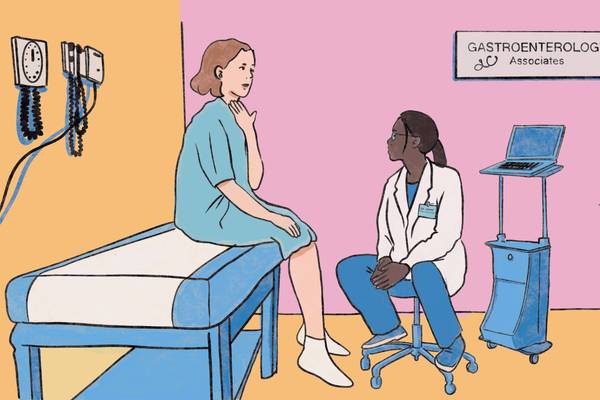
In adults and adolescents, the most typical symptom is trouble swallowing or food getting stuck. It’s important to note that food going down slowly or getting stuck is actually abnormal. Many people who ultimately are diagnosed with EoE don’t pay attention to this symptom at first. They might just avoid certain foods or chew more carefully until there’s a major issue. Don’t wait until that happens. Any trouble swallowing or getting food down really should be checked out. Some other gastrointestinal (GI) symptoms, like chest discomfort or heartburn, are also associated with EoE.
Other medical conditions can cause food to go down slowly or stick. When these symptoms happen along with asthma or eczema or food allergies, it's more likely to be a sign of EoE.
Children with EoE have totally different symptoms. It could be abdominal pain, vomiting, poor growth, failure to move to different consistencies or food avoidance. Many pediatric GI conditions can cause those symptoms. But they could also be signs of EoE, especially if a child also has eczema, asthma or food allergies as well.
If you have EoE, why is getting diagnosed so important?
We think that EoE generally starts as allergic inflammation. Over time, if left untreated, that inflammation can progress to scar tissue. Then the esophagus can become narrow and stiff, causing more symptoms and complications like food impaction. Food impaction can lead to a perforation or a rupture of the esophagus, a very severe problem. It doesn't happen frequently, but these are the complications we worry about. Kids who are affected severely may become malnourished.
There's also an impact on quality of life. Anything that impacts your eating will affect social events, family gatherings, work events and travel and can cause significant anxiety. The symptoms, the impact on quality of life and the potential complications are good reasons to get checked out.
How do you get an EoE diagnosis?
The diagnostic process comes down to an endoscopy to look into the esophagus. We don't have any blood tests or other ways to diagnose EoE.
The endoscopy is a sedated procedure. A lighted camera goes into the mouth and down into the esophagus and stomach. We look for typical signs of EOE. The esophagus can look swollen. It can be coated with white spots, which is inflammation. There can be scar tissue like rings or strictures. We send a biopsy to a pathologist who examines the allergy cells, which are the eosinophils. If there are enough eosinophils, and we can eliminate other things that might cause them, we can formally diagnose EoE.
Why is it important to have continuous care if you have EoE?
EoE is a chronic condition that needs to be managed over time. If people are diagnosed but not treated, many will ultimately develop more severe complications. It’s important to have a team in place and be consistent with treatment.
There's a range of severity with the condition. The team will customize the approach for each person’s situation. Someone who has been to the emergency room with an impaction, for example, will be followed much more closely than someone with mild symptoms. Continuous care is different for every person, but it’s very important to have it in place to avoid flare-ups and worsening problems.
What types of healthcare providers should be part of your care team if you have EoE?
Some people will be followed primarily by GI doctors. Some people will follow primarily with allergists. Some people may follow with both in more of a multidisciplinary fashion. Children may also need feeding therapists and other multidisciplinary providers. We often work with dieticians or nutritionists.
How do you manage EoE?
There are two major treatment categories: Diet elimination and medication.
We think that EoE is a food-triggered condition for most patients. Unlike a typical food allergy, with an immediate reaction, it’s a condition where eating certain foods over a long period of time triggers inflammation. Current allergy tests are not really accurate for EoE, so it’s a little tricky. But we do know the most common food triggers: dairy, wheat, eggs, soy, nuts and seafood. Elimination diets can be used to identify food triggers and remove them from the diet. It's a good option, but it really depends on the individual patient.
Anti-acid medicines such as omeprazole (Prilosec) or lanzoprazole (Prevacid) are often the first medicine we try. Around 30%–40% of people may respond to these simple medicines.
Then there’s a topical steroid. We now have an approved medication, budesonide oral suspension (Eohilia), that's specifically formulated to stick in the esophagus. It can be effective in 50%–60% of people, if not more.
Another we use is dupilumab (Dupixent), a systemic medicine. It's a weekly injection that blocks some of the allergy factors that cause EoE. Typically it’s reserved for people who aren't responding to other treatments. It might also be used for people being treated for asthma and eczema as well as EoE because dupilumab is approved for all of them.
Why is management of EoE a lifelong process?
The vast majority of people can get EoE under control, but it is chronic. If people are not treated, they tend to have issues down the road. Not everyone will have complications, but we don’t have a reliable way of knowing who is at risk for complications and who isn’t. So we want to provide individualized treatment and regular follow-up for everyone.
New treatments are in development, too. The field is moving rapidly. When I see someone in the clinic now, I'm able to offer different options than I had a few years ago. There are also a number of patient advocacy groups that help with education and patient support.
If you're experiencing these symptoms, don't ignore them. It’s becoming a much more common condition. Get checked out.
Resources
American Gastroenterological Association – Quiz: Do I have EoE?
This educational resource was created with support from Sanofi and Regeneron.
- Doctors Dismissed My Breathing Issues — But It Was Eosinophilic Esophagitis (EoE) ›
- When My Son Was Diagnosed With EoE, Our Family’s World Was Turned Upside Down ›
- What Is Eosinophilic Esophagitis (EoE)? ›
- Understanding and Managing Eosinophilic Esophagitis (EoE) ›
- Why Proactive Care Matters for Eosinophilic Esophagitis (EoE) - HealthyWomen ›
- Comic: Edna Gets an Endoscopy - HealthyWomen ›