Premenstrual Syndrome (PMS)
Premenstrual syndrome (PMS) describes a wide range of severe, recurrent symptoms that occur from several days to two weeks before your period. READ MORE

What Is It?
Premenstrual syndrome (PMS) describes a wide range of recurrent symptoms that occur from several days to two weeks before your period. PMS affects up to 75 percent of women in their childbearing years, although only 20 percent to 40 percent have difficulties as a result.
The symptoms of PMS can appear any time between puberty and menopause, but the most common age for it to start to become a problem is during the late 20s to early 30s.
Symptoms of PMS may get worse with age and stress, although the underlying causes are not well understood. Even women who have had hysterectomies can have PMS if at least one functional ovary is left. Women who are vulnerable to depressive illness, panic disorder, other psychiatric disorders or chronic medical conditions may also be susceptible to PMS, although these conditions may occur in women without PMS as well. Heredity may also play a role: if your mother or sister suffers from PMS, you may find you experience it, too.
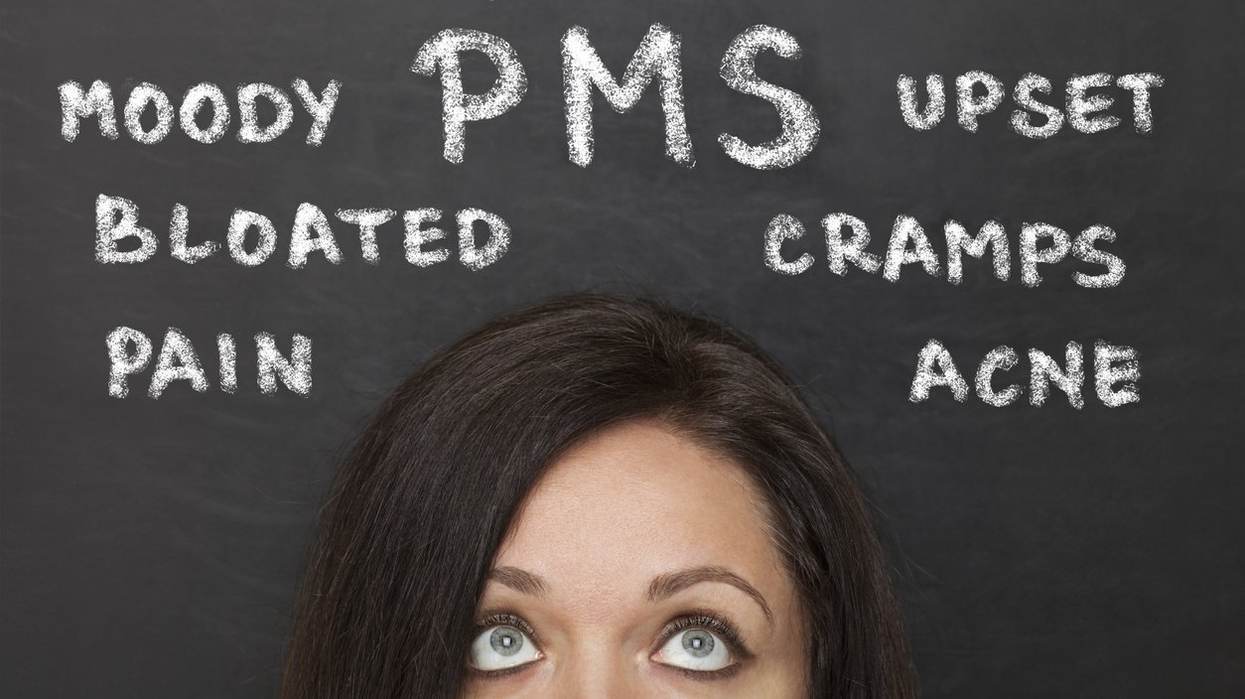
As many as 150 physical and behavioral symptoms have been assigned to PMS, but the number of PMS symptoms that most women experience is much more limited. The most common symptoms include irritability, bloating, mood swings, anxiety, depressed mood, fatigue, appetite changes, water retention and breast tenderness, among others.
Menstrual cramps, or dysmenorrhea, is not considered a PMS symptom, although many women with PMS also experience menstrual cramps.
PMS appears to be caused by a sensitivity to the rising and falling levels of the hormones estrogen and progesterone, which may influence brain chemicals, including serotonin, a substance that has a strong affect on mood. It's not clear why some women develop PMS or PMDD and others do not, but researchers suspect that some women are more sensitive than others to changes in hormone levels.
Calcium may play a role in PMS, although the reason remains unclear. In one study, women who took 600 mg of calcium twice a day experienced fewer PMS symptoms than women who took a placebo.
Dietary changes and exercise may also help relieve the discomfort of PMS symptoms. When symptoms are severe, serotonergic antidepressant medication may be prescribed. It is thought that increased serotonin reduces PMS symptoms.
One of the most important strategies for coping with premenstrual discomfort is to be aware of any pattern your symptoms follow. The more aware you are of your symptoms—when they start and stop and what works best to relieve them, for example—the better you can develop strategies to recognize and cope with them—whatever they may be.
Premenstrual Dysphoric Disorder
Approximately three to eight percent of women experience premenstrual dysphoric disorder (PMDD), a condition that, like PMS, is associated with the menstrual cycle. The symptoms of PMDD are the same as PMS symptoms, although women with PMDD may experience more dysphoric (depressive) symptoms and more severe symptoms. In fact, to be diagnosed with PMDD, symptoms must be severe enough to disrupt a woman's daily function.
The most important criteria for a PMDD diagnosis are mood symptoms. Physical symptoms may also be present but aren't as critical to the diagnosis. The difference between PMDD and mild PMS is like the difference between a mild tension headache and a migraine, experts say.
Women who have a history of depression are at higher risk for PMDD than other women. Treatment for PMDD includes serotonergic antidepressant medications and a particular brand of birth control pills, called Yaz. Yaz contains drospirenone (a progestin) and ethinyl estradiol (a form of estrogen) and has been shown to be clinically effective at treating the emotional and physical symptoms of PMDD, but should only be used to treat PMDD if you choose to use it for birth control because other forms of treatment for PMDD don't carry the same risks as oral contraceptives. Another form of birth control pill containing drospirenone plus a daily dose of folic acid also is FDA-approved to treat PMDD. It is sold under the brand names Beyaz and Safyral.
Another approach in using birth control pills is to use continuous dosing with no hormone-free interval (for example, Lybrel). This reduced PMS and PMDD symptoms for many women, although findings in multiple studies were not consistent.
Birth control pills containing drospirenone may cause some serious side effects in rare cases, including blood clots in the legs and lungs, so be sure and talk to your health care provider about your risks and benefits. Oral contraceptives are not recommended for women who smoke because of increased cardiovascular risks.
There is no specific laboratory test to determine if you suffer from PMS, and diagnosis can take some time because symptoms are so varied. But there are certain characteristics that health care professionals consider. To qualify as PMS, symptoms must follow this general pattern:
More than 150 physical and behavioral symptoms may be associated with PMS. The most common are irritability and anxiety/tension. Other common symptoms include:
The timing and severity of these symptoms are key to a PMS diagnosis. An average menstrual cycle spans 21 to 35 days. The follicular phase extends from menses to ovulation, and the luteal phase extends from ovulation to menses. PMS occurs during the luteal phase—approximately the last 14 days of your cycle, usually during the five to seven days before you get your period.
A premenstrual symptom chart or checklist (also called a menstrual cycle diary) is the most common method used to evaluate menstrual cycle symptoms. With this tool, you and your health care professional can track the type and severity of your symptoms, as well as when they occur, to identify a pattern that may indicate PMS.
Follow these simple steps to determine if your symptoms fit the PMS pattern:
Physical Symptoms
Emotional Symptoms
Behavioral Symptoms
In addition to suggesting that you keep a menstrual cycle diary, your health care professional likely will ask about your personal and family medical history and will give you a physical exam.
Laboratory tests are not routine but may be obtained to rule out other conditions with similar symptoms, such as low blood sugar (hypoglycemia), mania, depression, thyroid disorders, anemia, endometriosis, allergies, fibroids, dysmenorrhea, lupus, endocrine abnormalities, neurological problems such as brain tumors and heart problems.
Menopause and PMS share some of the same symptoms, so depending on your age and health history, your health care professional may want to make sure that you are indeed ovulating and therefore experiencing PMS, not menopausal symptoms.
To do this, you will probably be asked to use an over-the-counter ovulation testing kit. This is a simple test that you can do at home. The results tell you when ovulation is likely.
If you are approaching menopause (the average age is about 51 for U.S. women, but ranges from 42 to 60 years), blood hormone tests may also be used to confirm if you are menopausal. However, a single blood test is not informative because hormone levels change often.
Many premenstrual syndrome (PMS) symptoms improve with treatment. Treatment options range from medication therapy to birth control pills to diet modification, including vitamin and mineral supplementation, herbal medicines and exercise.
Antidepressant drugs called selective serotonin reuptake inhibitors (SSRIs) are typically recommended to women with severe mood-related symptoms such as anxiety, depression or mood swings.
Overall, common treatment options include:
In addition, there's some evidence that some nutritional supplements such as vitamin E, magnesium and vitamin B-6 may help ease symptoms of PMS. Discuss these and other strategies with your health care professional before taking any dietary supplement.
There is no single treatment that works well for every woman who experiences PMS. Typically, it's wise to try the most conservative treatment options first, which include lifestyle changes such as modifying your diet and exercising more. Discuss your symptoms with your health care professional if strategies you've tried don't work, so he or she can recommend other treatment options.
Can premenstrual syndrome (PMS) be prevented? Many women report benefits from a variety of lifestyle change including dietary changes, exercise and stress management. Dietary changes may include:
Ironically, some PMS symptoms, such as mood swings, irritability, bloating, hunger, carbohydrate cravings and fatigue, may lead you to consume foods that aggravate the condition.
Premenstrually, you may crave either refined sugar (usually combined with chocolate) or fat (combined with salt). Generally, foods high in refined sugars and fat temporarily raise energy levels. But within several hours or less, as your body metabolizes these foods, you may "crash," meaning you'll feel worse than before you ate them. Foods high in sugar content can also leave you feeling jittery.
To alleviate mood swings and fatigue, try adding more high-quality, complex carbohydrates to your diet such as:
These complex carbohydrates help keep blood sugar levels even while providing your body with a long-lasting source of energy.
It's not uncommon for your appetite to increase just before your period begins. To combat the munchies and extra weight gain, try eating smaller, low-fat healthful meals using the food choices listed above.
Make sure you include adequate calcium in your diet; calcium may help prevent irritability, anxiety and other PMS symptoms. Good sources of calcium include:
Another good way to prevent PMS symptoms is through regular exercise in the form of aerobic activities such as brisk walking, jogging, biking or swimming. You will get the greatest benefits from exercise if you do it for at least 30 minutes, five or more days a week. But even taking a 20- to 30-minute walk three times a week can:
Other lifestyle changes that will help you control PMS include:
Review the following Questions to Ask about premenstrual syndrome (PMS) so you're prepared to discuss this important health issue with your health care professional.
There is no single laboratory test for PMS, but one of the most common ways to diagnosis PMS is by keeping a daily checklist, chart or "menstrual cycle diary" that tracks when your premenstrual symptoms occur for a few consecutive months. Your health care professional should rule out other disorders or diseases that mimic or are identical to the symptoms caused by PMS before diagnosing you with the condition. Other conditions include but are not limited to thyroid disorders, depression, endocrine abnormalities, menopause, heart problems, allergies and low blood sugar. Laboratory tests, personal and family medical histories and a physical exam are part of the diagnostic process.
For information and support on coping with Premenstrual Syndrome, please see the recommended organizations, books and Spanish-language resources listed below.
American College of Obstetricians and Gynecologists (ACOG)
Website: https://www.acog.org
Address: 409 12th Street, SW
P.O. Box 96920
Washington, DC 20090
Phone: 202-638-5577
Email: resources@acog.org
MGH Center for Women's Mental Health
Website: https://www.womensmentalhealth.org
Address: Perinatal and Reproductive Psychiatry Program Simches Research Builiding
185 Cambridge St Suite 2200
Boston, MA 02114
Phone: 617-724-7792
National Family Planning and Reproductive Health Association (NFPRHA)
Website: https://www.nfprha.org
Address: 1627 K Street, NW, 12th Floor
Washington, DC 20006
Phone: 202-293-3114
Email: info@nfprha.org
Books
A Gynecologist's Second Opinion
by William H. Parker and Rachel L. Parker
Bitchin' in the Kitchen: The PMS Survival Cookbook
by Jennifer Evans
Curing PMS Naturally with Chinese Medicine
by Bob Flaws
Natural Medicine for PMS
by Deborah R. Mitchell
Once a Month: Understanding and Treating PMS
by Katharina Dalton
PMS & Perimenopause Sourcebook: A Guide to the Emotional, Mental, and Physical Patterns of a Woman's Life
by Lori Futterman and John E. Jones
PMS Relief: Natural Approaches to Treating Symptoms
by J. Marshall
PMS: Women Tell Women How to Control Premenstrual Syndrome
by Stephanie Degraff Bender and Kathleen Kelleher
Self-Help for Premenstrual Syndrome
by Marla Ahlgrimm R.Ph.
SOS for PMS: Whole Food Solutions for Premenstrual Syndrome
by Lissa Deangelis and Molly Siple
Spanish-language resources
Medline Plus: Premenstrual Syndrome
Website: https://www.nlm.nih.gov/medlineplus/spanish/premenstrualsyndrome.html
Address: Customer Service
8600 Rockville Pike
Bethesda, MD 20894
Email: custserv@nlm.nih.gov
Womenshealth.gov
Website: https://www.womenshealth.gov/espanol/preguntas/pms.cfm
Hotline: 1-800-994-9662







Support Our Mission