
Video/Image | Voiceover/Audio |
HERO: What Is Eosinophilic Esophagitis (EoE)? Animation: Show the outline of a body and zoom in on the esophagus. Show white spots on the esophagus and show it narrowing. Hero: Triggered by food and environmental factors Icons: Milk, wheat, egg, soy, fish, nuts, pollen Arrows pointing toward esophagus | Eosinophilic esophagitis, known as EoE, is a chronic immune condition where eosinophils, a type of white blood cells, build up in the esophagus. It can occur as an immune reaction to food or allergens, like pollen, mold, dust or animal hair. |
Animation: Show a person going through their daily lives and stopping while eating to signify they are in pain in their esophageal area | EoE can be painful and causes inflammation that damages the esophagus over time. This can take a toll on your daily life. |
HERO: Physical symptoms of EoE Pop up list:
Show a person in bed having a hard time sleeping, restless, shifting in bed, sitting up slightly uncomfortable | Food can get stuck in your throat, and you may have trouble swallowing, nausea, poor appetite, abdominal pain, chest pain, reflux that doesn’t improve with medication and difficulty sleeping because of discomfort. |
HERO: Emotional symptoms of EoE Pop up list:
Show a person turning down plans and staying at home | EoE can also affect your mental health. You may have anxiety about eating, fear of choking and feel hampered by following a strict diet — all of which may make it hard to enjoy eating out, socializing and traveling. |
Show a person sitting on a couch next to others at game night, keeping to themselves and turning away as a bowl of chips are passed | EoE can also affect self-esteem and relationships. You may avoid spending time with other people and worry that no one understands your condition. |
Show a person looking tired at work | Your symptoms may even affect your performance at work or school due to fatigue and stress. |
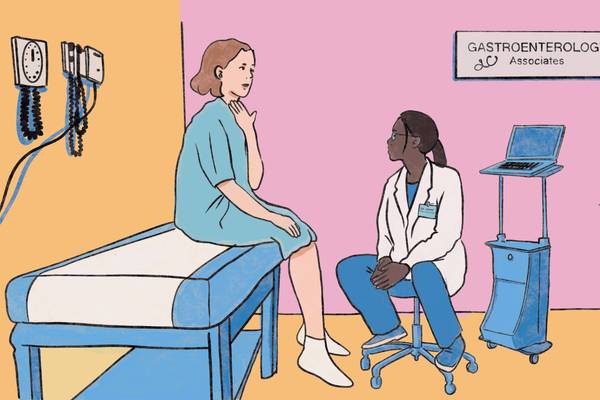
HERO: Getting a diagnosis is key Show the person sitting in their doctor’s office Show an endoscopy icon or animation Show a patient talking to an allergist who is handing them a list of foods to avoid Show medication icons Hero: Staying on treatment matters Show a person ordering food from a menu and a circle with a line through certain foods like wheat or soy to indicate that is not what they are ordering | EoE is diagnosed by a gastroenterologist who performs an upper endoscopy and biopsy of the esophagus. When managing EoE, GI doctors, allergists and dieticians work together to identify food or environmental triggers. Treatment can include dietary changes to avoid food triggers, medications to reduce inflammation and, sometimes, procedures to stretch the esophagus. Continued treatment is key to managing symptoms, preventing long-term complications like narrowing of the esophagus, and reducing discomfort. |
Woman goes back in for endoscopy | It’s important to keep having follow-up endoscopies and biopsies because symptoms alone can’t tell you if you’re responding to treatment. |
HERO: Listen to your body Show a patient talking to their doctor, then smiling and out to dinner with friends looking happy | If you have trouble eating and swallowing, talk to your healthcare provider. With proper treatment throughout your life, EoE can be managed — and your quality of life can improve. |
For more information, please visit HealthyWomen.org/EoE | |
This resource was created with support from Sanofi and Regeneron.
- Why Proactive Care Matters for EoE ›
- Doctors Dismissed My Breathing Issues — But It Was Eosinophilic Esophagitis (EoE) ›
- Understanding and Managing Eosinophilic Esophagitis (EoE) ›
- Clinically Speaking: Questions and Answers about Eosinophilic Esophagitis (EoE) ›
- What Is Eosinophilic Esophagitis (EoE)? ›