
1: Why is AMR a dangerous public health crisis?
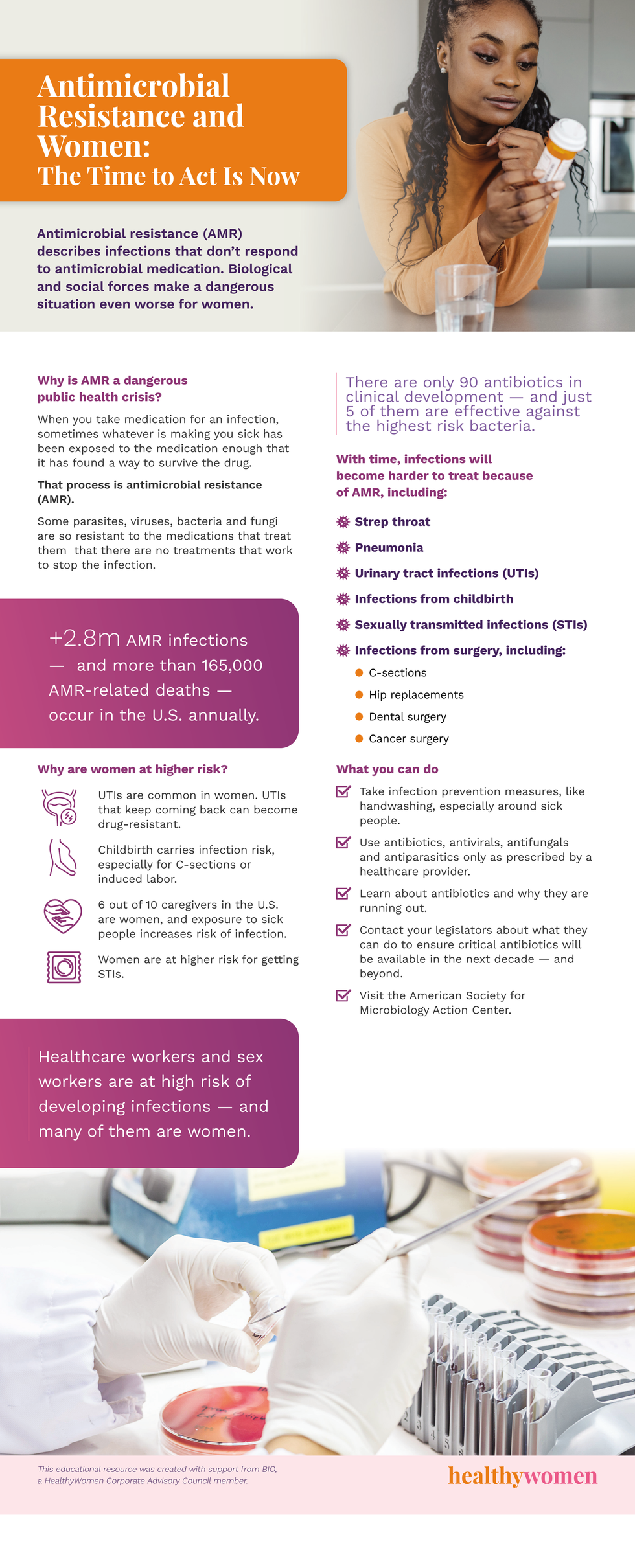
When you take medication for an infection, sometimes whatever is making you sick has been exposed to the medication enough that it has found a way to survive the drug.
That process is antimicrobial resistance (AMR).
Some parasites, viruses, bacteria and fungi are so resistant to the medications that treat them that there are no treatments that work to stop the infection.
There are only 90 antibiotics in clinical development — and just 5 of them are effective against the highest risk bacteria.
With time, infections will become harder to treat because of AMR, including:
-
Strep throat
-
Pneumonia
-
Urinary tract infections (UTIs)
-
Infections from childbirth
-
Sexually transmitted infections (STIs)
-
Infections from surgery, including:
-
C-sections
-
Hip replacements
-
Dental surgery
-
Cancer surgery
+2.8m AMR infections — and more than 165,000 AMR-related deaths — occur in the U.S. annually
Why are women at higher risk?
-
UTIs are common in women. UTIs that keep coming back can become drug-resistant.
-
Childbirth carries infection risk, especially for C-sections or induced labor.
-
6 out of 10 caregivers in the U.S. are women, and exposure to sick people increases risk of infection.
-
Women are at higher risk for getting STIs.
Pregnancy-related deaths caused by infection are on the rise.
Healthcare workers and sex workers are at high risk of developing infections — and many of them are women.
4: What you can do
-
Take infection prevention measures, like handwashing, especially around sick people.
-
Use antibiotics, antivirals, antifungals and antiparasitics only as prescribed by a healthcare provider.
-
Learn about antibiotics and why they are running out.
-
Contact your legislators about what they can do to ensure critical antibiotics will be available in the next decade — and beyond.
-
Visit the American Society for Microbiology Action Center.
Resources
American Society for Microbiology Action Center
This educational resource was created with support from BIO, a HealthyWomen Corporate Advisory Council member.
- 15 Minutes With: Rick Bright Talks About Antimicrobial Resistance (AMR) ›
- Antimicrobial Resistance (AMR): What You Need to Know to Keep Yourself and Your Family Safe ›
- Fast Facts: What You Need to Know About Antimicrobial Resistance (AMR) ›
- Antimicrobial Resistance Is Bad News for Everyone, but May Hurt Some Communities More Than Others ›
- Clinically Speaking: Important Questions to Ask About Antimicrobial Resistance ›
- How Antimicrobial Resistance (AMR) Complicates Other Health Conditions ›