
Brittany Barreto, Ph.D., is a podcaster, an entrepreneur, and a molecular and human geneticist. (In other words, she’s really smart.) Read her column here each month to learn about what’s happening in the world of technology and innovation in women’s health.
Trying to get pregnant can quickly become overwhelming.
For many people, the process starts with a simple question, “Am I ovulating?” But fertility is far more complex than a single day on a calendar. Hormones fluctuate. Ovulation timing shifts. Sperm health matters. Cervical mucus changes. Stress, sleep and age can all play a role.
Historically, understanding any of this required expensive clinic visits, bloodwork and a lot of waiting.
Now, a new generation of fertility technology companies is bringing fertility tracking, hormone monitoring and conception support into the home. These tools are helping people gather more data about their bodies earlier in the fertility journey, sometimes before they ever set foot in a fertility clinic.
Some are designed to identify fertile windows more accurately. Others confirm ovulation, monitor sperm health or support at-home insemination. Together, they reflect a broader shift in women’s health. Consumers increasingly want proactive, personalized health information they can access privately and conveniently.
Here’s a look at the ways that technology is changing how people approach fertility today.
1. Fertility tracking is moving beyond calendar apps

(Photo/courtesy Kegg)
For years, fertility apps relied heavily on cycle averages and calendar predictions. But many people don’t ovulate exactly on day 14, and even people with “regular” cycles can experience significant variation month to month.
That’s why many newer fertility tools focus on measuring biological signals directly rather than relying solely on predicted averages.
One of those signals is cervical mucus.
Kegg tracks cervical mucus changes linked to fertility
Kegg offers an at-home fertility tracking device that measures changes in cervical mucus using vaginal sensor technology.
Cervical mucus plays an important role in fertility. Most of the month, mucus acts as a protective barrier in the reproductive tract. But around ovulation, it changes consistency to help sperm survive and travel more effectively toward the egg. Research has shown that cervical mucus observations may predict fertility better than intercourse timing alone.
The Kegg fertility tracker measures electrical changes in cervical mucus and provides users with daily fertility scores through an app. Research suggests that cervical mucus could be more accurate than classic basal body temperature for predicting ovulation. The tracker costs $477 but you can find sales that reduce it significantly. For example, it’s on sale for $279 right now. The Kegg tracker is FSA-/HSA-eligible and, at this time, guarantees pregnancy within 1 year of use or your money back.
The device also reflects another major trend in fertility technology: the rise of longitudinal data collection. Instead of relying on a single hormone test or temperature reading, these systems gather daily data over time to personalize predictions for an individual user’s body.
Wearable fertility trackers are turning body temperature into reproductive insights
Another biological signal commonly used in fertility tracking is basal body temperature (BBT), which slightly rises after ovulation because of progesterone production.
Historically, tracking BBT meant taking your temperature manually every morning before getting out of bed, something that can be difficult to do consistently.
Now, wearable devices are automating that process.
Femometer uses a smart ring to track fertility signals continuously
Femometer continuously tracks body temperature, sleep, heart rate variability and other physiological metrics. The device is designed to help users identify and confirm ovulation while also monitoring broader health patterns, such as stress and sleep quality.
Unlike many consumer wearables that were originally designed for fitness tracking, Femometer is a fertility-focused smart ring specifically marketed around reproductive health. The company says the ring’s predictive algorithm is based on data from over 10 million users over the last 10 years in business. Insurance doesn't cover the ring, but it is HSA-/FSA-eligible and has a one-time fee ranging from $20 to $200, with no subscription required.
Wearable fertility tracking is part of a broader movement toward passive health monitoring, technologies that continuously collect physiological data without requiring users to actively test every day.
2. Hormone testing at home is becoming more sophisticated
(Photo/Courtesy Proov)
Ovulation predictor kits have traditionally focused on luteinizing hormone (LH), which surges before ovulation. But fertility specialists have long known that multiple hormones influence fertility and implantation.
New at-home hormone monitoring systems are expanding beyond LH alone.
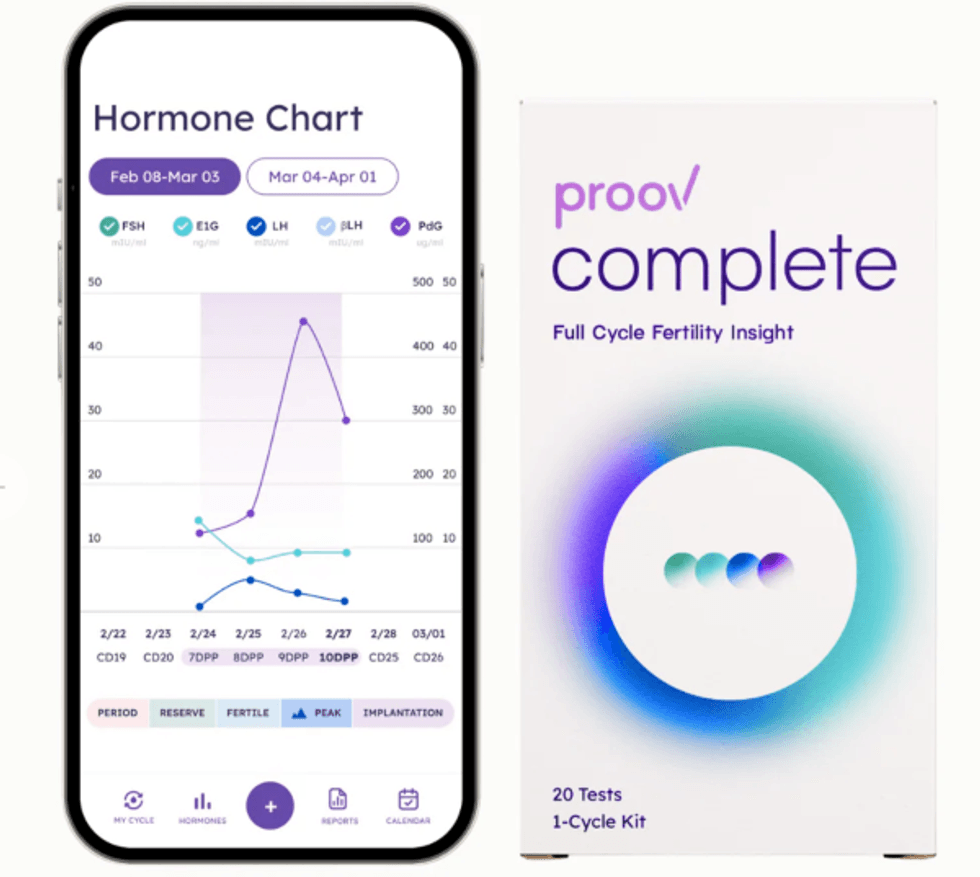
Proov measures four fertility-related hormones at home
Proov offers an at-home testing system that measures four hormones associated with fertility: follicle-stimulating hormone (FSH), estrogen metabolites (E1G), LH and progesterone metabolites (PdG).
Progesterone is especially important because it helps support implantation and early pregnancy after ovulation occurs. Many traditional ovulation tests can predict ovulation but cannot confirm whether progesterone levels rise appropriately afterward.
Proov’s system combines urine test strips with smartphone-based analysis and personalized hormone reports. Unlike many traditional ovulation tests that only track LH surges, Proov measures multiple hormones throughout the cycle, including progesterone metabolites, to help confirm whether ovulation actually occurred. In a 2022 study, Proov Complete detected up to six fertile days by tracking across the menstrual cycle.
Proov holds the distinction of being the first and only FDA-cleared at-home diagnostic test for confirming successful ovulation. The tests are available at major retailers, including CVS, Walgreens and Walmart, and most are FSA-/HSA-eligible. Costs are widely variable, depending on what you’re buying. They have individual tests starting at $14.99 and bundles that are as much as $500.
The growing popularity of these tools reflects increasing consumer demand for deeper fertility insights without immediately escalating to expensive fertility workups.
3. At-home insemination is expanding reproductive options
(Photo/Courtesy Mosie Baby)
Fertility technology is also evolving beyond tracking and into direct support for conception.
Mosie Baby brings FDA-cleared insemination into the home
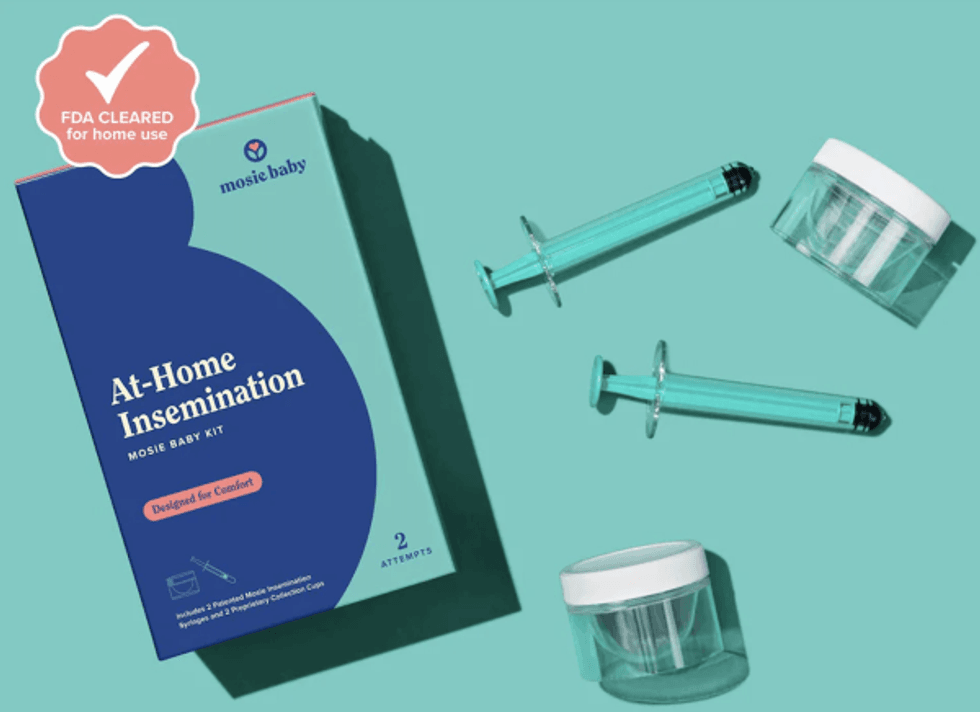
Mosie Baby created the first FDA-cleared at-home insemination kit available over the counter in the United States.
The system includes specially designed collection cups and insemination syringes intended to improve comfort and sperm transfer compared to standard syringes.
Natural intrauterine insemination, meaning no added hormones or treatments, costs $500 to $4,000 per cycle in the U.S. without insurance and between $300 to $1,000 with coverage. Whereas Mosie Baby costs $129 with two kits ($65 per cycle) and is FSA-/HSA-eligible. This is particularly useful for LGBTQ+ families, single parents by choice, and people using donor sperm because many insurances will not cover the procedure without a medical diagnosis of infertility. It may also support people with sexual dysfunction, chronic pain or other medical conditions that make intercourse difficult, but who cannot receive a diagnosis of infertility.
The rise of at-home fertility devices also reflects a broader shift toward reproductive autonomy, allowing people to access more reproductive tools privately and on their own timeline.
4. Fertility conversations are increasingly including male reproductive healt
Infertility is often discussed as a women’s health issue, but male factors contribute to 20% to 30% of all infertility cases.
Historically, semen analysis required clinic visits and lab testing. But consumer sperm testing technologies are making some screening tools available at home.
YO Home Sperm Test analyzes sperm motility and concentration at home
YO Home Sperm Test is an FDA-cleared at-home semen analysis system that uses a smartphone-based platform to measure sperm count and movement.
The test provides users with a video of moving sperm, along with results that can help show how many sperm are present and how well they are swimming — two important factors in fertility.
A study found that amateur users achieved greater than 97% agreement with laboratory professionals when using the YO Home Sperm Test to classify sperm movement levels.
While at-home sperm testing does not replace a full fertility evaluation, it may help people identify potential issues earlier and encourage more comprehensive fertility conversations that include both partners. At a $100 price point for three tests, Yo Sperm Test is FSA-/HSA- eligible and may be included in some insurance plans.
5. The future of fertility is becoming more personal
These technologies represent something bigger happening across healthcare: Fertility is increasingly moving out of the clinic and into everyday life.
For generations, many people trying to conceive were left with little visibility into what was happening inside their bodies between visits to their healthcare provider. Today, that’s beginning to change. Hormone monitoring systems, wearable sensors, at-home insemination kits and sperm analysis tools are giving people new ways to understand their reproductive health earlier in the process and from the privacy of their homes.
No app or device can guarantee pregnancy, but having more information may help reduce uncertainty and encourage earlier conversations with healthcare providers. For some people, it can also create a greater sense of confidence and participation during what is often an emotional and deeply personal journey.
Perhaps most importantly, these technologies are changing how people think about fertility itself. Instead of only seeking answers after months or years of struggling to conceive, more people can now proactively track, monitor and learn about their reproductive health long before they find themselves in a fertility clinic.
The information about products and/or services in this column does not constitute any form of endorsement or recommendation by HealthyWomen. Links are provided as a convenience and for informational purposes only. This column may occasionally cover companies in which Brittany Barreto is an investor.