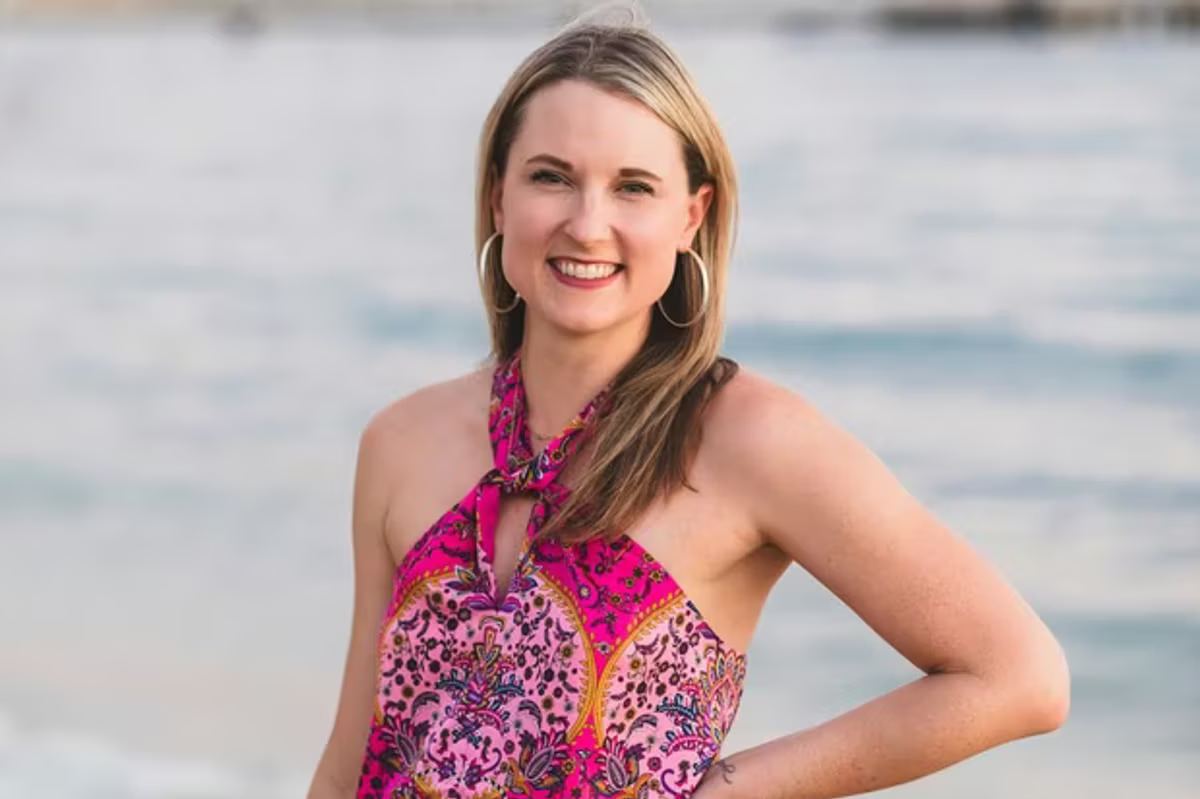
April is Autism Acceptance Month.
As told to Jacquelyne Froeber
I’ve always known there was something different about my brain. And I’ve always been looking for someone to help me understand it.
As a young adult, I went to different healthcare providers and was told I had attention-deficit hyperactivity disorder (ADHD), obsessive compulsive disorder (OCD) and anxiety: All of which are true. And although each diagnosis felt like a step in the right direction, I couldn’t escape the constant internal questions. What was it that made me so different?
After college, I got married and had two kids. Life was busy, but I never stopped trying to find an answer to that question. Then, when I turned 31, everything changed.
One day at work, a colleague of mine told me that her daughter was diagnosed with autism. I felt my heart skip a beat. Her daughter and I were classmates in college and we seemed so similar. In fact, we had both been homecoming queens of our high schools. If she was autistic then I didn’t know what autism was.
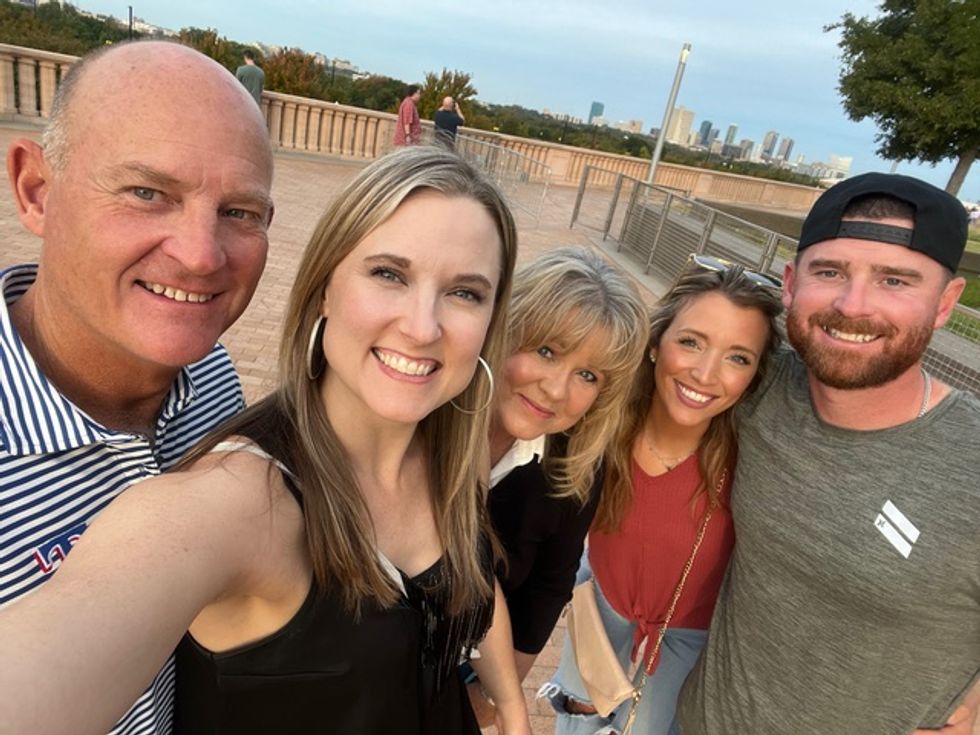 Taylor with her family, 2023
I started reading about autism quietly. I was already the girl with OCD, ADHD and anxiety, so I didn't want to throw something else out there without being certain. But it wasn’t long before I started recognizing myself in the description of autism.
I’ve always felt like I’m fluent in two languages but never get to use my native voice because I'm constantly adapting myself to the language that I’m “supposed” to speak. It’s like I’m observing a situation and taking notes on how people interact — their tone and facial expressions — so I can filter myself before I can actually say what I'm trying to say.
Other signs, like feeling exhausted for days after a social event, started to make sense.
I reached out to the classmate who was recently diagnosed and she recommended her psychologist to me.
I was nervous to go to the appointment. Even though I knew in my heart I was 100% autistic, getting a formal diagnosis was important to me. I process things by teaching and sharing because it helps me feel empowered. I knew I wanted to teach others about autism and I wanted to have the diagnosis behind me for credibility. But what if she didn’t agree?
The actual appointment did little to calm my nerves. It was a sensory nightmare. The air conditioner was broken and it was 100-plus degrees outside. Everyone was wearing masks because we were still in the pandemic, and a clear divider separated me and the psychologist in the testing room. Between the masks and the heat and feeling completely overwhelmed — I just prayed that she would really see me for who I am.
Thankfully, she did. After testing, the diagnosis was confirmed: I was autistic! Hearing that felt like coming home to myself, and the questions that had plagued me for years suddenly went quiet. It was like the camera shifted into focus and I could see things clearly. I cried tears of joy. I was so relieved.
When you don't have words to describe your experiences, it's so isolating. There's a huge component of shame that comes in and so many undiagnosed autistic adults feel broken, feel invisible and feel like they're never going to be understood.
Now I had the language to describe my challenges and describe my differences, and I wanted to help other autistic adults so they could feel less alone and more empowered.
In 2021, I started my YouTube channel, Mom on the Spectrum, as a way to reach out to the autism community and share my experiences. I also saw the channel as a video library that my young kids could watch one day whenever they were ready to learn about autism.
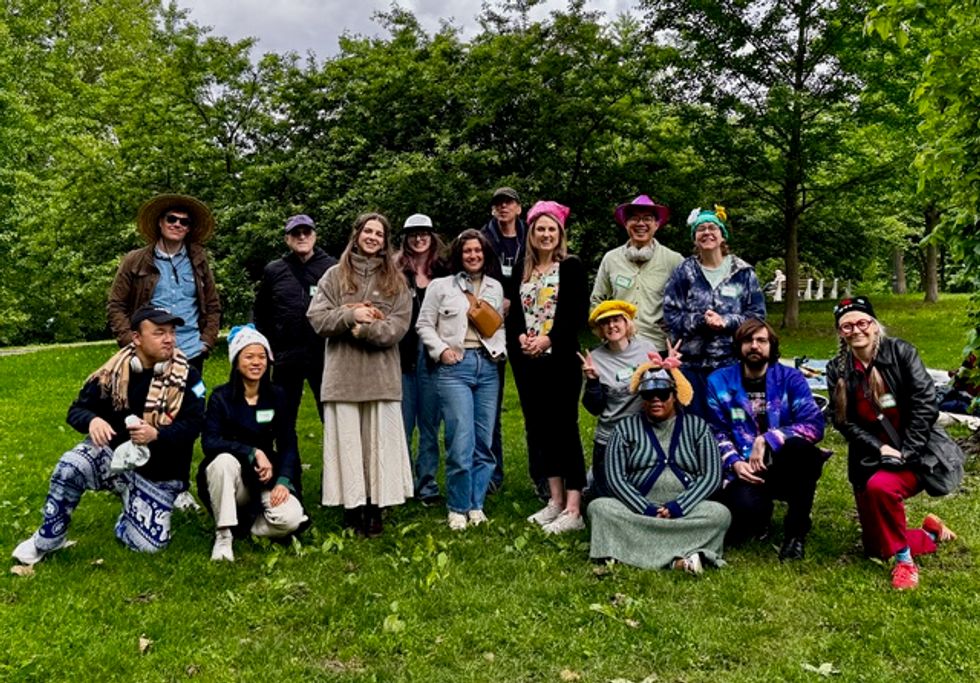 Taylor with some members of the Mom on the Spectrum community, 2025
Slowly, the channel became more popular and I was thrilled. But I wasn’t sure how long I could keep Mom on the Spectrum going. I was in the middle of a difficult divorce and interviewing for a new job as a software developer. Add in my family and kids and worrying about the pandemic and there never seemed to be enough hours in the day.
Then I had a thought: What if I bet 100% on myself? I’d spent my whole life pretending — masking — losing touch with what I actually wanted and needed. Now, I could clearly see that I could trust myself and I could choose myself. And I did.
About a year after creating Mom on the Spectrum, I made a video about the 16 traits of autism in women, and the video took off. Immediately, I started seeing new subscribers and a ton of interest in the channel. Today, that video has more than 1.7 million views. And Mom on the Spectrum has more than 360,000 followers.
Starting my channel has given me a voice and a platform to help other autistic people understand their brains. It may have taken 31 years, but I'm finally in touch with my true, authentic self — and that was worth the wait.
Have your own Real Women, Real Stories you want to share? Let us know.
Our Real Women, Real Stories are the authentic experiences of real-life women. The views, opinions and experiences shared in these stories are not endorsed by HealthyWomen and do not necessarily reflect the official policy or position of HealthyWomen.
- Removing the Mask: Autism in Women ›
- My Autism Diagnosis in My Late 30s Changed My Life for the Better ›
- I’m Living with Social Anxiety Disorder - HealthyWomen ›