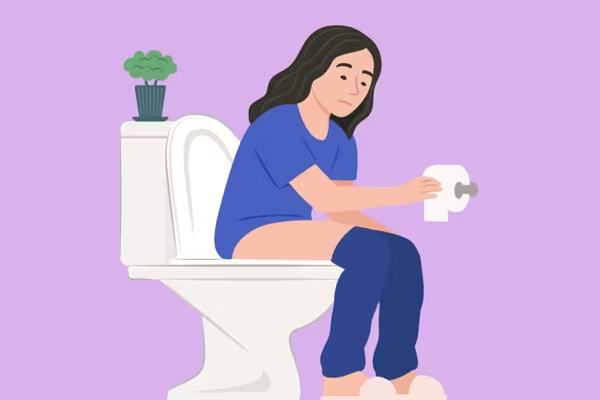

We’ve all experienced the uncomfortable feeling of rushing to get to a bathroom. And many of us have laughed so hard that we’ve leaked a little pee — and hopefully the good belly laugh was worth it!
But what if you find that you have the sudden and urgent feeling that you need to pee even when your bladder isn’t full? Or you have the need to pee and can’t stop it? That’s the reality for 2 out of 5 women who live with overactive bladder (OAB).
OAB often occurs in people over age 65, but many women experience it earlier — in their 40s or 50s. Having OAB can affect your sleep, your daily schedule, your social and travel plans, and your sex life.
The good news is that there are lifestyle changes and treatments that can help. The first step is talking to your clinician.
Diagnosis usually involves your clinician reviewing your symptoms and medical history, and sometimes a urinalysis. We suggest preparing for your appointment by keeping a bladder diary that will help your clinician get a good idea of what symptoms you’re experiencing. You can use the diary to track when and what you drink and how often you have the urge to pee.
When preparing to see your clinician, review the list of questions below, so you can get all the answers you need to find relief during your appointment. You can even download the guide and print it and take it with you or fill it out on your phone.
Downloadable Resource: Questions to Ask About Overactive Bladder >>
Before your appointment
Consider how OAB is affecting you, so you’re prepared to discuss these factors with your clinician:
- How many times do you typically pee during the day?
☐ 7 or less times per day ☐ 8 or more times per day
- How many times do you wake up in the night to pee?
☐ 0 to 1 times per night ☐ 2 or more times per night
- Do you often feel a sudden urge to pee that is difficult to control?
☐ Always ☐ Often ☐ Occasionally ☐ Rarely ☐ Never
- Do you frequently leak pee because you can’t control the urgency?
☐ Always ☐ Often ☐ Occasionally ☐ Rarely ☐ Never
- Does OAB affect your daily life, such as interfering with work, hobbies, time with family and friends, or day-to-day tasks?
☐ Always ☐ Often ☐ Occasionally ☐ Rarely ☐ Never
- Do you change travel plans because of OAB?
☐ Always ☐ Often ☐ Occasionally ☐ Rarely ☐ Never
- Does OAB affect your sex life?
☐ Always ☐ Often ☐ Occasionally ☐ Rarely ☐ Never
- Do you experience any effects on your mental health because of OAB?
☐ Always ☐ Often ☐ Occasionally ☐ Rarely ☐ Never
At your appointment
Questions to ask your clinician about OAB
- What factors — such as menopause, diet or medications — can be contributing to my OAB?
- Do you think I need any specific diagnostic tests, such as a urinalysis, ultrasound or a postvoid residual volume test (PVR)?
- What treatment options are available to manage my OAB symptoms?
- Is there a need for me to see a specialist?
- If so, what type of specialist should I see?
- Are there lifestyle changes that I can make to help prevent or improve symptoms?
Questions to consider when choosing a treatment
- How long will the treatment take before I get relief from my symptoms?
- Are treatments daily, weekly or on a different schedule?
- Are treatments oral, topical or by injection?
- Do nerve stimulation devices help and if so, should I consider one?
- What side effects can I expect from treatment?
- Do you suggest a specific treatment over another?
- Will I need treatment for the rest of my life?
- Are there any risks or complications with certain treatments?
- What happens if the treatment doesn’t work?
- What are my next steps?
This educational resource was created with support from Sumitomo Pharma America, Inc.
- Overactive Bladder Can Affect Your Daily Life ›
- Overactive Bladder 101 ›
- Talking to Your Clinician About Overactive Bladder ›
- Overactive Bladder: Those Awkward Questions You Want and Need to Ask ›
- How to Talk to Your Clinician About Overactive Bladder - HealthyWomen ›