

Search
Latest Stories





Newsletter Sign-Up
Newsletter
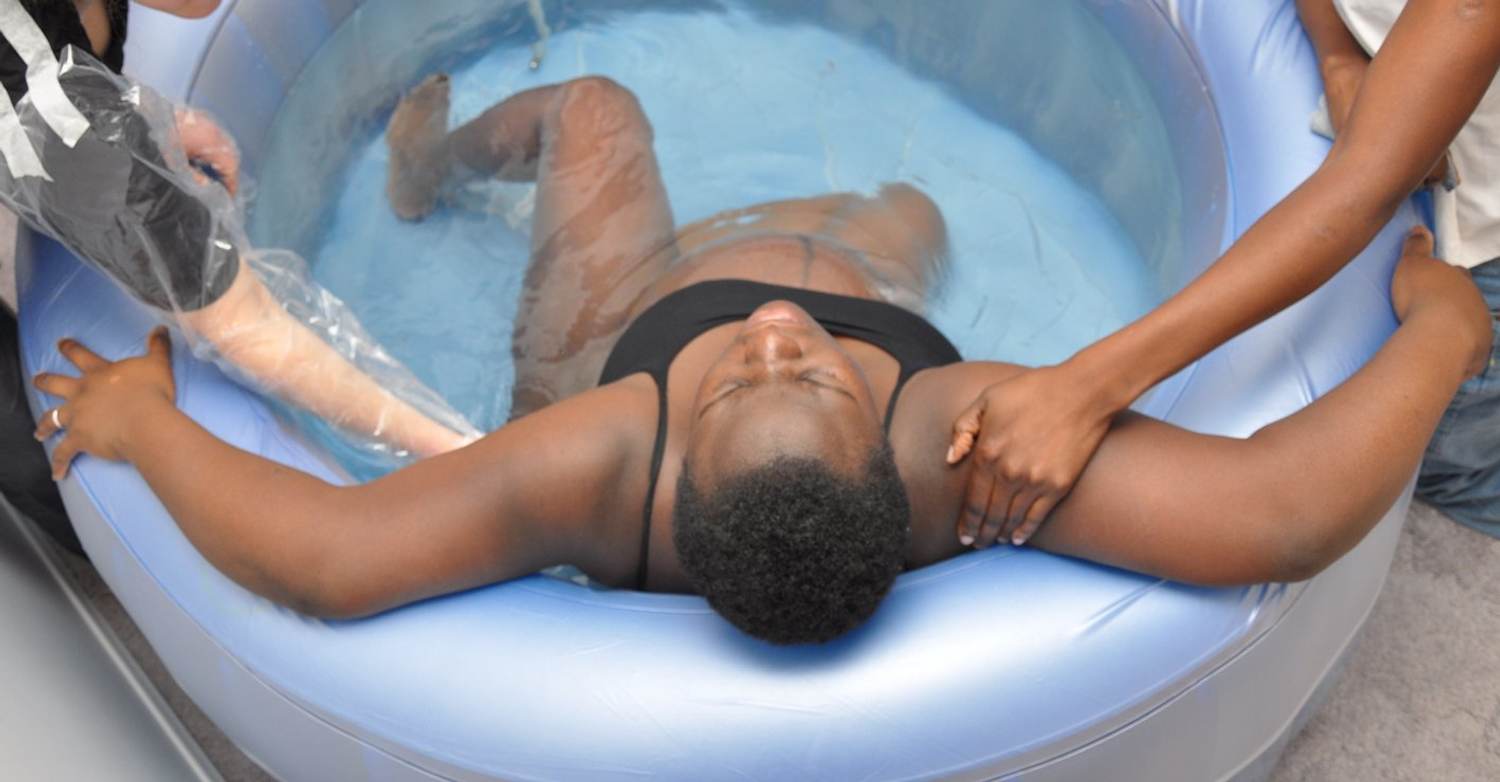
If you're pregnant and considering using a birthing pool during labor and delivery, you may want to review recent recommendations on water birth from The American College of Obstetricians and Gynecologists (ACOG) and the American Academy of Pediatrics (AAP).
Undergoing the first stage of labor in a birthing pool may offer some advantages, such as decreased pain or use of anesthesia and shorter labor, but staying in the pool through the final stages of labor and delivery has no proven benefit to women or babies and may pose some health risks for the newborn, according to a statement from the joint committee.
"Many labor and delivery units are equipped with tubs to be used by laboring women, and immersion in water for relaxation and pain relief is appealing to some," said Jeffrey L. Ecker, MD, chair of the College's Committee on Obstetric Practice that developed the Committee Opinion. "But it is important to recognize that laboring in water is not the same as delivering underwater."
A water birth refers to giving birth in a tub of warm water. Some women use the tub only during labor, but get out for delivery, while others stay in the water for delivery. Water births have grown in popularity since the 1980s, with the theory behind them being that water provides a similar environment to what the baby had in the amniotic fluid sac and is therefore gentler for the baby and less stressful for the mother. The American Pregnancy Association (APA) lists specific potential benefits for the mother and baby.
The joint committee, however, examined research on delivering babies in water and found no benefits to the baby. It did, however, find some rare, but serious, health risks, Ecker said. Potential hazards of an underwater delivery include a higher risk of maternal and neonatal infections; difficulty regulating the baby's body temperature; greater chance of umbilical cord damage; possible respiratory distress from the baby inhaling tub water; and potential for seizures or asphyxiation after birth.
Who Should Avoid Birthing Pools?
You should discuss your interest in using a birthing pool or tub with your health care professional well before labor begins, but especially if you may have some special circumstances, which could increase risk, including:
- You have herpes, which can transfer easily in water.
- Your baby is breech, which may cause a more difficult delivery and greater risks.
- You have excessive bleeding or maternal infection.
- You are expecting multiples.
- You have toxemia or preeclampsia, both of which can increase risk.
If you go into early labor—more than two weeks before your due date—a water birth is not recommended.
If you are interested in using a birthing pool for labor at a hospital or birth center, the AAP and ACOG recommend that you check to ensure that the facility:
- Has standards for deciding which women should be permitted to use the birthing pools
- Maintains and cleans tubs and birthing pools
- Follows infection control procedures
- Monitors pregnant women regularly while immersed
- Moves women out of the tubs if concerns develop
If there are no birthing centers that offer water birth options, you can rent a birthing tub. Check online sites and discuss options with your midwife. Also check with your insurer to see if it will reimburse the rental costs.








Popular
1

Don't Panic at Your Child's First Pubic Hair
Dec 14, 2015
2

Pregnancy
Sep 16, 2009
3

Low Progesterone Symptoms
Jun 27, 2024
4
5

Wondering How to Get Pregnant? Try These 5 Sex Tips
Jun 24, 2014
6

Teen Health
Sep 16, 2009
Support Our Mission
Keep Trusted Women’s Health Information Free
Your donation ensures every woman continues to have access to credible health content.More Stories







Everything you need to know about women’s health — in one place.