

Search
Latest Stories



Newsletter Sign-Up
Newsletter

You've made it through fatigue, morning sickness, strange cravings and even intense back pain, so you can deal with anything at week 34, right? How about leaking nipples? Not a fun thought, but it may happen as you near your due date.
Tip of the week:
For some women, the thought of leaky breasts is alarming, not because of health concerns, but rather due to worries that they'll ruin a perfectly good bra. In addition to purchasing nursing pads to soak up the extra fluid, you may also want to invest in a new bra to wear throughout the end of pregnancy. Look for one that is very supportive—after all, there's probably more to support at this point—and has a band under the cups, wide straps, an adjustable closure and is free of underwire.
Inside your belly, your baby is about the length of a white board and weighs about 5 pounds, or the heft of a cantaloupe. Her lungs are finishing their development and her central nervous system is quite advanced. In fact, babies born prematurely between weeks 34 and 37 often have no health problems and may require only short-term care after birth.
To get ready for your little one's arrival, your breasts may already have started producing colostrum, which is basically early breast milk. More specifically, colostrum is a fluid that is dense in nutrients and will give your baby a major dose of vitamins, minerals, protein, carbohydrates and antibodies when you start breastfeeding. Early colostrum will be thick and yellow in color, becoming thin and colorless later on.
Even though baby isn't here yet, your body knows she's coming and is getting a head start on producing colostrum. This can happen when you're waiting for the barista to finish your latte, or when you're getting intimate with your partner—it's different for all women. Either way, know that it's normal.
If you don't experience any leakage, you will still likely start producing milk when your baby is born. In fact, if you're really curious, you may be able to squeeze some colostrum from your nipple with a gentle pinch.
It's a good idea to contact your health care provider if the leaking fluid looks or smells strange or is tinged with blood.






Stories We Love
1
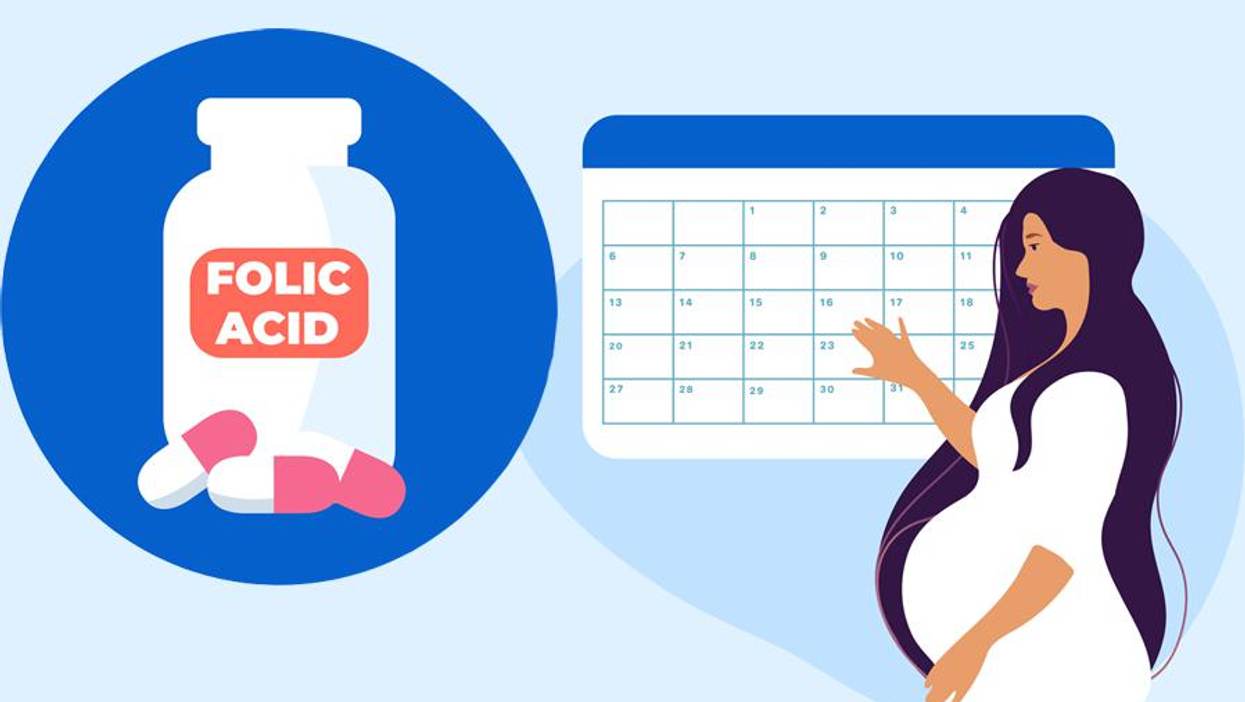
Folic Acid and Birth Defects: What’s the Connection?
Jan 11, 2022
2

1 Week Pregnant: Preparing Your Body for Pregnancy
May 30, 2014
3

4

5

4 Weeks Pregnant: Suspecting Successful Conception
May 30, 2014
6

5 Weeks Pregnant: Preparing for a Healthy Pregnancy
May 30, 2014
Support Our Mission
Keep Trusted Women’s Health Information Free
Your donation ensures every woman continues to have access to credible health content.
More Stories





Everything you need to know about women’s health — in one place.