May is Lupus Awareness Month.
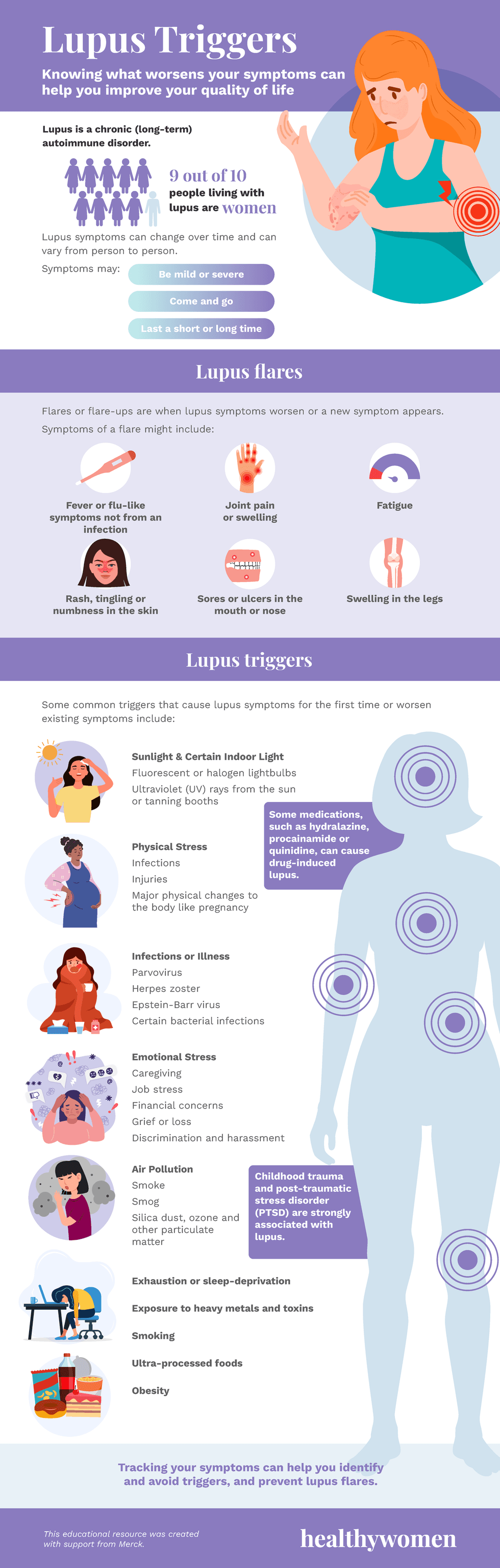
Lupus is a chronic (long-term) autoimmune disorder.
9 out of 10 people living with lupus are women.
Lupus symptoms can change over time and can vary from person to person.
Symptoms may:
Be mild or severe
Come and go
Last a short or long time
Lupus flares
Flares or flare-ups are when lupus symptoms worsen or a new symptom appears.
Symptoms of a flare might include:
- Fever or flu-like symptoms not from an infection
- Joint pain or swelling
- Fatigue
- Rash, tingling or numbness in the skin
- Sores or ulcers in the mouth or nose
- Swelling in the legs
Lupus triggers
Some common triggers that cause lupus symptoms for the first time or worsen existing symptoms include:
- Sunlight & Certain Indoor Light
- Fluorescent or halogen lightbulbs
- Ultraviolet (UV) rays from the sun or tanning booths
- Medications Some medications, such as hydralazine, procainamide or quinidine, can cause drug-induced lupus.
- Physical Stress
- Infections
- Injuries
- Major physical changes to the body like pregnancy
- Infections or Illness
- Parvovirus
- Herpes zoster
- Epstein-Barr virus
- Certain bacterial infections
- Emotional Stress
- Caregiving
- Job stress
- Financial concerns
- Grief or loss
- Discrimination and harassment
Childhood trauma and post-traumatic stress disorder (PTSD) are strongly associated with lupus.
- Exhaustion or sleep-deprivation
- Air Pollution
- Smoke
- Smog
- Silica dust, ozone and other particulate matter
- Exposure to heavy metals and toxins
- Smoking
- Ultra-processed foods
Tracking your symptoms can help you identify and avoid triggers, and prevent lupus flares.
This educational resource was created with support from Merck.
- Lupus and Reproductive Health: What You Need to Know ›
- Common Types of Lupus ›
- Understanding Lupus Research ›
- FAQs About Lupus ›