
Search
Latest Stories




Newsletter Sign-Up
Newsletter

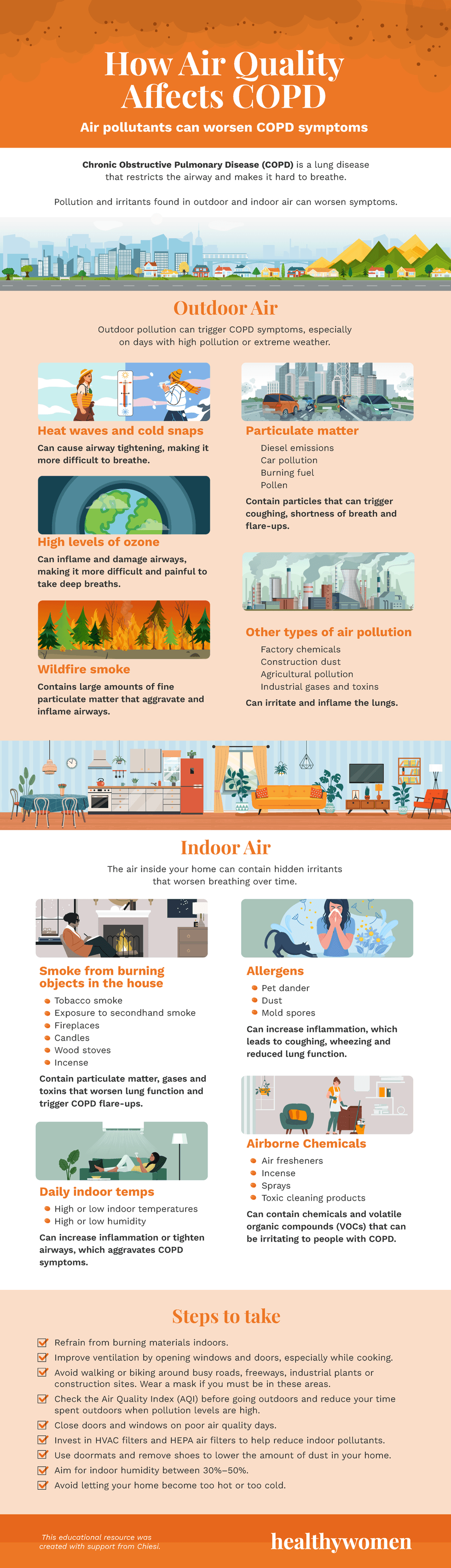
Chronic Obstructive Pulmonary Disease (COPD) is a lung disease that restricts the airway and makes it hard to breathe.
Pollution and irritants found in outdoor and indoor air can worsen symptoms.
Outdoor Air
Outdoor pollution can trigger COPD symptoms, especially on days with high pollution or extreme weather.
- Heat waves and cold snaps
Can cause airway tightening, making it more difficult to breathe.
- High levels of ozone
Can inflame and damage airways, making it more difficult and painful to take deep breaths.
- Wildfire smoke
Contains large amounts of fine particulate matter that aggravate and inflame airways.
- Particulate matter
- Diesel emissions
- Car pollution
- Burning fuel
- Pollen
- Other types of air pollution
- Factory chemicals
- Construction dust
- Agricultural pollution
- Industrial gases and toxins
Can irritate and inflame the lungs.
Indoor Air
The air inside your home can contain hidden irritants that worsen breathing over time.
- Smoke from burning objects in the house
- Tobacco smoke
- Exposure to secondhand smoke
- Fireplaces
- Candles
- Wood stoves
- Incense
Contain particulate matter, gases and toxins that worsen lung function and trigger COPD flare-ups.
- Allergens
- Pet dander
- Dust
- Mold spores
Can increase inflammation, which leads to coughing, wheezing and reduced lung function.
- Daily indoor temps
- High or low indoor temperatures
- High or low humidity
Can increase inflammation or tighten airways, which aggravates COPD symptoms.
- Airborne Chemicals
- Air fresheners
- Incense
- Sprays
- Toxic cleaning products
Can contain chemicals and volatile organic compounds (VOCs) that can be irritating to people with COPD.
Steps to take
- Refrain from burning materials indoors.
- Improve ventilation by opening windows and doors, especially while cooking.
- Avoid walking or biking around busy roads, freeways, industrial plants or construction sites. Wear a mask if you must be in these areas.
- Check the Air Quality Index (AQI) before going outdoors and reduce your time spent outdoors when pollution levels are high.
- Close doors and windows on poor air quality days.
- Invest in HVAC filters and HEPA air filters to help reduce indoor pollutants.
- Use doormats and remove shoes to lower the amount of dust in your home.
- Aim for indoor humidity between 30%–50%.
- Avoid letting your home become too hot or too cold.
This educational resource was created with support from Chiesi.








Popular
1
2

Biologics for Treating Asthma
Sep 22, 2026
3

¿Qué es la urticaria crónica espontánea (UCE)?
Jun 29, 2026
4
Biofármacos para el tratamiento del asma
Sep 22, 2026
5

The Skinny on Microdosing GLP-1 Drugs
Mar 06, 2025
6

10 Reasons You Might Have Blood in Your Urine
Feb 24, 2025
Support Our Mission
Keep Trusted Women’s Health Information Free
Your donation ensures every woman continues to have access to credible health content.More Stories





Everything you need to know about women’s health — in one place.