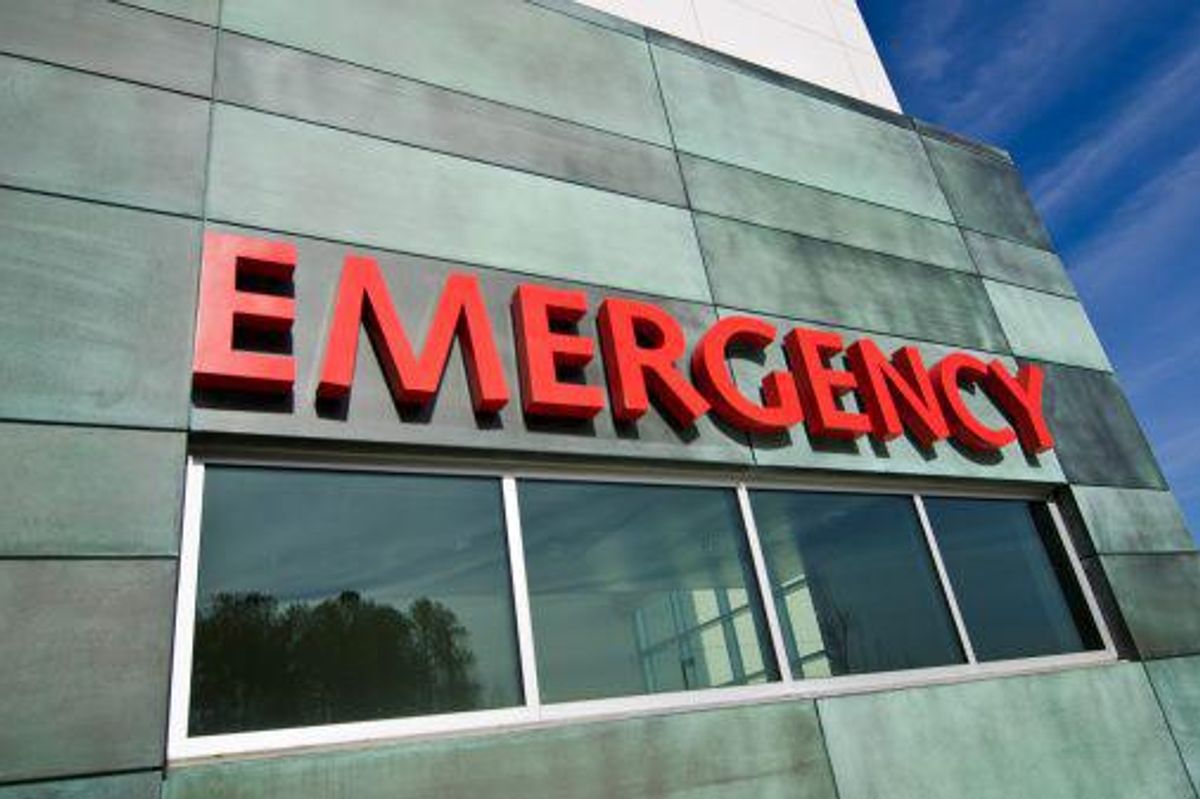
Yesterday morning, concerned about a problem I was having after having some injections weeks before for varicose veins in my legs, I called my doctor. I'll be taking a five-hour flight later this week and wanted to make sure there would be no problem. Ever since writing about deep vein thrombosis, I've had it on my mind.
"The doctor is on vacation until the end of the month," I was told. My doctor is a solo practitioner, and rather than get started with an unknown doctor who was covering for him, I phoned the physician who administered the injections, a vascular specialist.
"The doctor is on vacation until next week," reported his receptionist.
Where to turn?
I decided to wait until Wednesday, when one of his partners could squeeze me in. But if I felt it couldn't wait—or if there were no available appointments— it's likely I would have gone to the nearest emergency room (ER) to get it checked out.
Seems like I'm not alone. Jane Brody's New York Times column this week, "Avoiding Emergency Rooms," couldn't be timelier.
Emergency rooms are an easy substitute for a visit to the doctor, although not necessarily the wisest choice. One problem is that, unlike doctors who have set schedules, ERs are open 24 hours a day, seven days a week. And I call it a problem because ER visits are driving up the cost of health care.
Billions of dollars in unnecessary spending occurs because of ER visits. The costs are shocking: everyday outpatient problems, like headaches, have been found, in a new study, to rack up charges at the ER between $15 and $17,797 and urinary tract infections tip the charts at ranges from a low of $50 to a high of $73,002.
Common problems that could be easily diagnosed and treated—if patients could only reach their doctors—can easily cost thousands of dollars in just one visit to the ER, between diagnostic tests and procedures (many of which are unnecessary and may complicate the patient's medical problem), unnecessary hospitalizations and rising overhead costs.
Aside from that, each hospital that accepts Medicare and Medicaid is required by law to treat everyone who comes in seeking help, regardless of their legal status, citizenship or ability to pay.
Is it any wonder that hospital emergency rooms are overflowing, usually requiring long waits?
I used to think that these types of nonemergency ER visits belonged to only poor or underserved people or people without a private physician. But I learned that notion is woefully wrong.
As Brody writes: "The biggest increase (in ER use) has involved insured middle-class patients and those with personal physicians who could not reach or see their own doctors when they needed care."
One possible solution is urgent care, or walk-in clinics, where patients can be seen without an appointment and usually without a long wait. But that's not enough. There never seems to be one when you're looking for it. (Wouldn't it be nice if they were as visible as Starbucks?) Insurance coverage or payments also may present problems at walk-in clinics.
I happen to have my doctor's private cell phone number, but that doesn't do me much good when he's vacationing in Hawaii. Perhaps more doctors should share that information with their patients, or share the numbers of their partners or doctors who are on call for them so that their patients can contact them with questions or problems instead of heading to the nearest ER.
Wondering when a problem warrants a visit to the emergency room?
Read about it here. When to Go to the Emergency Room