
As a new parent, you face many decisions about how to best care for your infant. One of the most important areas to learn about is feeding and providing optimal nutrition for your new baby. In a recent HealthyWomen survey of neonatal and maternity nurses, 90 percent of maternity nurses said they counsel mothers about feeding options during their postpartum recovery. So it is a good idea to ask for advice while still in the hospital or talk to your obstetrician or pediatrician even before giving birth.
Health experts say there are only two safe and nutritious feeding choices for infants less than six months old: breast milk or infant formula. Breastfeeding is considered by health professionals as the ideal infant feeding, and infant formula is the only safe and nutritious alternative.
Choosing what to feed your baby
The American Academy of Pediatrics (AAP) recommends exclusive breastfeeding for a minimum of four months but preferably for six months. Breastfeeding should be continued, they say, with the addition of complementary foods, at least through the first 12 months of age and thereafter as long as mutually desired by mother and infant. Breast milk provides virtually all the nutrients your baby needs to be healthy. It also contains many substances that benefit your baby's immune system, including antibodies, immune factors, enzymes and white blood cells.
However, some women cannot breastfeed or choose not to. For their babies, infant formula is the only safe, nutritious and recommended alternative that is proven to help infants grow and develop into healthy children. Infant formula provides the caloric, protein, carbohydrate and fat values needed for proper infant nutrition.
Many mothers supplement their breastfeeding with infant formula, which is called supplementary or mixed feeding. They breastfeed for some feedings and prepare bottles of formula for others. This common practice works well for most babies.
Selecting baby formula and bottles
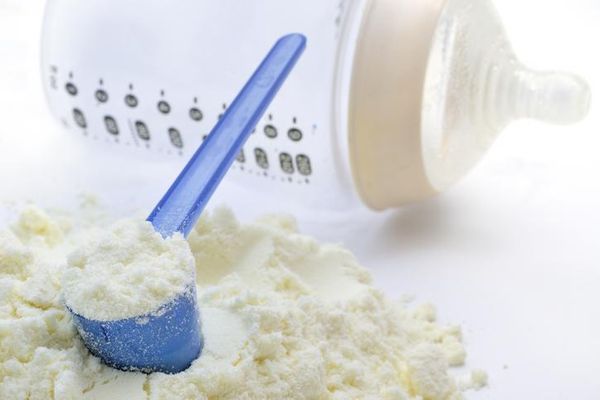
The AAP recommends starting with an iron-fortified cow's milk-based formula. There are three forms to choose from: powdered formula, liquid concentrate and ready-to-feed liquid.
Although most babies do well on milk-based formulas, there are some who are allergic or intolerant to it. Signs that a baby isn't tolerating the formula include crying after feeding, vomiting, persistent diarrhea, colic with a distended abdomen or irritability and frequent night waking. If your baby has difficulty digesting a milk-based formula, your health care provider may recommend a soy-based or a lactose-free milk-based formula.
Mothers who formula-feed also need to choose the proper bottle. This may require experimenting with bottles of various sizes and materials (glass or plastic) and with nipples to find the right combination. When combining breastfeeding with formula feeding, many mothers are successful with a nipple that closely replicates the breast.
How to safely purchase and prepare formula
It is important to buy infant formula only from reputable retailers or directly from the manufacturer. Never buy cans of formula with dents, bulges, puffed ends, leaks or rusty spots. Also, check the formula's "use by" date on the lid or the label and only purchase formula that is not past this date. Store unopened cans in a cool, dry, indoor location.
Begin formula preparation by boiling new bottles and nipples for five minutes before using them for the first time. For subsequent use, wash bottles, nipples, caps, rings and preparation utensils in hot soapy water. Always rinse thoroughly before using.
When preparing formula that must be reconstituted (powdered or liquid concentrate), follow the directions on the packaging unless otherwise instructed by your health care provider. Adding too little water can burden the baby's kidneys and digestive system and result in dehydration. Too much water may interfere with proper growth, since overly diluted formula would not contain adequate calories and nutrients.
If a baby prefers a warm bottle, it can be heated immediately before feeding by holding it under warm running water. The formula's temperature should always be tested by squirting a couple of drops onto your wrist or the back of your hand. Never use a microwave to heat bottles because microwaves heat bottles unevenly and risk burning the baby's mouth. Also, some covered bottles can explode when heated in a microwave.
Be sure to discard any unused formula after a feeding and rinse the bottle in cool water to remove any residue. Never reuse leftover formula because the mixture of formula and baby's saliva can promote the growth of disease-causing germs. Click here for more tips about infant feeding.
How much formula does your baby need?
Because a baby's stomach is quite tiny, frequent small feedings work better than larger ones spaced further apart. Look for signs of hunger before feeding your baby, including: waking and tossing, sucking on a fist and crying or fussing. Also, be sure to respond quickly to those early signs of hunger. Do not wait until the baby is upset and crying hard.
During a feeding, hold the baby in the cradle of your arm, partially upright. This makes a baby feel secure and helps to prevent choking. Tip the bottle just enough that milk fills the nipple and no air gets in. Always hold the bottle during feeding. Propping a bottle for a baby can cause choking or suffocation.
Continue to feed your baby until you see signs of fullness, including:
- sealing the lips together
- decreased sucking
- spitting out the nipple
- turning away from the bottle or pushing the bottle away
Never force a baby to finish what is in the bottle. Babies are the best judges of how much they need. They may eat less if they are not feeling well or eat more if they are going through a growth spurt.
Most babies will need to burp after a large feeding. The easiest way to burp your baby is by gently patting or rubbing the back while the baby is resting on your shoulder or sitting on your lap. Don't be surprised if the baby brings up some milk along with the swallowed air. If your baby doesn't burp right away, wait a minute or two and try again. If the baby still doesn't burp, but seems content, you can stop there. However, if the baby seems fussy, keep trying. Some babies are more prone to gas and may need to burp in the middle of large feedings or after even very small feedings. You will get to know your own baby's needs through trial and error.
What next?
Typically, you should begin to introduce solid foods to your baby at four to six months. Check with your health care provider about what might be best, especially if your child shows any indication of food allergies or digestive problems. Milks other than breast milk, including cow or goat milk, soy milk, rice milk, almond milk, evaporated milk and sweetened condensed milk, are not recommended for children under 12 months of age, because they can be difficult to digest and do not meet a baby's nutritional needs. Until your baby reaches one year old, continue to supplement solid food with either formula or breast milk.
This content was developed with the support of the International Formula Council.