
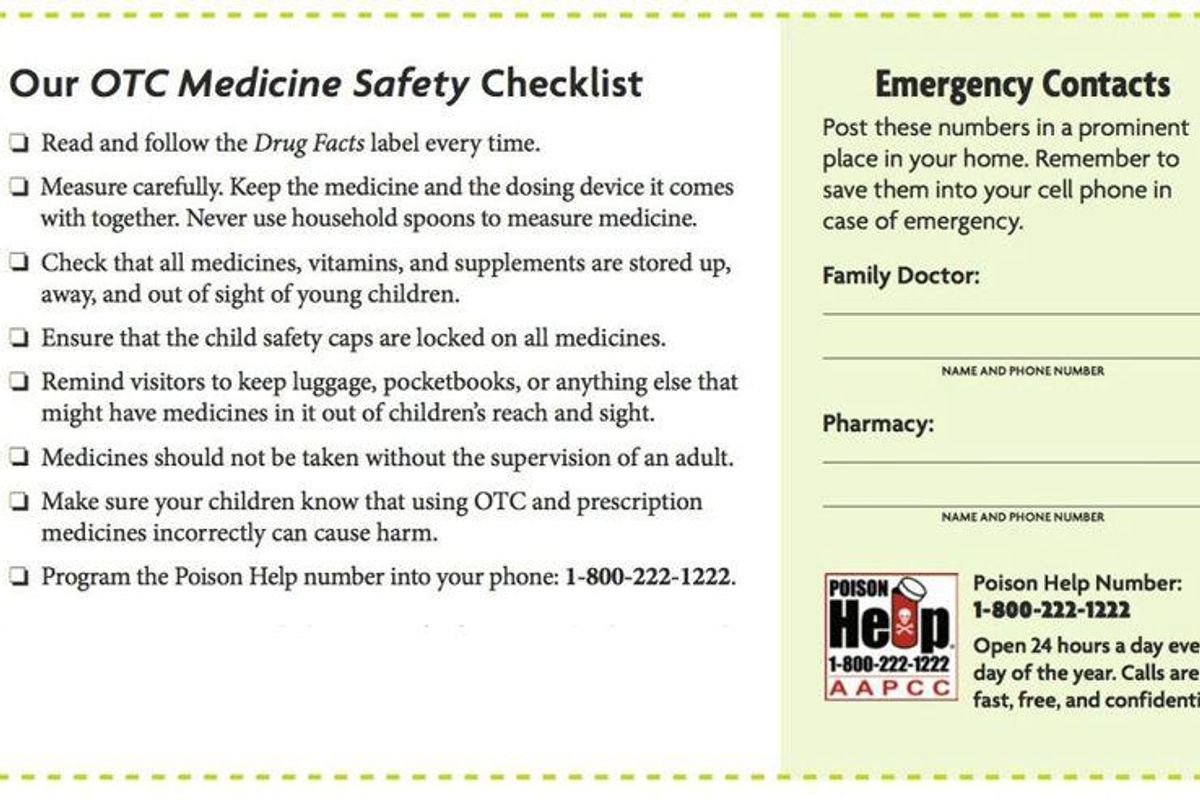
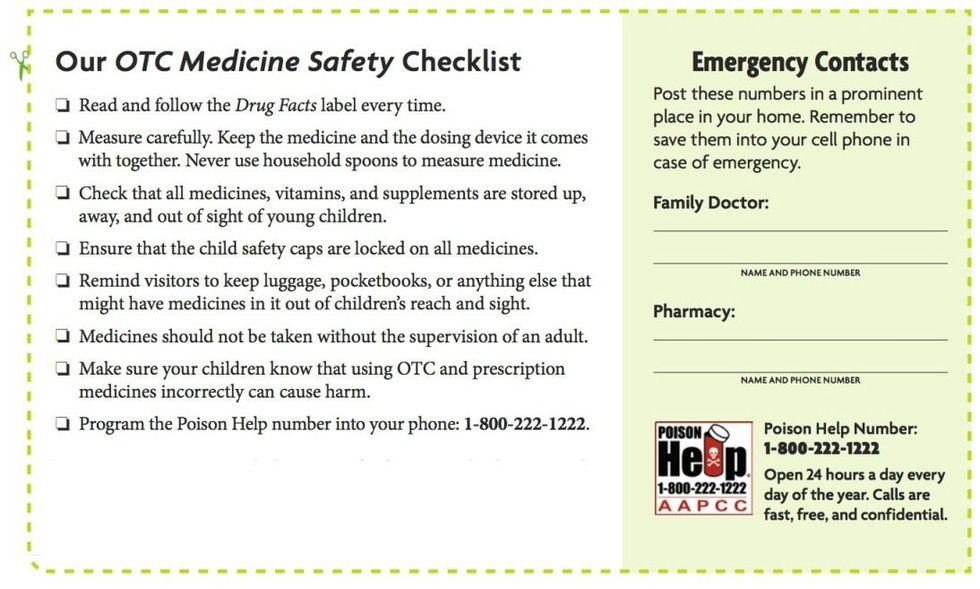
Checklist courtesy of Scholastic
As parents, we spend so much time preparing our children for the real world and teaching them the life skills they need to stay informed and safe.
It may sound odd at first to have a medicine action plan for your family, but considering that kids begin to self-medicate around 11 years old, it's crucial we arm them with knowledge to make informed decisions.
Creating an action plan is one way to know that you and your entire family are using and storing medicines safely in your home. Get your whole family involved by talking about over-the-counter (OTC) medicine safety. Follow these steps to guide your discussion:
1. Use the checklist below to inspect your home for OTC medicine hazards.
2. Create an action plan.
3. Practice your plan and continue conversations all year long.
OTC Medicine Safety Checklist
- Read and follow the Drug Facts label every time.
- Measure carefully. Use the dosing device that comes with the medicine. Keep the medicine and the dosing device it comes with together.
- Be sure to check expiration dates on medications before administering
- Check that all medicines, vitamins, and supplements are stored up, away, and out of sight of young children.
- Ensure that the child safety caps are locked on all medicines.
- Remind visitors to keep luggage, pocketbooks, or anything else that might have medicines in it out of children's reach and sight.
- Medicines should not be taken without the supervision of an adult.
- Make sure your children know that using OTC and prescription medicines incorrectly can cause harm.
- Program the Poison Help number into your phone: 800-222-1222.
To get free information and resources about how to keep your family safe around medicine, visit the Scholastic Over-the-Counter Medicine Safety website.
Support for the development of this material was provided by McNeil Consumer Healthcare.