 What are NSAIDs?
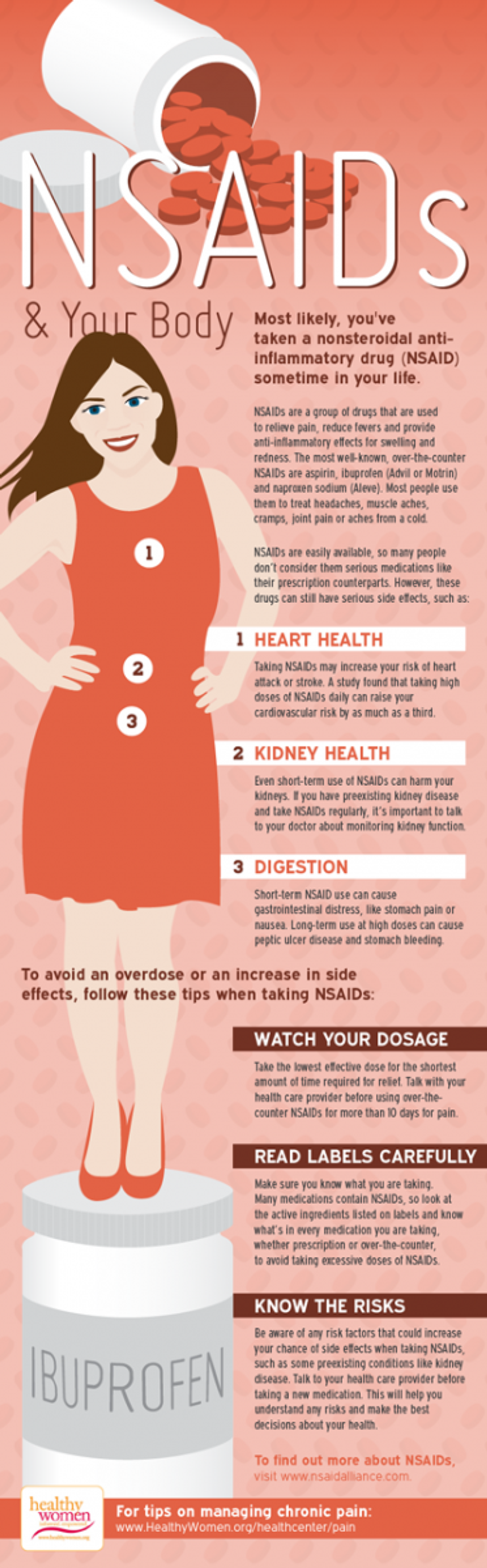
Most likely, you've taken a nonsteroidal anti-inflammatory drug (NSAID) sometime in your life. NSAIDs are a group of drugs that are used to relieve pain, reduce fevers and provide anti-inflammatory effects for swelling and redness.
The most well-known, over-the-counter NSAIDs are aspirin, ibuprofen (Advil or Motrin) and naproxen sodium (Aleve). Most people use ibuprofen or naproxen to treat headaches, muscle aches, cramps, joint pain or aches from a cold. NSAIDs also come in prescription forms for higher doses. For example, your dentist may prescribe ibuprofen for pain relief after a procedure.
Aspirin works differently from other NSAIDs and is primarily used for cardiovascular and neurovascular protection. It should never be given to kids with a fever because of the risk of Reye's syndrome.
There is another type of NSAID that differs from ibuprofen, naproxen and aspirin, called COX-2 inhibitors. These medications, including celecoxib (Celebrex), were developed to reduce pain and inflammation without the gastrointestinal side effects. Only celecoxib is currently available because researchers are evaluating the potential cardiovascular effects from these drugs.
One potential problem with over-the-counter NSAIDs is that because of their easy availability, they aren't considered a serious medication like their prescription counterparts. After all, who hasn't popped an aspirin for a headache without a second thought?
However, despite their over-the-counter availability, these NSAIDs are still medications that need to be discussed with your health care provider. If you don't mention them, you could run the risk of an overdose if your health care provider prescribes another medication that also contains an NSAID.
Are there side effects?
As with any medication, some people experience side effects from taking NSAIDs. The most common complaints involve gastrointestinal symptoms like stomach pain or discomfort, nausea and/or heartburn. In extreme cases, NSAIDs can cause kidney damage, or even kidney failure, and they pose the risk of stomach bleeding or ulcers because they can cause an increase in stomach acid while also affecting the stomach's protective lining.
Taking NSAIDs may increase your risk of heart attack or stroke. A study found that taking high doses of NSAIDs daily can raise your cardiovascular risk by as much as a third.
Can side effects be avoided?
To avoid the risks of overdose or an increase in side effects, use these tips when taking NSAIDs:
- Take the lowest dose for the shortest amount of time. The U.S. Food and Drug Administration (FDA) advises you talk to your health care provider before using over-the-counter NSAIDs for more than 10 days for pain. As a rule, you also shouldn't use them for more than three days for a fever.
- Read labels carefully. Make sure you know what dose you are taking. According to the FDA, the recommended doses for over-the-counter NSAIDs are: aspirin, up to 4,000 mg a day; ibuprofen, up to 1,200 mg a day; and naproxen sodium, up to 660 mg a day. If the label-recommended dose doesn't improve your symptoms, your health care provider may recommend gradually increasing the dose or switching to a different NSAID, but you should not increase the dosage on your own or combine one type of NSAID with another. Be sure you know if any other medications you are taking contain an NSAID.
- Always talk to your health care provider. Consult with your health care provider before you try to treat a problem on your own for a long time. If you experience daily pain, you and your health care provider should figure out a treatment plan together.
- Know the symptoms of common side effects. Experiencing some of the typical side effects, like stomach pain, is a sign that you need to stop taking the medication and see your health care provider. NSAIDs can be taken safely and effectively, but you need to be aware of any possible complications.
- Know yourself. If you have a chronic condition, especially one related to the gastrointestinal tract, kidney or heart, or you regularly take other medications, it is important to talk to your health care provider or pharmacist before taking an over-the-counter NSAID.
This article was created with support from the Alliance for Rational Use of NSAIDs (nsaidalliance.com).